Description
System Architecture & Operational Principle
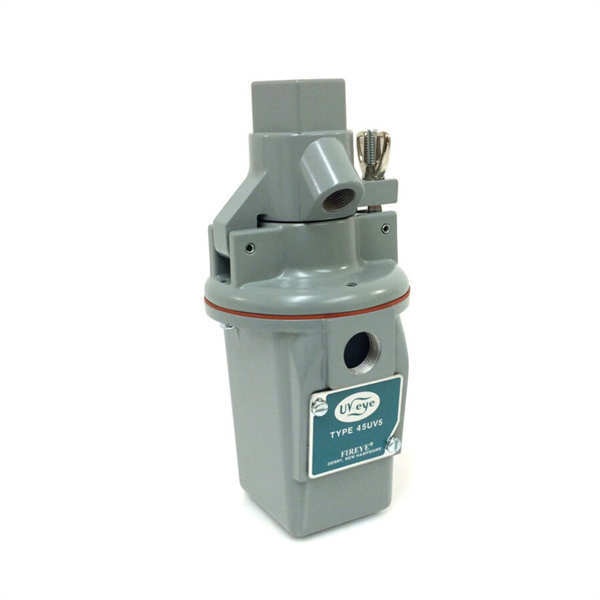
The 45UV5-1101 is a field-mounted ultraviolet flame scanner typically installed on the combustion chamber or near the burner quarl, where it has a direct line of sight to the flame. It operates at Level 0 (Process) of the Purdue Model, interfacing directly with a safety-rated burner management system (BMS) or PLC-based combustion safeguard controller.
Upstream, the BMS issues a “pilot enable” or “main valve open” command only after receiving a confirmed flame signal from the 45UV5-1101. Downstream, the scanner’s output—either a 0–5 VDC analog or 4–20 mA loop—signals flame intensity and presence. The BMS logic uses this to either continue normal operation or initiate a safety shutdown (fuel cut-off) if the flame is lost.
The UV sensor detects radiation in the 190–260 nanometer range, which is characteristic of hydrocarbon combustion. This allows the 45UV5-1101 to distinguish flame from incandescent refractory or hot surfaces, which emit outside this band. The module contains internal amplification and signal conditioning, outputting a signal proportional to flame strength. Its NEMA 4-rated housing protects against dust, water ingress, and typical industrial contaminants, making it suitable for outdoor boiler houses or enclosed turbine enclosures.
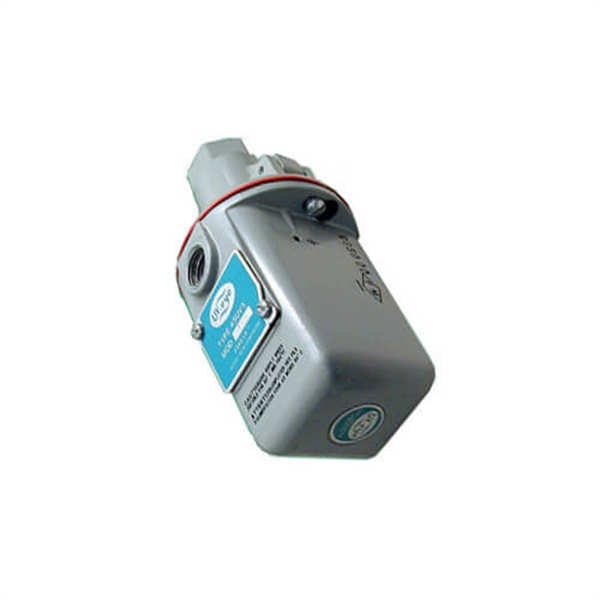
Fireye 45UV5-1101
Core Technical Specifications
-
Physical Interface: Cable gland with shielded cable (typically 18 AWG, 3-conductor plus shield)
-
Signal Type: Analog output (0–5 VDC or 4–20 mA selectable via jumper/internal switch)
-
Detection Spectrum: 190–260 nm UV wavelength
-
Response Time: <1 second typical flame detection; <3 seconds flame failure recognition
-
Operating Temperature: -40°C to +75°C (-40°F to +167°F)
-
Environmental Rating: NEMA 4 (IP66 equivalent) weatherproof enclosure
-
Supply Voltage: 24 VDC nominal (18–32 VDC range)
-
Current Draw: <100 mA at 24 VDC
-
Field of View: ~80° cone angle (line-of-sight dependent)
-
Electrical Connection: Screw terminals inside housing; pigtail leads to terminal block
-
Certifications: FM approved, CSA certified, CE marked
-
Weight: ~0.9 kg (2.0 lbs)
Customer Value & Operational Benefits
Reliable Flame Verification Reduces Unplanned Shutdowns
The 45UV5-1101’s narrowband UV detection avoids false trips from hot refractory or sunlight, a common issue with broadband sensors. This improves burner availability, especially in multi-burner boilers where reflected heat can confuse less selective detectors.
Simplified Integration with Existing BMS/PLC Systems
With both 0–5 VDC and 4–20 mA output options, the module can interface directly with legacy analog input cards or modern safety PLCs without additional signal converters. This minimizes redesign effort during burner retrofits or BMS upgrades.
Rugged Housing Minimizes Maintenance in Harsh Environments
The NEMA 4 enclosure resists corrosion from flue gases and washdown procedures common in food processing or pharmaceutical boiler rooms. Combined with a wide operating temperature range, this extends service intervals and lowers lifecycle costs.

Fireye 45UV5-1101
Field Engineer’s Notes (From the Trenches)
When installing the 45UV5-1101, orient the sensor’s lens perpendicular to the flame core—not at an oblique angle. I’ve seen scanners miss flame pulses when mounted too far off-axis, leading to nuisance trips during light-off. Also, always use shielded cable and terminate the shield at the scanner end only; grounding both ends introduces 60 Hz noise that can corrupt the analog output. If you’re switching between 0–5 VDC and 4–20 mA modes, check the internal jumper—it’s easy to overlook and will cause the BMS to misinterpret flame strength if set incorrectly.
Real-World Applications
In a municipal waste-to-energy plant, the 45UV5-1101 verifies ignition of refuse-derived fuel burners. The scanner is mounted 3 feet from the burner nozzle, angled to view the primary combustion zone. The BMS requires a minimum 2 VDC signal to confirm flame; the 45UV5-1101’s output ramps from 0 V (no flame) to 5 V (strong flame) within 500 ms of ignition, allowing rapid transition from pilot to main fuel valves.
On a natural gas-fired package boiler in a chemical refinery, the same unit detects flame loss during rapid load changes. The 4–20 mA output feeds a safety PLC, which initiates a 2-second purge delay before a full trip, preventing unnecessary shutdowns during momentary flame instability. The NEMA 4 housing withstands the refinery’s corrosive atmosphere and periodic washdowns.