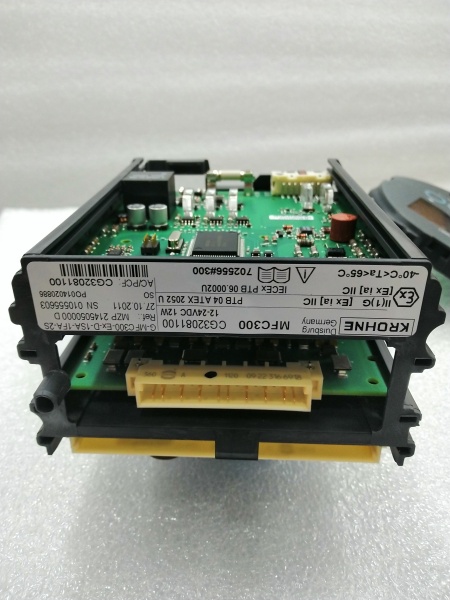
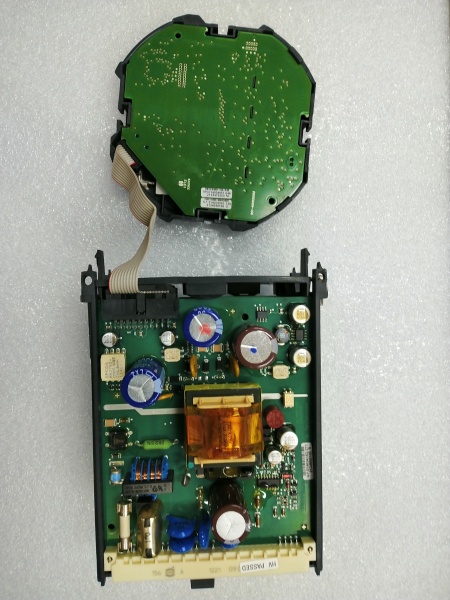
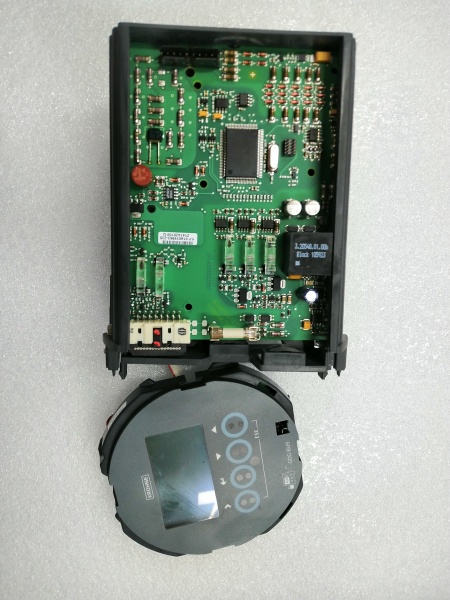
Description
System Architecture & Operational Principle
The KEOHNE MFC300 is a PLC-based high-precision motor control module designed for industrial motor management and automation. It serves as the central processing unit (CPU) in KEOHNE’s control architecture, interfacing with:
-
Upstream: Human-Machine Interfaces (HMIs) or SCADA systems for operator input and monitoring.
-
Downstream: Low-voltage motors (e.g., induction motors, servo motors) via digital/analog I/O or fieldbuses (e.g., Modbus RTU, Ethernet).
Core Functional Blocks
-
Processing Unit: A high-performance CPU executes logic programs (e.g., ladder logic, structured text) and motion control algorithms (e.g., PID, trajectory planning).
-
Motor Control Module: Manages motor speed, torque, and position using advanced control strategies (e.g., vector control, direct torque control).
-
I/O Interface: Handles digital (24 V DC) and analog (±10 V) signals for sensor feedback (e.g., temperature, pressure) and actuator control (e.g., motor starters).
-
Communication Interface: Supports multiple communication protocols (Modbus RTU, Ethernet, USB) for integration with HMIs, SCADA systems, or other controllers.
Operational Workflow
-
Input Reception: The controller receives commands from the HMI (e.g., “start motor”) or SCADA system.
-
Logic Execution: The CPU executes the programmed logic (e.g., checking safety interlocks, calculating motor speed).
-
Motor Control: The motor control module sends commands to the motor starter or drive to adjust motor speed/torque.
-
Feedback Processing: Sensors (e.g., encoders, temperature sensors) send data back to the controller for closed-loop control.
-
Output Transmission: The controller sends status updates to the HMI or SCADA system (e.g., “motor running at 1500 RPM”).
Core Technical Specifications
|
Parameter
|
Specification
|
|---|---|
|
Processor
|
High-performance CPU (e.g., ARM Cortex-A9)
|
|
Input Voltage
|
200-240 VAC (±10%)
|
|
Output Voltage
|
0-240 VDC
|
|
Power Rating
|
Up to 15 kW
|
|
Protection Features
|
Overload, Short Circuit, Undervoltage, Overvoltage, Phase Failure
|
|
Communication
|
RS485 Modbus RTU, Ethernet (10/100 Mbps), USB
|
|
Environmental Rating
|
IP54 (dust-protected, water-resistant)
|
|
Control Panel
|
Graphical Display Panel with USB Port
|
|
Programming Languages
|
FlexLogic Programming Package (C, Ladder Logic)
|
|
Dimensions
|
170 x 100 x 65 mm (approx.)
|
|
Weight
|
Approximately 1.2 kg
|
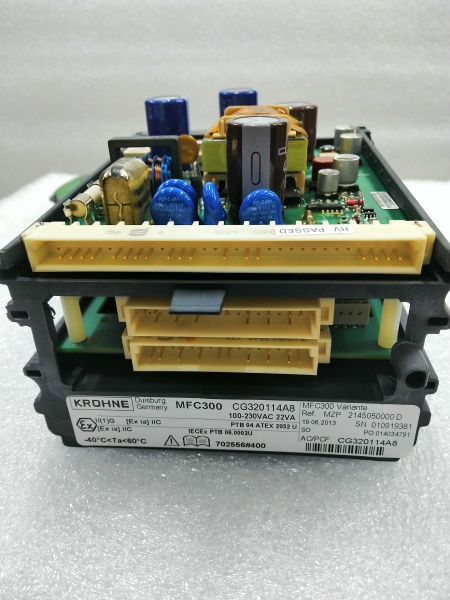
KEOHNE MFC300
Customer Value & Operational Benefits
1. High Precision & Reliability
The MFC300’s advanced motor control algorithms (e.g., vector control) enable precise speed and torque control (±0.1% accuracy), critical for applications like precision machining (e.g., CNC milling machines) or robotics (e.g., 6-axis robotic arms). Its high reliability (IP54 rating) ensures operation in harsh industrial environments (e.g., factories, warehouses).
2. Flexible Integration
Support for multiple communication protocols (Modbus RTU, Ethernet, USB) allows the MFC300 to integrate with third-party devices (e.g., Siemens sensors, Schneider Electric actuators) and legacy systems. This flexibility reduces the need for costly system overhauls.
3. Reduced Downtime
The controller’s self-diagnostic tools (e.g., LED status indicators, fault logs) and hot-swap capability (for I/O modules) minimize downtime. For example, if a motor drive fails, the controller can isolate the fault and alert maintenance teams via the HMI.
4. Scalability
The MFC300’s modular design allows users to add expansion modules (e.g., additional I/O, communication interfaces) as system requirements grow. This scalability is ideal for small businesses or contractors who need to upgrade their systems over time.
Field Engineer’s Notes (From the Trenches)
When installing the MFC300, always verify the input voltage (200-240 VAC ±10%) with a multimeter—low voltage can cause the controller to reset intermittently. I once saw a technician install the controller with a 120 VAC power supply, leading to hours of downtime.Check the motor wiring—ensure the motor is connected to the correct output terminals (e.g., U, V, W) on the MFC300. Incorrect wiring can cause the motor to run in reverse or not at all.Update the firmware (via KEOHNE’s website) after installation—firmware updates often fix bugs and improve compatibility with new devices. I recommend checking for updates every 6 months, especially if you’re using the controller for critical applications.KEOHNE MFC300
Real-World Applications
1. Precision Machining: CNC Milling Machine
A machine shop uses the MFC300 to control a CNC milling machine’s spindle motor. The controller’s precise speed control (±0.1% accuracy) ensures consistent part quality (e.g., drilling holes with ±0.05 mm tolerance).
2. Robotics: 6-Axis Robotic Arm
An automotive manufacturer uses the MFC300 to control a 6-axis robotic arm for assembling car parts. The controller’s advanced motion control algorithms enable smooth trajectory planning (e.g., picking a part from a conveyor belt and placing it in a fixture with ±0.1 mm accuracy).
3. Factory Automation: Production Line
A food packaging company uses the MFC300 to control a production line’s conveyor belt motors. The controller’s flexible integration with sensors (e.g., photoelectric sensors) ensures that boxes are transported efficiently, reducing labor costs by 25%.