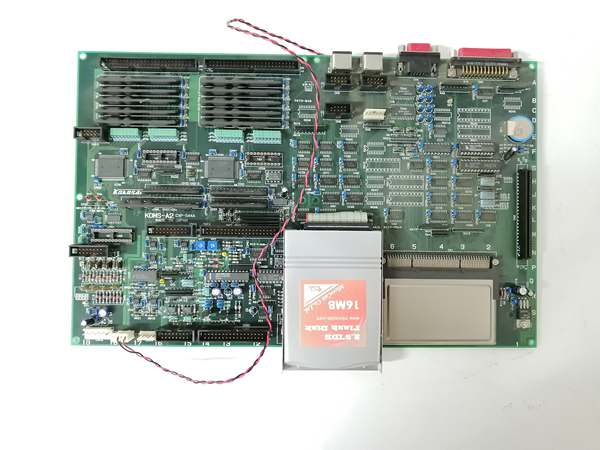
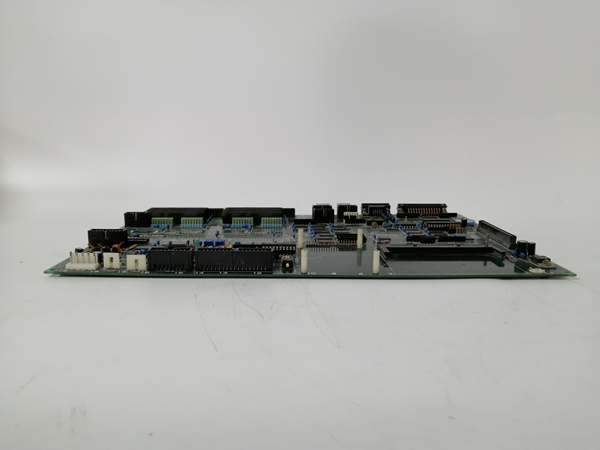
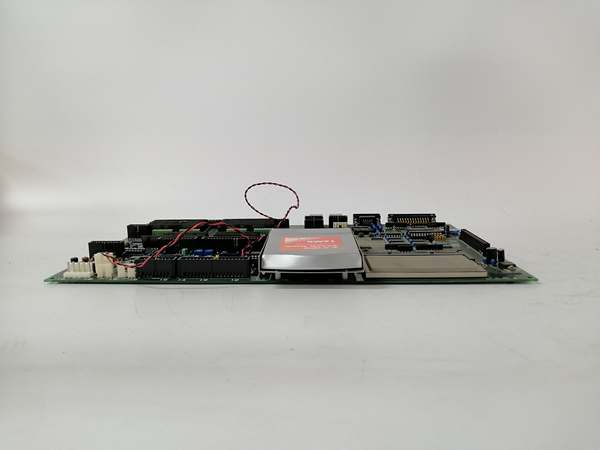
Description
System Architecture & Operational Principle
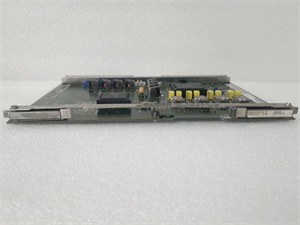
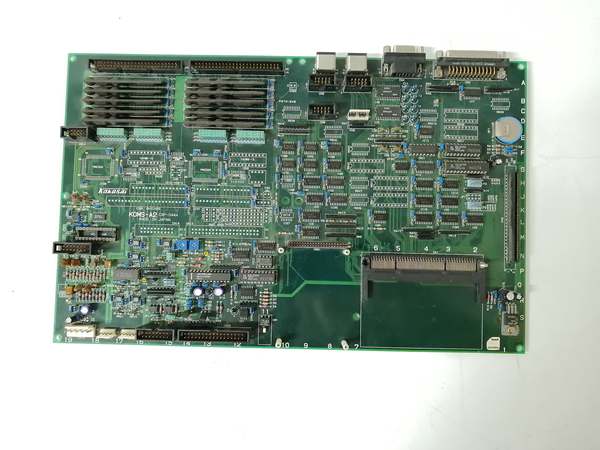
The KOKUSAI CXP-544A KOMS-A2 is a high-performance industrial signal processing module designed to enhance signal integrity in automation systems. It operates as an intermediate device between field sensors/actuators (e.g., temperature transmitters, pressure sensors) and KOMS-A2 series controllers (e.g., CPU-720), performing critical signal conditioning tasks to ensure reliable data transmission.
Core Functional Blocks
-
Signal Conditioning Circuitry:
-
Filtering: Multi-stage analog filters (low-pass, high-pass) remove noise from sensor signals, ensuring only relevant data is transmitted.
-
Amplification: Adaptive amplifiers adjust signal gain to match the input range of the controller, improving measurement accuracy.
-
-
Isolation Stage:
-
1500V AC optical isolation separates the field side from the control side, preventing ground loops and protecting the controller from high-voltage transients.
-
-
Communication Interface:
-
Supports high-speed communication with KOMS-A2 controllers via proprietary protocols, enabling real-time data exchange.
-
-
Power Supply:
-
Rack-mounted power supply (220V AC) provides stable power to the module, with overvoltage/overcurrent protection.
-
Operational Workflow
-
Signal Reception: The module receives raw analog signals (0-10V/4-20mA) from field sensors.
-
Conditioning: The signal passes through filtering and amplification stages to remove noise and adjust gain.
-
Isolation: The conditioned signal is isolated to prevent interference from the control system.
-
Transmission: The processed signal is sent to the KOMS-A2 controller for further processing (e.g., PID control, data logging).

KOKUSAI CXP-544A
Core Technical Specifications
|
Parameter
|
Specification
|
|---|---|
|
Input Range
|
0-10V DC / 4-20mA DC
|
|
Isolation Voltage
|
1500V AC (channel-to-ground)
|
|
Response Time
|
≤2ms (10%–90% of full scale)
|
|
Operating Temperature
|
-40°C to +85°C (ambient)
|
|
Certifications
|
CE, RoHS, IEC 61000-6-2 (EMC immunity)
|
|
Communication
|
Proprietary high-speed protocol (compatible with KOMS-A2 controllers)
|
|
Power Supply
|
220V AC (±10%), 50/60 Hz
|
|
Dimensions
|
23 cm × 25 cm × 28 cm (approx.)
|
|
Weight
|
~1.05 kg (2.3 lbs)
|
Customer Value & Operational Benefits
1. Improved Signal Integrity
The module’s multi-stage filtering and adaptive amplification ensure that sensor signals are free from noise and accurately scaled, reducing measurement errors in critical applications (e.g., chemical processing, power generation).
2. Enhanced System Reliability
1500V AC isolation protects the controller from high-voltage transients (e.g., lightning strikes, motor starts), minimizing downtime and extending the life of the control system.
3. Flexible Integration
The module is compatible with KOMS-A2 series controllers (e.g., CPU-720) and remote I/O units (e.g., RIO-300), making it easy to integrate into existing automation systems without major modifications.
4. Harsh Environment Durability
The -40°C to +85°C operating temperature range and rugged construction allow the module to withstand harsh industrial environments (e.g., outdoor installations, factories with high vibration).
KOKUSAI CXP-544A
Field Engineer’s Notes (From the Trenches)
When installing the CXP-544A KOMS-A2, always verify the input signal range (0-10V/4-20mA) with a multimeter—using an incorrect range can damage the module’s amplifiers. I once saw a technician connect a 20mA signal to a 10V input, which burned out the amplification stage.Check the isolation voltage—ensure the module’s isolation barrier is intact (no cracks or damage) to maintain protection against ground loops. Use a megohmmeter to test the insulation resistance (should be >100MΩ).Test the response time—apply a step signal (0-10V) to the input and measure the output delay with an oscilloscope. The delay should be ≤2ms; if not, adjust the filter settings via the module’s configuration software.
Real-World Applications
1. Petrochemical Processing Lines
A refinery uses the CXP-544A KOMS-A2 to condition signals from temperature transmitters (4-20mA) installed on distillation columns. The module’s filtering removes noise from the process fluid, while amplification ensures the controller receives accurate temperature data for PID control.
2. Power Generation Control Systems
A power plant uses the module to process signals from pressure sensors (0-10V) on boiler feedwater lines. The isolation stage protects the controller from high-voltage transients caused by turbine startups, ensuring reliable pressure monitoring.
3. Automated Manufacturing Environments
A car manufacturer uses the module to condition signals from flow sensors (4-20mA) on paint lines. The fast response time (≤2ms) allows the controller to adjust paint flow in real time, ensuring consistent coating thickness.