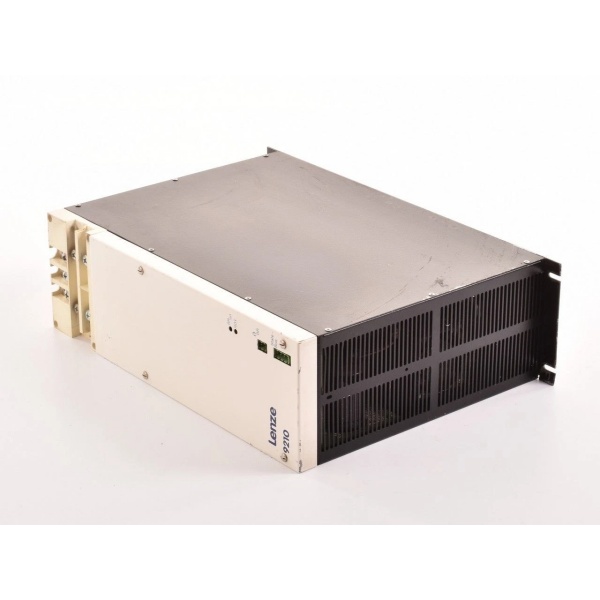
Description
System Architecture & Operational Principle
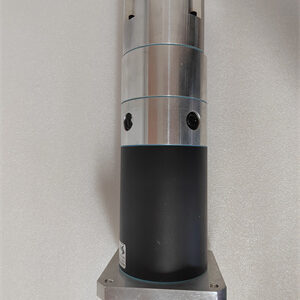
The LENZE E84AHWMC1534V-V003 is a synchronous servo motor from the E84 series, designed for precision motion control in industrial automation. It resides at Purdue Model Level 1 (Process Control), acting as the intermediary between upstream control systems (e.g., PLCs, HMIs) and downstream actuators (e.g., robot joints, machine tool spindles).
Core Functional Blocks
-
Rotor/Stator Assembly: Uses permanent magnets (NdFeB) on the rotor and wound stator windings to generate torque via electromagnetic induction. The high pole count (e.g., 8 poles) enables smooth operation at low speeds and high torque density.
-
Encoder System: Equipped with a 17-bit absolute encoder (single-turn + multi-turn) for real-time feedback of rotor position and speed. This feedback is critical for closed-loop control, ensuring micrometer-level positioning accuracy.
-
Protection Mechanisms: Features IP65 (dust-tight, water-jet resistant) protection, making it suitable for harsh industrial environments. Additional protections include overcurrent, overvoltage, and thermal overload.
-
Mechanical Interface: Keyless shaft with radial eccentricity tolerance N (ensures precise alignment with loads) and a rotatable connector for easy integration with servo drives.
Operational Workflow
-
Command Reception: Receives speed/torque/position commands from upstream systems (e.g., LENZE i700 servo drive) via fieldbuses (EtherCAT) or analog/digital I/O.
-
Torque Generation: The stator windings are energized by the servo drive, creating a rotating magnetic field that interacts with the rotor’s permanent magnets to produce torque.
-
Feedback Loop: The encoder sends real-time rotor position/speed data back to the servo drive, which adjusts the voltage/current output to maintain precise control (closed-loop).
-
Load Actuation: The motor’s shaft rotates, driving the mechanical load (e.g., robot arm joint) to the desired position/speed.

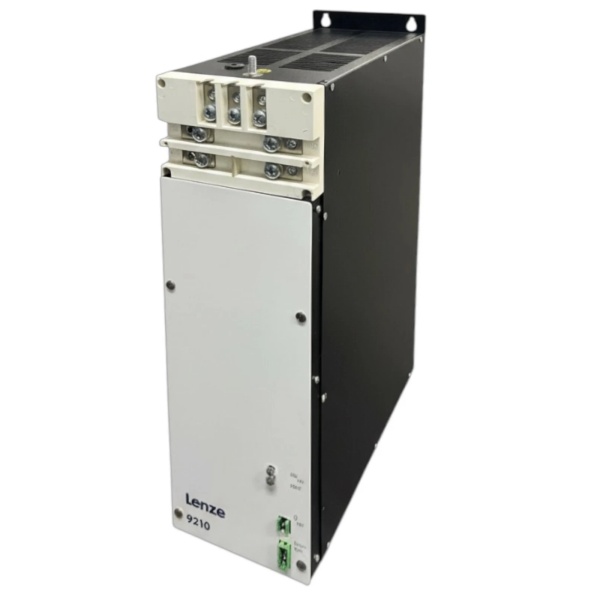
Lenze 9215
Core Technical Specifications
|
Parameter
|
Specification
|
|---|---|
|
Motor Type
|
Synchronous Servo Motor (E84 Series)
|
|
Torque Range
|
0.5–190 Nm
|
|
Power Range
|
0.25–15.8 kW
|
|
Protection Class
|
IP65 (dust-tight, water-jet resistant)
|
|
Operating Temperature
|
-20°C to +40°C (ambient)
|
|
Encoder
|
17-bit absolute (single-turn + multi-turn), DRIVE-CLiQ compatible
|
|
Shaft Type
|
Keyless, radial eccentricity tolerance N
|
|
Cooling Method
|
Natural cooling (self-ventilated)
|
|
Voltage Range
|
600 V DC (DC link voltage)
|
|
Weight
|
~15–20 kg (estimated from E84 series peers)
|
Customer Value & Operational Benefits
1. High Precision for Critical Applications
The 17-bit encoder and closed-loop control enable micrometer-level positioning accuracy, critical for applications like semiconductor assembly (wafer stage positioning) or medical device fabrication (implant component alignment). This precision reduces defect rates and improves product quality.
2. Rugged Reliability for Harsh Environments
The IP65 protection rating makes the motor resistant to dust, water jets, and temporary immersion, suitable for automotive paint lines (wet, dusty environments) or food processing (washdown areas). The keyless shaft and radial eccentricity tolerance reduce mechanical wear, extending service life.
3. Flexible Integration with Existing Systems
Supports multiple communication protocols (EtherCAT, CANopen) and analog/digital I/O, allowing seamless integration with third-party PLCs (e.g., Siemens S7) and legacy systems. The rotatable connector simplifies wiring, reducing installation time.
4. Energy Efficiency for Cost Savings
Synchronous servo motors are inherently more efficient than asynchronous motors (≥90% efficiency vs. ~85% for asynchronous). This reduces energy consumption by 10–15% in continuous-operation systems (e.g., conveyor belts, packaging machines), leading to lower utility costs.
Lenze 9215
Field Engineer’s Notes (From the Trenches)
When installing the E84AHWMC1534V-V003, always verify the encoder cable connection—a loose connector can cause position jitter or “encoder fault” errors. I once saw a site lose 8 hours of production because the encoder cable was not fully seated.Check the shaft alignment with a dial indicator—misalignment >0.05 mm can cause premature bearing wear. Use the motor’s keyless shaft design to adjust alignment without modifying the load.Test the thermal protection after installation—run the motor at full load for 30 minutes and check the temperature (should not exceed 85°C). If it does, verify the cooling (e.g., a fan) or reduce the load.Update the servo drive firmware (via LENZE Engineer software) after installing the motor—firmware updates often fix bugs and improve compatibility with new encoder types.
Real-World Applications
1. Industrial Robotics: Automotive Welding Arms
A Tier-1 auto supplier uses the E84AHWMC1534V-V003 to power the joints of a 6-axis welding robot. The motor’s high torque density (0.5–190 Nm) allows the arm to lift heavy components (up to 50 kg) while maintaining precise positioning (±0.1 mm), critical for consistent weld seam quality.
2. Machine Tools: CNC Milling Machines
A job shop uses the motor to drive the spindle of a CNC milling machine. The 17-bit encoder and closed-loop control enable fast acceleration (0–3000 rpm in 0.5 sec) and precise speed control (±0.05% tolerance), reducing cycle time by 10% and improving part quality.