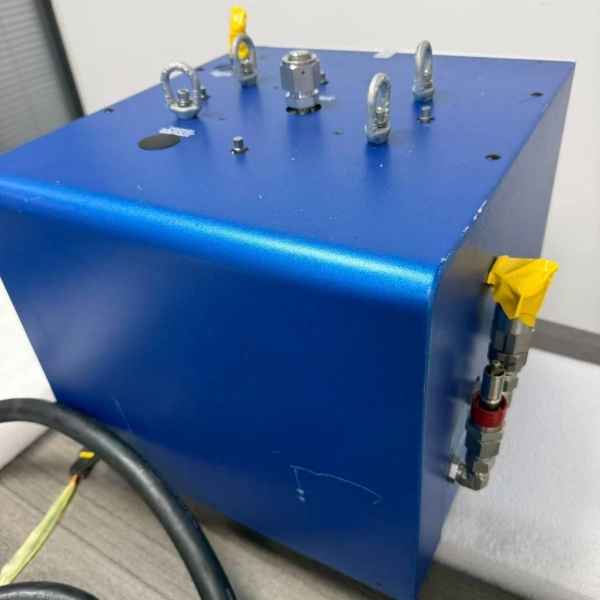
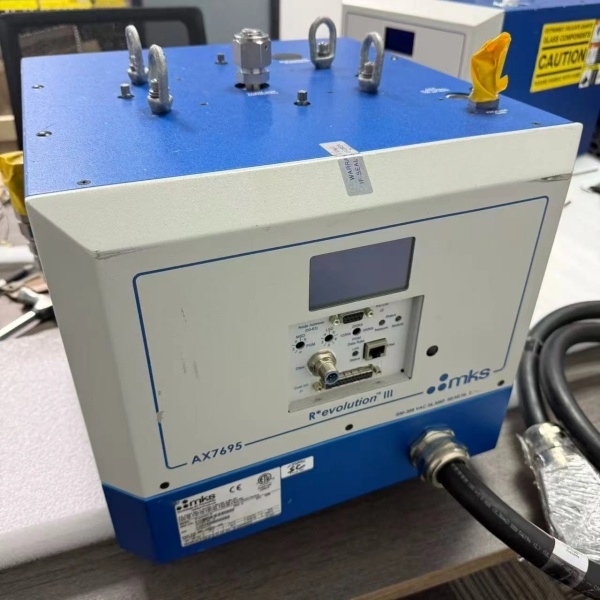
Description
System Architecture & Operational Principle
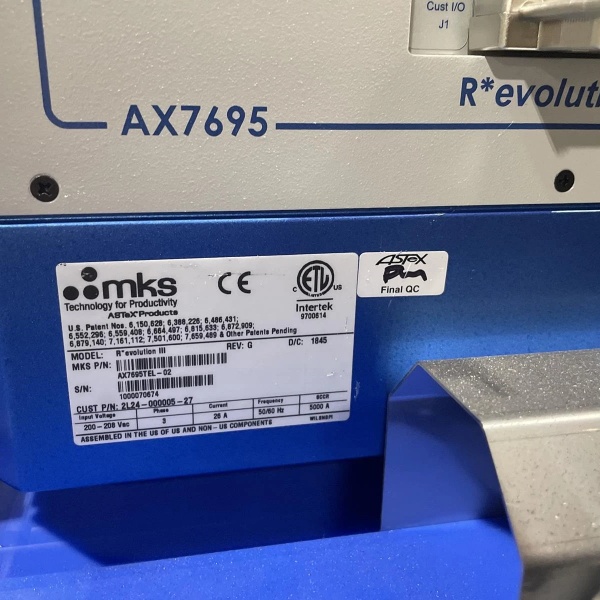
The MKS RPS AX7695 is an integrated remote plasma source (RPS) designed for semiconductor wafer processing, belonging to the MKS R*evolution® III series. It serves as a critical component in advanced chip manufacturing, providing a clean, controllable source of atomic radicals for processes like dielectric etching (SiO₂, SiNₓ), metal etching (Al, Cu), and surface treatment (plasma cleaning/activation).
Architectural Role
The AX7695 is positioned between the RF power supply and the process chamber, acting as the interface for plasma generation and delivery. It integrates a quartz vacuum chamber, RF matching network, gas delivery system (mass flow controllers, MFCs), and advanced diagnostics into a compact, self-contained unit. This design allows for easy installation directly on the tool process chamber, reducing complexity and cost compared to traditional plasma systems.
Operational Principle
-
Gas Delivery: Process gases (e.g., O₂, Ar, N₂) are fed into the plasma chamber via MFCs, which precisely control gas flow rates (up to 6.0 slm).
-
RF Excitation: A 13.56 MHz RF power supply generates high-frequency electromagnetic energy, which is transmitted to the plasma chamber through a matching network. The matching network tunes the impedance to maximize power transfer to the plasma.
-
Plasma Generation: The electromagnetic field excites the gas molecules into a plasma state, creating a high-density (≥10¹² cm⁻³) and uniform plasma.
-
Radical Delivery: The plasma is directed towards the wafer surface through the plasma outlet, where reactive species (e.g., oxygen radicals) interact with the wafer to achieve the desired process result (e.g., removing contaminants during cleaning or etching patterns during fabrication).
Key Architectural Advantages
-
Integration: Combines RF power, matching network, gas delivery, and diagnostics into a single unit, reducing the need for external components and simplifying system integration.
-
Controllability: Precise control of plasma parameters (density, uniformity, gas flow) enables optimization of process outcomes (e.g., minimizing etch bias in semiconductor fabrication).
-
Reliability: Designed for 24/7 operation in cleanroom environments, with a mean time between failure (MTBF) of >20,000 hours.

MKS RPS AX7695
Core Technical Specifications
|
Parameter
|
Specification
|
|---|---|
|
RF Frequency
|
13.56 MHz (±0.05% typical)
|
|
Power Range
|
2 kW (nominal)
|
|
Plasma Density
|
≥10¹² cm⁻³
|
|
Plasma Uniformity
|
<5% (across the wafer surface)
|
|
Operating Pressure
|
0.5–2.0 Torr
|
|
Gas Flow Rate
|
Up to 6.0 slm (standard); 10.0 slm (optional)
|
|
Ignition Gas
|
100% O₂ or Ar; 90% O₂/10% N₂
|
|
Process Gas
|
Up to 6.0 slm of 100% O₂; 90% O₂/10% N₂
|
|
Dimensions
|
~600 mm × 400 mm × 300 mm (23.6 in × 15.7 in × 11.8 in)
|
|
Weight
|
~20 kg (44 lbs)
|
|
Cooling
|
Liquid-cooled (deionized water)
|
|
Compliance
|
SEMI S2/S8 (safety); CE, RoHS
|
Customer Value & Operational Benefits
1. Improved Process Yield
The AX7695’s high plasma density (>10¹² cm⁻³) and uniformity (<5%) enable precise control of semiconductor processes, reducing defects (e.g., micro-loading in etching) and improving wafer yield. For example, in a 5nm logic chip fabrication process, the AX7695’s uniform plasma reduces etch variation by 30%, increasing the number of usable dies per wafer.
2. Reduced Cost of Ownership
The integrated design eliminates the need for external RF power supplies and matching networks, reducing capital expenditure (CAPEX) by ~20% compared to traditional systems. Additionally, the liquid-cooled system minimizes downtime for maintenance, reducing operational expenditure (OPEX).
3. Enhanced Flexibility
The AX7695 supports multiple process gases (O₂, Ar, N₂) and flow rates (up to 6.0 slm), making it suitable for a wide range of semiconductor processes (e.g., cleaning, etching, deposition). This flexibility allows manufacturers to use the same system for multiple applications, reducing the need for specialized equipment.
4. Reliable Operation
The AX7695’s MTBF of >20,000 hours ensures continuous operation in 24/7 manufacturing environments. The advanced diagnostics (real-time V/I/power monitoring) enable predictive maintenance, reducing the risk of unplanned downtime.
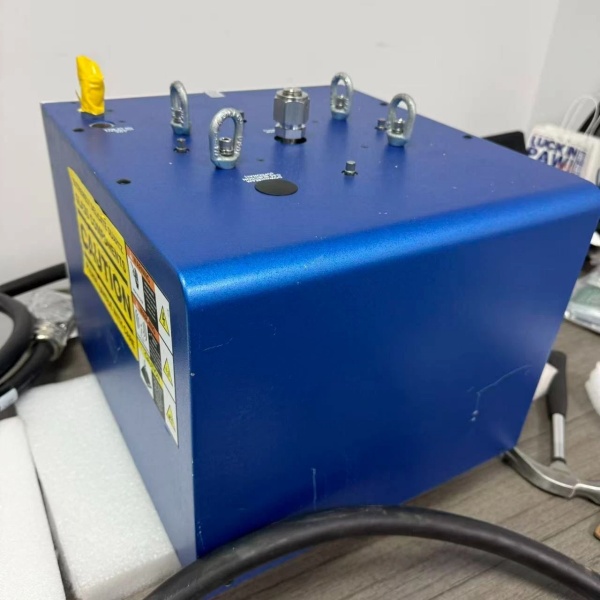
MKS RPS AX7695
Field Engineer’s Notes (From the Trenches)
When installing the AX7695, always verify the gas line connections—use stainless steel tubing and compression fittings to prevent leaks. I once saw a technician use plastic tubing, which melted due to the high temperature of the plasma, causing a gas leak and process contamination.Clean the plasma chamber regularly (every 6 months) using a dry nitrogen purge—dust and debris can accumulate on the chamber walls, reducing plasma density and uniformity. Use a soft brush to avoid scratching the quartz chamber.Test the RF matching network after installation—use a network analyzer to measure the VSWR (voltage standing wave ratio). A VSWR >1.5:1 indicates a mismatch, which can reduce power transfer and plasma performance. Adjust the matching network’s capacitors to optimize the VSWR.
Real-World Applications
1. Semiconductor Wafer Cleaning
A leading semiconductor manufacturer uses the AX7695 for pre-etch wafer cleaning. The plasma removes organic contaminants (e.g., photoresist residues) from the wafer surface, improving etch selectivity and reducing defects. The AX7695’s high plasma density ensures complete contaminant removal in <60 seconds, reducing cycle time by 25%.
2. Dielectric Etching
In a 3D NAND flash memory fabrication process, the AX7695 is used to etch SiO₂ layers. The plasma’s uniform density ensures vertical etch profiles with <2° taper, which is critical for maintaining the aspect ratio of the memory cells. The AX7695’s precise gas flow control minimizes etch bias, improving the reliability of the memory devices.
3. Surface Activation
A solar cell manufacturer uses the AX7695 to activate the surface of silicon wafers before depositing anti-reflective coatings. The plasma modifies the wafer surface, increasing the adhesion of the coating and improving the solar cell’s efficiency. The AX7695’s low plasma non-uniformity (<5%) ensures consistent activation across the entire wafer, resulting in a 1.5% increase in solar cell efficiency.