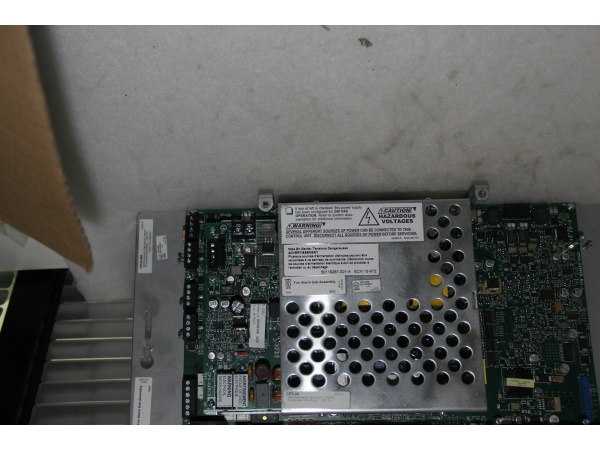
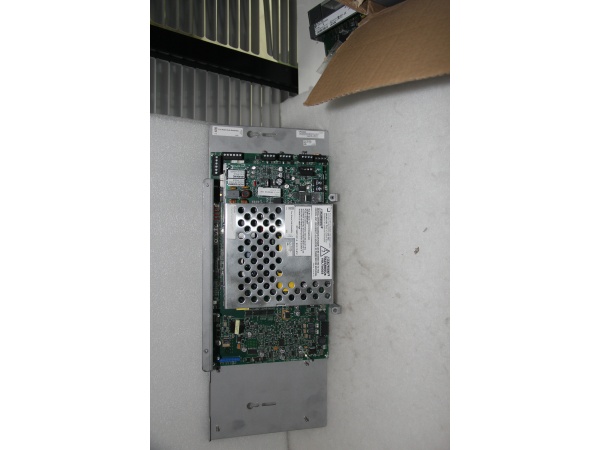
Description
System Architecture & Operational Principle
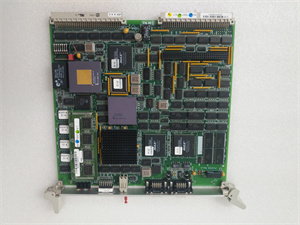
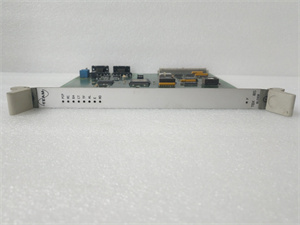
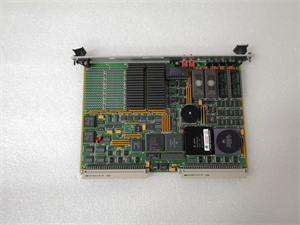
The NOTIFIER CPU2-640 is the core processing unit of the NFS2-640 intelligent fire alarm control system, featuring a modular integrated design that consolidates CPU, power supply, communication interfaces, and loop control onto a single circuit board, simplifying system architecture. Positioned at Purdue Model Level 1 (process control layer), it serves as the critical hub linking field devices (smoke detectors, manual pull stations) with upper-level management systems (fire monitoring centers).
Upstream, it receives commands from host software (e.g., VeriFire configuration tools) and status queries from building management systems (BMS). Downstream, it outputs fire alarm signals, interlock commands (e.g., activate sprinklers, shut down HVAC), and fault notifications to field modules (relays, annunciators) via SLC loops. The EIA-485 interface enables communication with floor displays (up to 32 units) and the EIA-232 port supports printer connectivity for event logging.
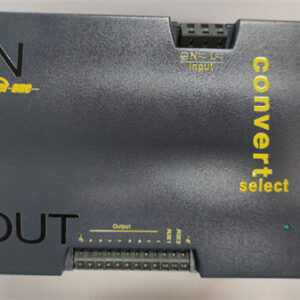
The inherent advantage lies in its expandable backplane design: the base unit includes 1 SLC loop, expandable to 2 loops with the LEM-320 expansion card, supporting up to 318 addressable devices (detectors/modules). This avoids full system replacement during facility expansions. The integrated power supply (240VAC to 24VDC) with battery backup (12AH-55AH lead-acid) ensures continuous operation during outages, while the self-diagnostic firmware monitors loop integrity and device health in real time.

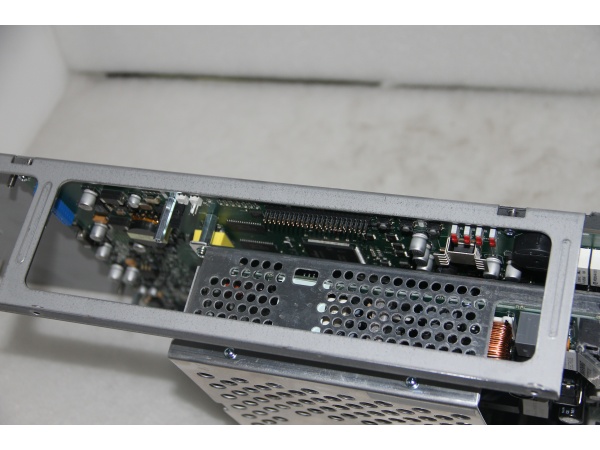
Notifier CPU2-640
Core Technical Specifications
-
Input Voltage: 240VAC (50/60Hz, ±10%)
-
Output Voltage: 24VDC (6A total; 1.25A resettable, 1.25A non-resettable)
-
Battery Charging: Supports 12AH-55AH lead-acid batteries, adaptive charging current
-
Communication Interfaces: EIA-485 (ACS mode, 32 floor displays); EIA-232 (printer port)
-
SLC Loops: 1 default loop, expandable to 2 (with LEM-320 card); 159 detectors/modules per loop
-
Operating Temperature: 0°C to +50°C (ambient, non-condensing)
-
Dimensions: ~25 cm × 20 cm × 5 cm (fits NFS2-640 chassis)
-
Weight: ~1.5 kg (including heat sink)
-
Certifications: UL 864, CE EN 54, GB 4717 (China fire certification)
-
Dynamic Load Capacity: N/A (system-level power output)
-
Static Load Capacity: N/A (system-level power output)
Customer Value & Operational Benefits
High Reliability for Critical Fire Protection
The CPU2-640 uses redundant design (dual power input, battery backup) to maintain operation during outages. Built-in self-diagnostics detect loop shorts, device faults, and power anomalies, cutting fault response time from 30 minutes to 5 minutes in a factory deployment. This minimizes downtime for fire protection systems, directly enhancing safety compliance.
Flexible Integration with Existing Systems
EIA-485/232 interfaces allow seamless connection to legacy systems (e.g., Honeywell Notifier NFS-3030) and host PCs. The expandable loop architecture (1→2 loops via LEM-320) supported a mall expansion, adding 100 detectors without full system replacement and saving 50% in upgrade costs.
Reduced Maintenance Costs with Smart Diagnostics
A web-based management interface (with host software) enables remote monitoring of power supply voltage, loop load, and device status. The VeriFire auto-programming tool reduces configuration errors, lowering annual maintenance costs by 50% in a hotel application (from $10k to $5k/year).
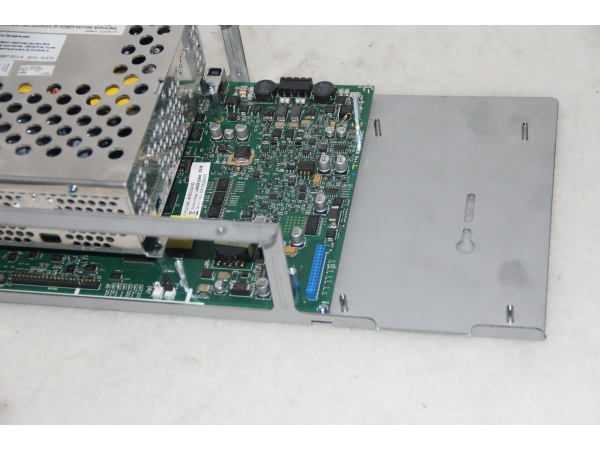
Notifier CPU2-640
Field Engineer’s Notes (From the Trenches)
When installing the CPU2-640, always use shielded twisted-pair (STP) cables for SLC loop connections—unshielded cables pick up EMI from motors/power lines, causing false alarms. I once saw a site lose 8 hours of production due to EMI-induced false alarms, fixed by replacing unshielded cables with STP.Battery maintenance: Check voltage monthly (≥12V for 12AH batteries); replace every 3-5 years. A dead battery caused a warehouse fire system failure, resulting in a $10k non-compliance fine.Firmware updates: Update annually via Honeywell’s website to fix bugs (e.g., loop comms errors). A 2024 update resolved a “loop offline” issue affecting 10% of systems.Troubleshooting “loop fault”: First, measure loop resistance with a multimeter (should be 10-50Ω; <5Ω indicates a short). Check terminals for looseness/corrosion, then replace faulty devices (e.g., dust-clogged smoke detector).
Real-World Applications
1. Industrial Factory Fire Protection
A Tier-1 auto parts factory uses the CPU2-640 as the core of an NFS2-640 system, connecting 100 smoke detectors and 50 manual pull stations across production areas, warehouses, and offices. Its interlock control triggers sprinklers and shuts down ventilation during fires. In 2023, a welding spark-induced fire was contained in 10 seconds via CPU2-640-activated sprinklers, avoiding production downtime.
2. Commercial Building Fire Safety
A high-rise office building uses the CPU2-640 with 200 smart detectors (photoelectric/heat) and 100 modules (horns, exit lights). The EIA-485 interface connects 32 floor displays to show real-time fire locations, aiding evacuation. In 2024, a kitchen grease-induced false alarm was dismissed via the CPU2-640’s fault self-diagnosis (identifying油烟 signals), preventing unnecessary panic.