Description
System Architecture & Operational Principle
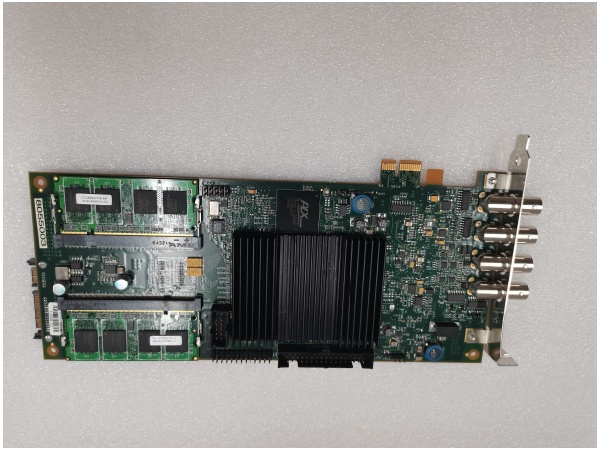
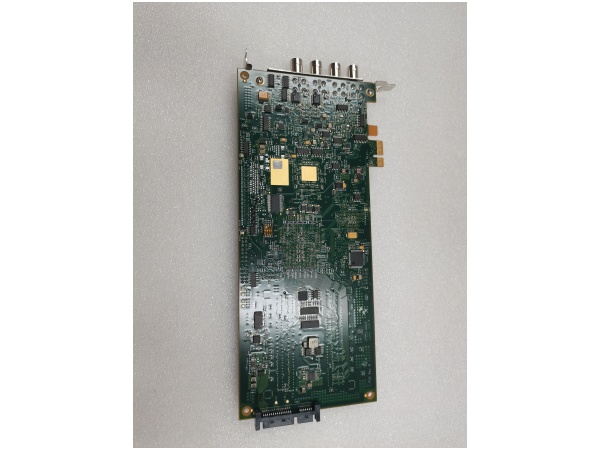
The OKOS AL8XGTE-3 is a high-performance data acquisition card designed for industrial non-destructive testing (NDT) and ultrasound applications. It serves as the critical interface between analog field devices (e.g., ultrasound transducers, vibration sensors) and digital analysis systems (e.g., PCs, industrial controllers).
Core Functional Blocks
-
Analog Front End (AFE):
-
Input Stage: Accepts analog signals from transducers (e.g., ultrasound pulses, vibration waveforms) via BNC connectors.
-
Amplification & Filtering: Adjusts signal amplitude (via programmable gain amplifiers) and removes noise (via low-pass filters) to ensure compatibility with the analog-to-digital converter (ADC).
-
-
Analog-to-Digital Converter (ADC):
-
An 8-bit ADC with a 3 GS/s sampling rate converts the filtered analog signal to digital data. The high sampling rate enables accurate capture of fast-transient signals (e.g., ultrasound echoes, vibration peaks).
-
-
Onboard Memory:
-
512 MB–2 GB of DDR3 memory stores acquired data temporarily, allowing continuous acquisition even when the PC is busy processing previous data. This “double-buffering” mechanism prevents data loss during high-throughput applications.
-
-
PCIe Interface:
-
A PCIe x1 bus connects the card to the host PC, enabling high-speed data transfer (up to 2.5 Gbps) for real-time analysis. The interface supports both Windows and Linux operating systems.
-
-
Control Logic:
-
A microcontroller manages data acquisition (e.g., triggering, sampling rate adjustment) and communicates with the host PC via the PCIe bus. It also handles error checking (e.g., CRC) to ensure data integrity.
-
Operational Workflow
-
Signal Reception: The AFE receives an analog signal from a transducer (e.g., an ultrasound probe).
-
Signal Conditioning: The signal is amplified and filtered to remove noise.
-
Digitization: The ADC converts the conditioned signal to digital data, which is stored in onboard memory.
-
Data Transfer: The digital data is transferred to the host PC via the PCIe bus for analysis (e.g., using software like LabVIEW or MATLAB).
-
Triggering: The card can be triggered by an external signal (e.g., a laser pulse) or an internal timer to start acquisition, ensuring synchronization with other devices.

AL8XGTE-3
Core Technical Specifications
|
Parameter
|
Specification
|
|---|---|
|
Sampling Rate
|
3 GS/s (max); adjustable down to 250 KS/s
|
|
Resolution
|
8 bits
|
|
Input Voltage Range
|
125 mV to 2 V (programmable via software)
|
|
Bus Interface
|
PCIe x1 (2.5 Gbps data transfer rate)
|
|
Onboard Memory
|
512 MB–2 GB DDR3
|
|
Trigger Modes
|
External (BNC), internal (timer), or software-triggered
|
|
Operating Temperature
|
-40°C to +85°C (industrial-grade)
|
|
Power Consumption
|
~10 W (from PCIe bus)
|
|
Form Factor
|
Half-length PCIe card (167 mm × 107 mm)
|
|
Certifications
|
CE, RoHS, ISO 9001:2015
|
Customer Value & Operational Benefits
1. High-Speed, High-Resolution Data Acquisition
The 3 GS/s sampling rate and 8-bit resolution enable the AL8XGTE-3 to capture fast-transient signals (e.g., ultrasound echoes, vibration peaks) with high fidelity. This is critical for NDT applications like ultrasound testing (detecting defects in metal parts) and vibration analysis (monitoring rotating machinery).
2. Real-Time Processing & Minimal Latency
The PCIe x1 interface and onboard memory allow real-time data transfer to the host PC, minimizing latency between acquisition and analysis. This is essential for applications like industrial automation (e.g., real-time monitoring of production lines) and defense (e.g., radar signal processing).
3. Rugged & Reliable for Harsh Environments
The AL8XGTE-3 is designed to operate in industrial environments (-40°C to +85°C) and withstand vibration (up to 10 g) and shock (up to 50 g). This makes it suitable for use in factories, power plants, and outdoor testing facilities.
4. Flexible Integration with Existing Systems
The card supports both Windows and Linux operating systems and is compatible with popular software tools (e.g., LabVIEW, MATLAB). This allows engineers to integrate the AL8XGTE-3 into existing workflows without significant changes to their software.
AL8XGTE-3
Field Engineer’s Notes (From the Trenches)
When installing the AL8XGTE-3, always use a shielded BNC cable to connect the transducer to the card—unshielded cables can pick up electromagnetic interference (EMI) from nearby equipment (e.g., motors, generators), leading to noisy data. I once spent hours troubleshooting a “noisy signal” fault only to find the cable was unshielded.Check the PCIe slot compatibility—the AL8XGTE-3 is a half-length PCIe card, so ensure your PC has a free x1 or larger PCIe slot. I’ve seen technicians try to install it in a x16 slot, which works but wastes space.Update the firmware (via OKOS’s website) after installation—firmware updates often fix bugs and improve performance. I recommend checking for updates every 6 months, especially if you’re using the card for critical applications.
Real-World Applications
1. Ultrasound Non-Destructive Testing (NDT)
A manufacturing plant uses the AL8XGTE-3 to test metal parts for defects (e.g., cracks, voids). The card acquires ultrasound signals from a transducer, which are then analyzed by software to detect defects. The 3 GS/s sampling rate allows the plant to detect small defects (down to 0.1 mm) that would be missed by slower DAQ cards.
2. Vibration Analysis for Rotating Machinery
A power plant uses the AL8XGTE-3 to monitor the vibration of turbines. The card acquires vibration signals from accelerometers, which are then analyzed to detect imbalances or bearing wear. The real-time data transfer allows the plant to schedule maintenance before a failure occurs, reducing downtime.
3. Radar Signal Processing
A defense contractor uses the AL8XGTE-3 to process radar signals. The card acquires high-frequency signals from a radar antenna, which are then analyzed to detect targets. The 8-bit resolution and 3 GS/s sampling rate enable the contractor to detect small targets (e.g., drones) at long distances.