Description
System Architecture & Operational Principle
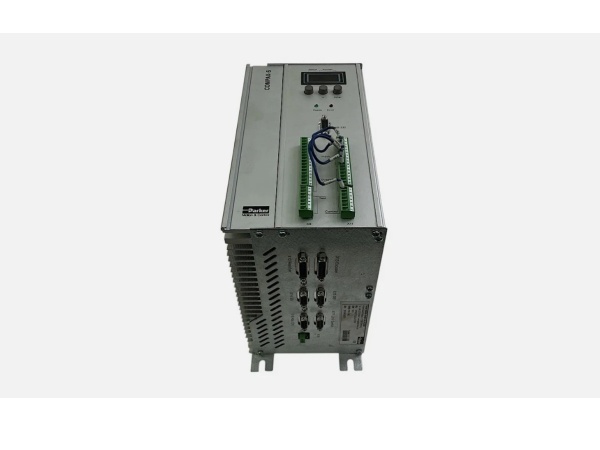
The PARKER CPX2500S/E3/F3 is a closed-loop servo pressure controller designed for precision process control in industrial automation. Positioned at Purdue Model Level 1, it bridges upstream control systems (e.g., Allen-Bradley ControlLogix, Siemens SIMATIC PCS 7) and downstream pneumatic actuators (e.g., proportional valves, air cylinders). Upstream, it receives analog (4-20 mA/0-10 V) or digital (Profibus DP) pressure setpoints; downstream, it outputs regulated pneumatic pressure (3-15 psi or 0-100 psi) to modulate actuator position, maintaining process variables (e.g., paint thickness, hydraulic force).
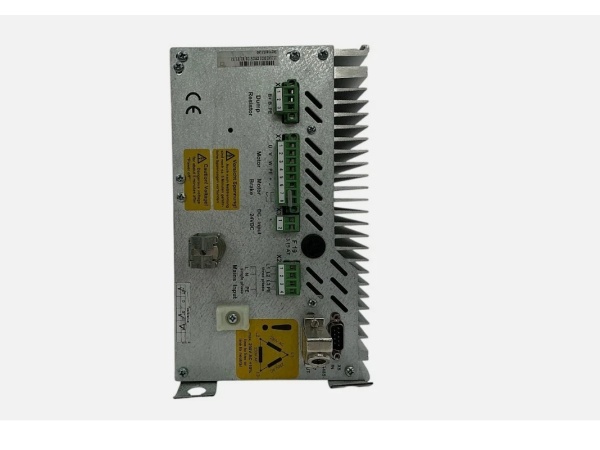
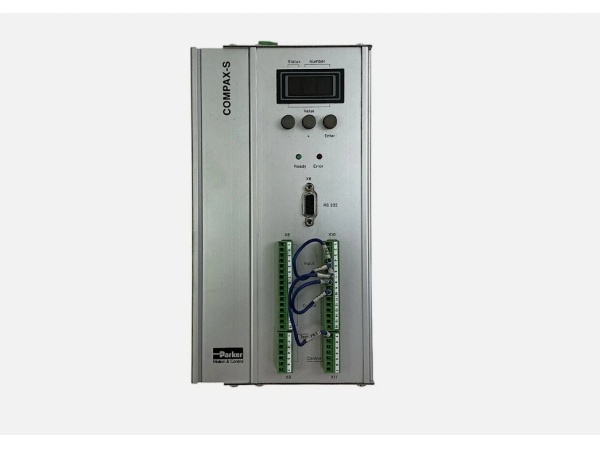
Its architecture leverages a piezoresistive pressure sensor for feedback, a DSP-based control loop for PID tuning, and a high-speed solenoid valve array for rapid pressure adjustment. The modular backplane (compatible with Parker CPX series I/O modules) enables hot-swapping of electronics (E3) or pressure ranges (F3), minimizing downtime during maintenance. The Profibus DP interface supports integration with legacy systems, while the NEMA 4X enclosure (IP65) ensures durability in harsh environments (paint booths, hydraulic presses).
Operational workflow: Setpoint reception → sensor feedback comparison → error calculation (PID) → solenoid valve actuation → pressure regulation. The 10 ms response time enables tight control of dynamic processes like automotive painting or injection molding.

Parker CPX2500S/E3/F3
Core Technical Specifications
-
Pressure Range: 3-15 psi (default) / 0-100 psi (F3 variant)
-
Accuracy: ±0.1% full scale (FS)
-
Response Time: <10 ms (0-90% of final value)
-
Input Signal: 4-20 mA (2-wire), 0-10 V (3-wire), Profibus DP (9.6 kbps–12 Mbps)
-
Output Signal: Regulated pneumatic pressure (3-15 psi/0-100 psi)
-
Control Mode: PID (Proportional-Integral-Derivative), manual override
-
Operating Temperature: -20°C to +60°C (ambient)
-
Protection Rating: NEMA 4X (IP65)
-
Power Supply: 24 VDC (±10%), 5 W max
-
Communication: Profibus DP (isolated)
-
Weight: ~1.2 kg (2.6 lbs)
Customer Value & Operational Benefits
Precision Reduces Process Variability
The CPX2500S/E3/F3’s ±0.1% FS accuracy and 10 ms response time minimize pressure fluctuations in critical processes. In automotive painting, this cuts paint thickness variation from ±5 µm to ±1 µm, reducing rework by 15%. For hydraulic press control, it maintains force consistency within 0.2%, preventing part defects.
Modular Design Cuts Downtime
Hot-swappable electronics (E3) and pressure range modules (F3) allow field replacement without system shutdown. A Tier-1 auto supplier reduced controller-related downtime by 30% using this feature, avoiding $50k/month in lost production. The Profibus DP interface also simplifies integration with existing PLCs, eliminating custom gateway hardware.
Durability in Harsh Environments
The NEMA 4X enclosure resists paint overspray, hydraulic fluid, and dust. In a steel mill application, the controller operated for 5 years without failure, compared to 2-year lifespans of previous models. Self-diagnostics (e.g., sensor drift alerts) enable proactive maintenance, cutting unscheduled repairs by 25%.
Parker CPX2500S/E3/F3
Field Engineer’s Notes (From the Trenches)
When installing the CPX2500S/E3/F3, always use Parker-recommended pneumatic tubing (e.g., PTFE-lined 4 mm ID) to minimize pressure lag. I once saw a site use PVC tubing, causing 50 ms delays and paint defects.Calibrate the sensor annually with a deadweight tester (e.g., Druck DPI 610). A 2023 calibration of a painting line revealed a 0.3% drift, corrected via the controller’s zero/span adjustments.Ground the Profibus DP shield at one end only (controller side) to avoid ground loops. A site had intermittent communication faults until they removed the shield ground at the PLC end.Vent the exhaust port to atmosphere—blocked vents cause pressure buildup and erratic output. Check the muffler (part # PXC-VM10) quarterly for clogging.
Real-World Applications
1. Automotive Paint Booth Pressure Control
A Ford supplier uses the CPX2500S/E3/F3 to regulate paint spray pressure (3-15 psi) in robotic painting systems. The controller’s PID loop adjusts pressure based on paint viscosity feedback, maintaining consistent film thickness (±1 µm) across vehicle bodies. This cut paint waste by 12% and reduced rework claims.
2. Hydraulic Press Force Regulation
A metal stamping plant uses the F3 variant (0-100 psi) to control hydraulic cylinder force (0-15 tons). The controller’s Profibus DP interface receives tonnage setpoints from a Siemens S7-1500 PLC, adjusting pressure to match die requirements. This prevented die damage from overpressure, extending die life by 20%.