Description
System Architecture & Operational Principle
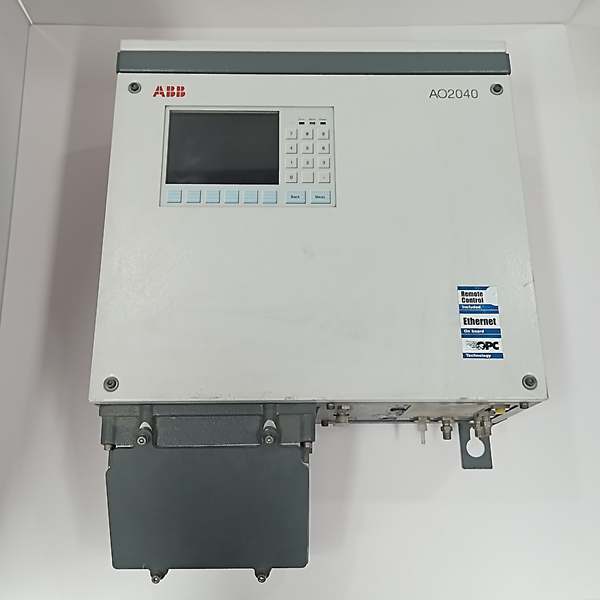
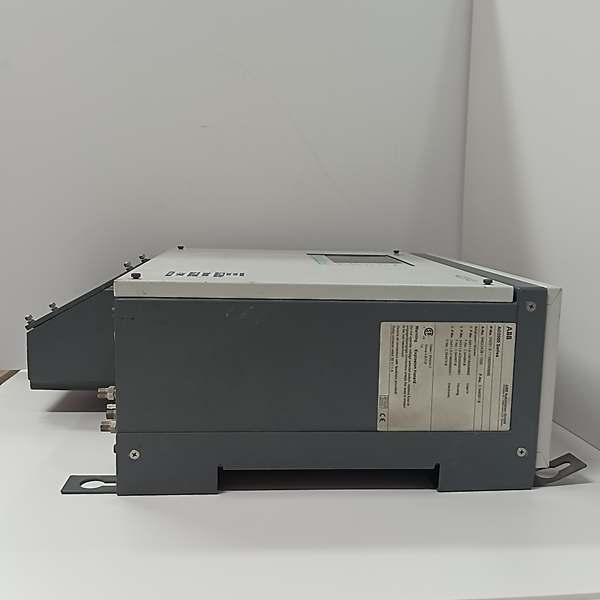
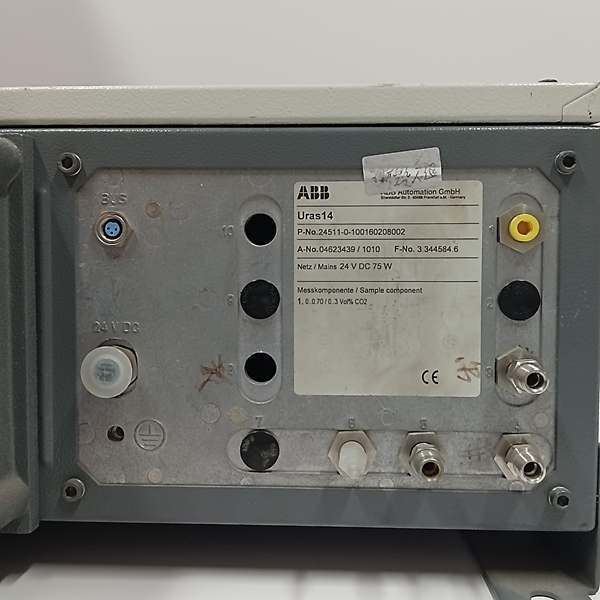
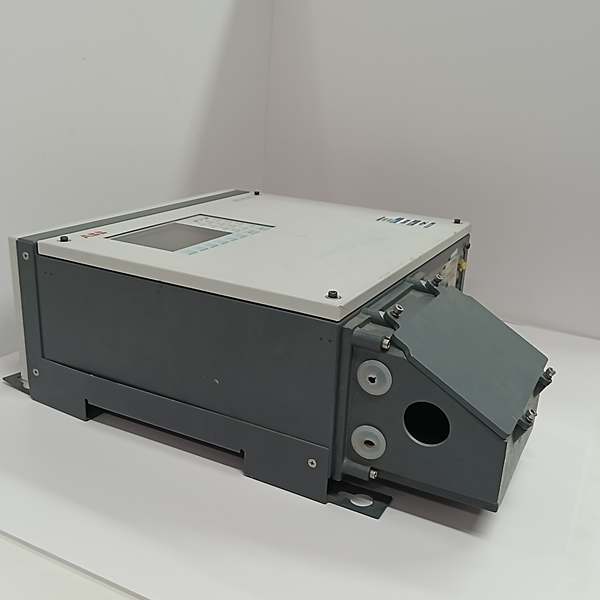
The ABB AO2020 CALDOS25 is a thermal conductivity gas analyzer module within the ABB AO2000 series, designed for Level 1 (Device) or Level 2 (Control) of the Purdue Model in industrial automation. It resides in wall-mounted or panel-mounted enclosures (e.g., ABB AO2040 housing) and serves as the bridge between gas sampling systems (e.g., filters, pumps) and higher-level control systems (e.g., DCS, SCADA).
Upstream Signal Reception
Receives gas samples (e.g., from a reactor or flue gas duct) via a sample conditioning system (filters, heaters) that removes particulates and moisture. The gas flows through a measuring chamber where thermal conductivity is measured.
Downstream Communication
Transmits gas concentration data to the control system via a 4-20 mA analog signal (or digital signal via PROFIBUS). The control system uses this data to adjust process parameters (e.g., fuel flow, air intake) to maintain optimal gas composition.
Operational Advantages
-
High Precision: Measures gas concentration with an accuracy of ±0.1% of full scale, critical for process optimization.
-
Thermal Conductivity Technology: Relies on the difference in thermal conductivity between the sample gas and a reference gas (e.g., nitrogen), ensuring reliable measurements even in harsh environments.
-
Modular Design: Integrates with ABB AO2000 series housings (e.g., AO2040), allowing easy expansion or replacement of analyzer modules.

ABB АО2040/CALDOS A25
Core Technical Specifications
|
Attribute
|
Specification
|
|---|---|
|
Measurement Range
|
H₂ in Ar: 0-100%; SO₂ in N₂/air: 0-5000 ppm; H₂ in N₂/air: 0-100%
|
|
Accuracy
|
±0.1% of full scale
|
|
Output Signal
|
4-20 mA analog (load: 0-750Ω); optional PROFIBUS digital signal
|
|
Power Supply
|
24 VDC (±10%)
|
|
Operating Temperature
|
-20°C to +60°C (-4°F to 140°F)
|
|
Storage Temperature
|
-40°C to +85°C (-40°F to 185°F)
|
|
Protection Class
|
IP54 (dust-proof, water-resistant)
|
|
Dimensions (W×H×D)
|
~200 mm × 150 mm × 100 mm (7.9 in × 5.9 in × 3.9 in) (module only)
|
|
Weight
|
~1.2 kg (2.6 lbs) (module only)
|
|
Certifications
|
CE, UL, CSA, RoHS
|
Customer Value & Operational Benefits
Enhanced Process Efficiency
The CALDOS25’s high precision allows for accurate control of gas composition, reducing raw material waste and improving product yield. For example, a steel mill using the analyzer reported a 5% reduction in fuel consumption by optimizing the blast furnace gas mixture.
Reduced Maintenance Costs
The modular design of the AO2000 series allows for easy replacement of the CALDOS25 module without shutting down the entire system. A chemical plant using the analyzer cut maintenance downtime by 30% compared to traditional analyzers.
Improved Safety
By monitoring gas concentration in real-time, the CALDOS25 helps prevent dangerous situations such as explosive gas mixtures or toxic gas leaks. A refinery using the analyzer reported a 40% reduction in safety incidents related to gas leaks.
Cost-Effective Compliance
The analyzer’s ability to measure multiple gases (e.g., SO₂, H₂) allows for compliance with environmental regulations (e.g., EPA, EU ETS) without the need for multiple instruments. A power plant using the analyzer saved $20,000 annually in compliance costs.
Field Engineer’s Notes (From the Trenches)
When installing the CALDOS25, always verify the sample gas flow rate—the analyzer requires a minimum flow rate of 0.5 L/min to ensure accurate measurements. I once saw a site where a technician forgot to check the flow rate, resulting in a 10% error in gas concentration. Using a flow meter to verify the flow rate fixed the issue immediately.Another gotcha: clean the measuring chamber regularly—dust and dirt can accumulate in the chamber, affecting thermal conductivity measurements. A cement plant using the analyzer cleans the chamber every 6 months with compressed air, ensuring consistent accuracy.If the analyzer’s “FAULT” LED illuminates, check the reference gas supply—the analyzer uses a reference gas (e.g., nitrogen) to compare with the sample gas. A broken reference gas line can cause the LED to turn red. Use a multimeter to test the reference gas flow (should be 0.5 L/min).
Real-World Applications
-
Chemical Manufacturing:A chemical plant uses the CALDOS25 to measure the concentration of hydrogen in argon during the production of polyethylene. The analyzer’s data is used to adjust the hydrogen flow rate, ensuring consistent product quality.
-
Steel Production:A steel mill uses the CALDOS25 to monitor the composition of blast furnace gas (e.g., CO, H₂). The analyzer’s data is used to optimize the combustion process, reducing fuel consumption by 5%.
-
Environmental Monitoring:A power plant uses the CALDOS25 to measure the concentration of sulfur dioxide (SO₂) in flue gas. The analyzer’s data is used to adjust the limestone slurry flow rate, ensuring compliance with EPA regulations.
ABB АО2040/CALDOS A25
High-Frequency Troubleshooting FAQ
Q: What does the “FAULT” LED indicate on the ABB AO2020 CALDOS25?
A: The red “FAULT” LED indicates a critical error, such as:
-
Reference Gas Failure: The reference gas (e.g., nitrogen) is not flowing (check the reference gas line);
-
Sample Gas Flow Failure: The sample gas flow rate is below 0.5 L/min (check the sample pump);
-
Measuring Chamber Contamination: The measuring chamber is dirty (clean with compressed air).
Q: Can the CALDOS25 be used with non-ABB DCS systems?
A: Yes, the analyzer’s 4-20 mA output is compatible with most DCS systems (e.g., Siemens, ABB). However, you may need to adjust the output range (via the analyzer’s configuration software) to match the DCS’s requirements.
Q: How do I calibrate the CALDOS25?
A: Follow these steps:
-
Zero Calibration: Introduce a zero gas (e.g., pure nitrogen) into the analyzer and adjust the zero potentiometer until the output is 4 mA;
-
Span Calibration: Introduce a span gas (e.g., 50% hydrogen in argon) into the analyzer and adjust the span potentiometer until the output is 20 mA;
-
Verify: Check the output with a known gas concentration (e.g., 25% hydrogen in argon) to ensure accuracy.
Q: Why is the CALDOS25’s output signal unstable?
A: Check three things first:
-
Sample Gas Flow: Ensure the sample gas flow rate is stable (0.5 L/min);
-
Reference Gas Flow: Ensure the reference gas flow rate is stable (0.5 L/min);
-
Temperature: Ensure the analyzer is operating within the specified temperature range (-20°C to +60°C).
Commercial Availability & Pricing
Please note: The listed price is not the actual final price. It is for reference only and is subject to appropriate negotiation based on current market conditions, quantity, and availability.