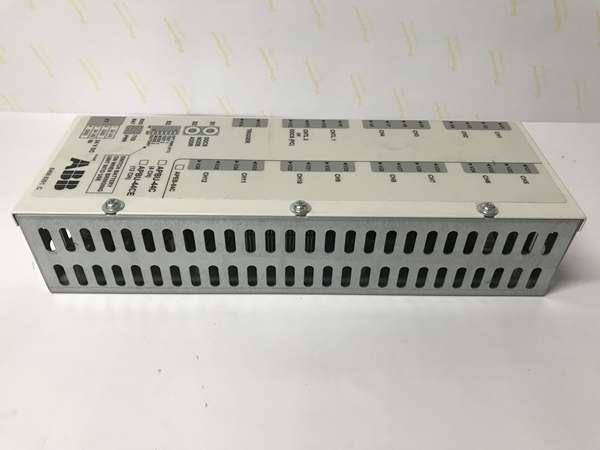
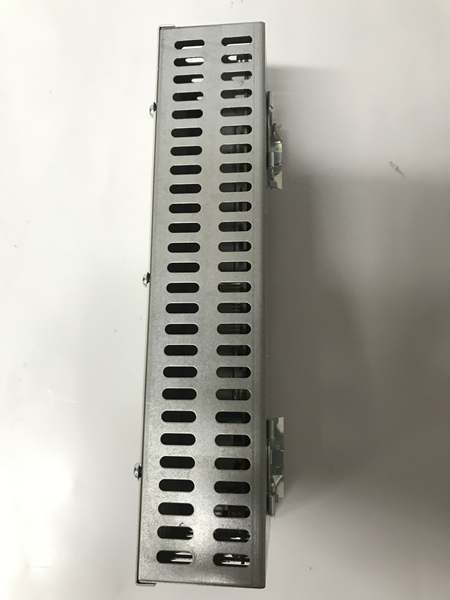
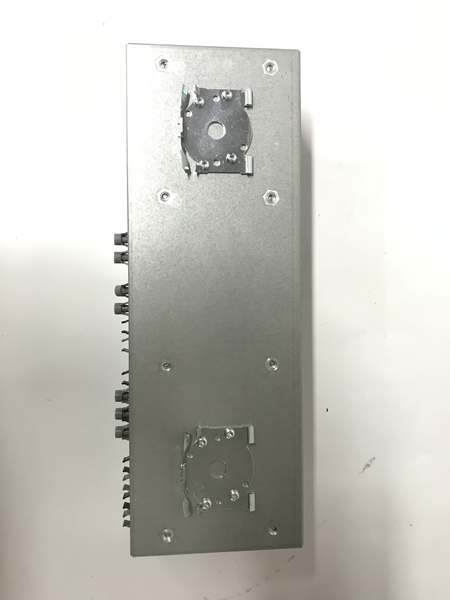
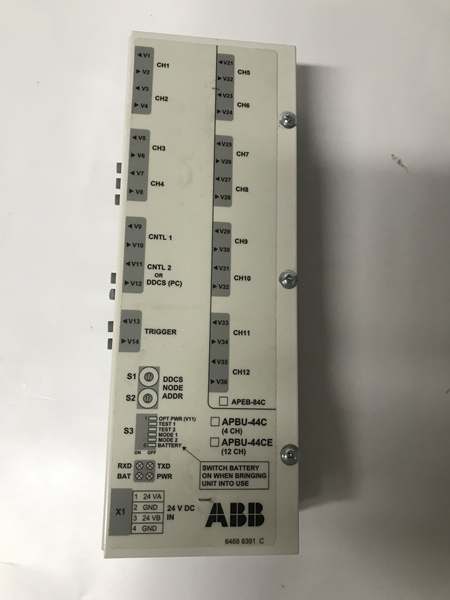
Description
System Architecture & Operational Principle
The ABB APBU-44C is a critical component in the Level 1 (Device) or Level 2 (Control) of the Purdue Model, depending on the application. It resides in the control cabinet of an ACS800 multi-drive system and acts as the backbone for communication between the RDCU (Drive Control Unit) and up to four inverter/supply modules.
Upstream Communication: Receives command signals (e.g., speed setpoints, start/stop commands) from the RDCU via fiber optic cables (V9/V10 terminals). The module aggregates these signals and distributes them to the connected drive modules.
Downstream Communication: Transmits real-time data (e.g., motor current, voltage, temperature) from each drive module back to the RDCU using fiber optic links (V1-V4 terminals). This bidirectional communication enables precise coordination and monitoring of the multi-drive system.
The APBU-44C’s fiber optic-based PPCS (Power, Protection, Control, Surveillance) architecture is a key advantage: it eliminates electromagnetic interference (EMI) common in industrial environments, ensuring reliable data transmission even in high-noise areas. The module also includes a data logger that records critical power stage parameters, facilitating proactive fault detection and root-cause analysis. For example, if a drive module overheats, the data logger captures the temperature rise trend, helping engineers identify the issue before it leads to a shutdown.
Core Technical Specifications
-
Physical Interface: 4x fiber optic ports (V1-V4) for drive modules; 2x fiber ports (V9/V10) for RDCU; 2x fiber ports (V11/V12) for PC/DDCS; 2x trigger ports (V13/V14) for external devices.
-
Signal Type: Fiber optic (Agilent 10MBd transceivers); supports POF (Plastic Optical Fiber) and HCS (Hard Clad Silica) cables.
-
Channel Density: 4 channels (supports up to 4 ACS800 modules).
-
Communication Protocol: PPCS (ABB’s proprietary protocol for drive communication); 8 Mbit/s data rate.
-
Data Logger: Records voltage, current, temperature, and power (stores up to 6 months of data with battery backup).
-
Power Supply: 24V DC (19.2-28.8V DC range); dual power inputs for redundancy.
-
Power Consumption: < 5W (typical).
-
Environmental Tolerance: -20°C to +70°C operating; -40°C to +85°C storage.
-
Dimensions: 75mm x 45mm x 8mm (HxWxD); DIN rail mountable (7.5x35mm EN50022 standard).
-
Weight: 0.8 kg (1.76 lbs).

ABB APBU-44C
Customer Value & Operational Benefits
Reliable Multi-Drive Coordination
The APBU-44C’s fiber optic links eliminate EMI, ensuring consistent communication between the RDCU and drive modules. This is critical for applications like conveyor systems or pumps, where synchronized operation prevents mechanical stress and extends equipment life.
Proactive Fault Detection
The integrated data logger captures real-time power stage data, enabling predictive maintenance. For example, if a drive module’s current starts to drift, the data logger alerts engineers to the issue before it causes a failure—reducing unplanned downtime by up to 30%.
Simplified System Expansion
The module supports up to four drive modules, allowing facilities to scale their ACS800 systems without adding complex wiring. This reduces installation time and costs, especially in retrofits where space is limited.
Reduced Maintenance Costs
The APBU-44C’s hot-swappable design allows for replacement without shutting down the entire system. This minimizes production interruptions and lowers maintenance labor costs—key for 24/7 operations like water treatment or manufacturing.
Field Engineer’s Notes (From the Trenches)
When installing the APBU-44C, always use fiber optic cleaning kits (alcohol wipes, lint-free cloths) to clean the fiber connectors before mating. Dust or oil on the connectors can cause signal attenuation—something I’ve seen cost hours of troubleshooting time.Another gotcha: verify the fiber type (POF vs. HCS) matches your cable infrastructure. The APBU-44C supports both, but using the wrong type will result in poor signal quality. Check the module’s label or the ACS800 manual for the recommended fiber type.If you’re replacing an older APBU-44C, back up the data logger’s memory using the RDCU software before removal. The module stores critical historical data, and losing it can delay fault analysis. Use a USB drive to save the data to a PC.
Real-World Applications
-
Conveyor Belt Systems in ManufacturingThe APBU-44C connects four ACS800 inverter modules to a single RDCU, enabling synchronized speed control of a long conveyor belt. The data logger monitors each drive’s current, alerting engineers to overloaded motors before they burn out.
-
Pump Stations in Water TreatmentUsed to aggregate data from four ACS800-driven pumps, the APBU-44C transmits real-time flow rate and pressure data to a SCADA system. The fiber optic links eliminate EMI from nearby motors, ensuring reliable communication even in wet, harsh environments.
ABB APBU-44C
High-Frequency Troubleshooting FAQ
Q: What do the LEDs on the ABB APBU-44C indicate?
A: The module has four LEDs:
-
PWR: Green (on) indicates the 5V DC power supply is normal.
-
RXD: Yellow (blinking) indicates data is being received from the RDCU.
-
TXD: Yellow (blinking) indicates data is being sent to the RDCU.
-
BAT: Red (off) indicates the backup battery voltage is low (below 2.8V). Replace the battery if this LED stays off.
Q: Can the ABB APBU-44C be used with ACS880 drives?
A: No, the APBU-44C is specifically designed for ACS800 series drives. For ACS880 systems, use the ABB APBU-88C branching unit, which is compatible with the newer drive platform.
Q: How do I reset the APBU-44C’s data logger?
A: To reset the data logger, follow these steps:
-
Power down the APBU-44C.
-
Remove the cover and locate the battery (position 6 on the circuit board).
-
Disconnect the battery for 10 seconds, then reconnect it.
-
Power up the module— the data logger will be reset to factory defaults.
Q: What is the maximum length of the fiber optic cables for the APBU-44C?
A: The maximum cable length depends on the fiber type:
-
POF (Plastic Optical Fiber): 20 meters (short mode) or 30 meters (long mode, enabled via DIP switch S3).
-
HCS (Hard Clad Silica): 50 meters (short mode) or 200 meters (long mode).
Commercial Availability & Pricing
Please note: The listed price is not the actual final price. It is for reference only and is subject to appropriate negotiation based on current market conditions, quantity, and availability.