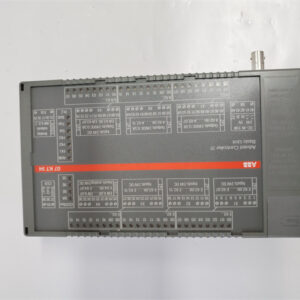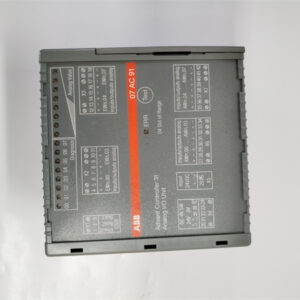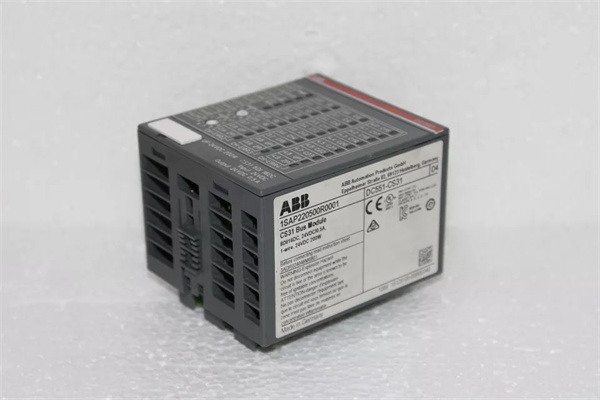
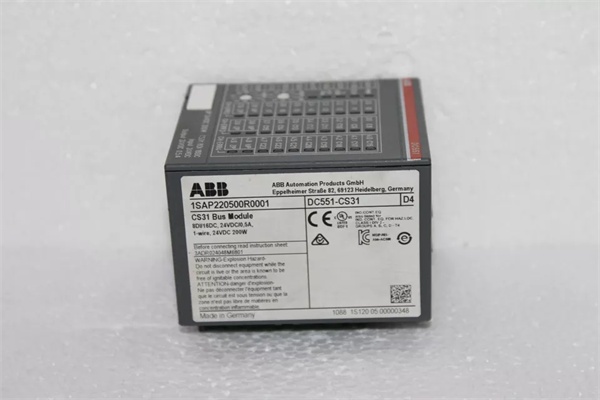
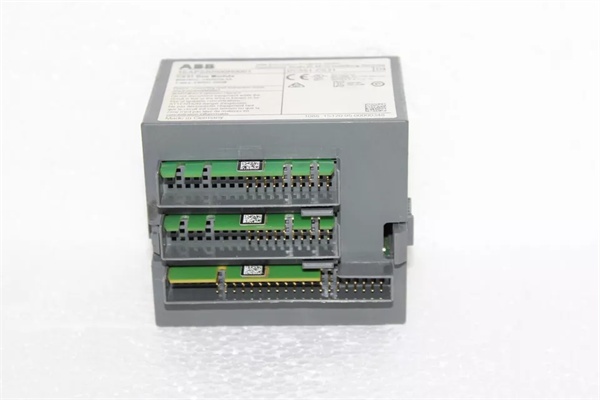
ABB DC551-CS31 1SAP220500R0001 | CS31 Communication Coupler for AC500

  • Model: DC551-CS31
  • Alt. P/N: 1SAP220500R0001
  • Series: AC500 I/O Series
  • Type: Communication Coupler / Fieldbus Interface
  • Key Feature: CS31 Protocol Support (Master/Slave)
  • Primary Use: Connecting AC500 PLCs to CS31 distributed I/O stations
Manufacturer:
Part number: ABB DC551-CS31 1SAP220500R0001
Our extensive catalogue, including : ABB DC551-CS31 1SAP220500R0001 , is available now for dispatch to the worldwide.
  • Full 12-month warranty
  • Available for dispatch immediately
  • We deliver worldwide

Description

Key Technical Specifications
  • Model Number: DC551-CS31
  • Manufacturer: ABB
  • Protocol Support: CS31 (Master/Slave)
  • Ports: 2 (CS31 bus connections for daisy-chain topology)
  • Data Rate: Up to 1.5 Mbps
  • Operating Temperature: -25°C to +55°C
  • Isolation: 500V AC (port-to-bus)
  • Power Supply: 24V DC (from AC500 rack backplane)
  • Power Consumption: 2W (typical)
  • I/O Capacity: Up to 32 I/O modules per CS31 station
  • Dimensions: 25mm x 128mm x 115mm (width x height x depth)
  • Weight: 0.18kg
  • Certifications: CE, UL, cULus

    ABB DC551-CS31 1SAP220500R0001
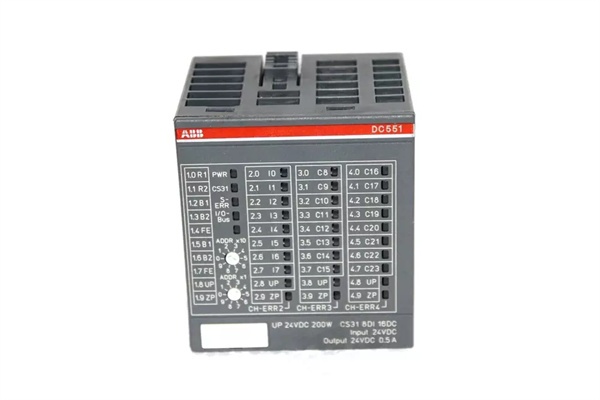
    ABB DC551-CS31 1SAP220500R0001
Field Application & Problem Solved
In the field, the biggest challenge when dealing with legacy ABB systems is integrating older CS31 fieldbus I/O into a modern AC500 PLC architecture. You can’t just plug those old I/O stations into the new rack; the CPU doesn’t speak CS31. This coupler solves that exact problem. It acts as a protocol translator, bridging the gap between the AC500’s internal communication and the established CS31 network used by existing distributed I/O modules.
You will typically find this module in retrofits of older Advant OCS or System 800xA installations, or in new facilities where cost-effective CS31 I/O stations are deployed. Its core value is preserving previous hardware investments and simplifying system expansion. By handling all CS31 polling and data framing, it offloads the AC500 CPU, preventing scan time overruns and ensuring deterministic control of critical processes. Essentially, it lets you keep running proven I/O while upgrading the core control system.
Installation & Maintenance Pitfalls (Expert Tips)
Incorrect Bus Termination: A common rookie mistake is messing up the CS31 bus termination. The daisy-chain requires a 150-ohm resistor at both physical ends. An open or misplaced terminator causes signal reflections, leading to data corruption and intermittent faults. Always verify termination with a multimeter before powering up.
Improper Shield Grounding: The CS31 cable’s shield must be grounded at one end only, typically at the power supply for the I/O station. Grounding it at both ends creates a ground loop, which introduces noise and causes random communication timeouts. If you’re getting noise-related faults, check the shield grounding first.
Address Conflicts: Every CS31 station on the bus must have a unique address, set via DIP switches or software. A duplicate address will bring the entire segment down. Before commissioning, document every station’s address to avoid conflicts.
Power Budget Miscalculation: The DC551-CS31 gets its power from the rack, but the CS31 I/O stations require local power. Rookies often forget to verify that the local 24V supply can handle the total current draw of all modules in the station. An overloaded supply leads to brownouts and erratic behavior.
Software Configuration Errors: The module must be configured in Automation Builder with the correct baud rate, station addresses, and I/O mapping. A mismatch here results in a “no communication” fault. Always download the project after any configuration change and verify the online status.

ABB DC551-CS31 1SAP220500R0001

ABB DC551-CS31 1SAP220500R0001
Technical Deep Dive & Overview
The DC551-CS31 is an intelligent communication coupler designed for the AC500 I/O system. It functions as a protocol converter and data concentrator. The AC500 CPU communicates with the coupler via the rack backplane using a high-speed internal protocol. The module then manages the CS31 fieldbus, which operates as a daisy-chained multidrop network.
Internally, it handles all low-level CS31 protocol tasks: addressing each station, constructing data frames, performing error checking, and managing bus arbitration. It continuously polls the connected I/O stations (slaves) for input data, aggregates the responses, and sends a consolidated data packet back to the CPU. Conversely, it receives output data from the CPU and transmits it to the appropriate stations. This architecture isolates the CPU from the complexities and timing demands of the fieldbus, ensuring that the main control program runs without interruption. It is a critical component for integrating legacy or cost-sensitive CS31 I/O into a modern, deterministic control strategy.
We've got you covered
We give you access to a global supply of automation parts at your fingertips, ensuring that manufacturers around the world can avoid unnecessary downtime and continue to do what they do best – making our world possible.
  • Full 12-month warranty on all components
  • Dedicated after-sales support
  • Same-day dispatch on 1000s of parts
  • All units are fully tested
Continue Searching
We're here when you need us
What happens next?
  • 1. Email confirmation
    You will get an email confirming that we have received your enquiry.
  • 2. Dedicated Account Manager
    One of our team will be in touch to confirm your part(s) specification and condition.
  • 3. Your quote
    You will receive a comprehensive quote tailored to your specific needs.