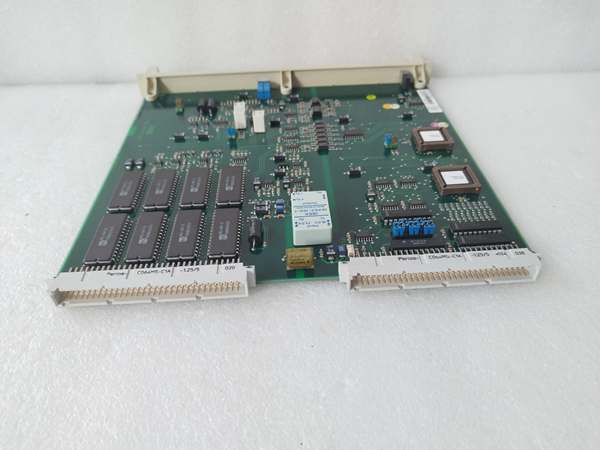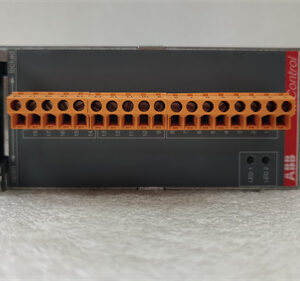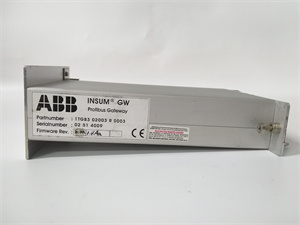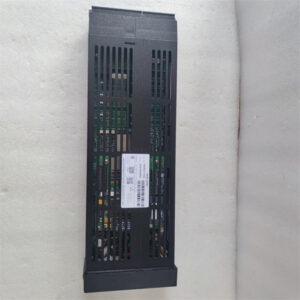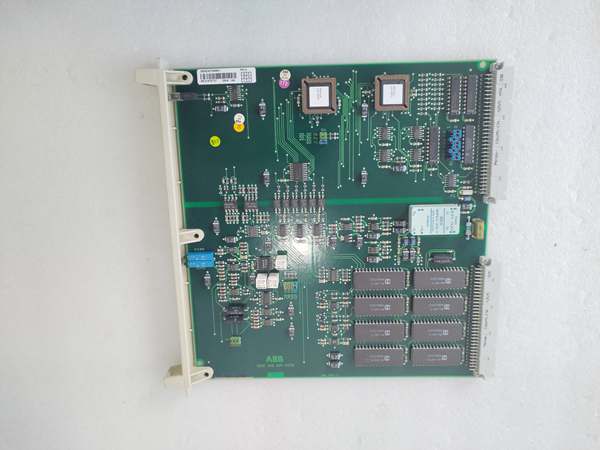
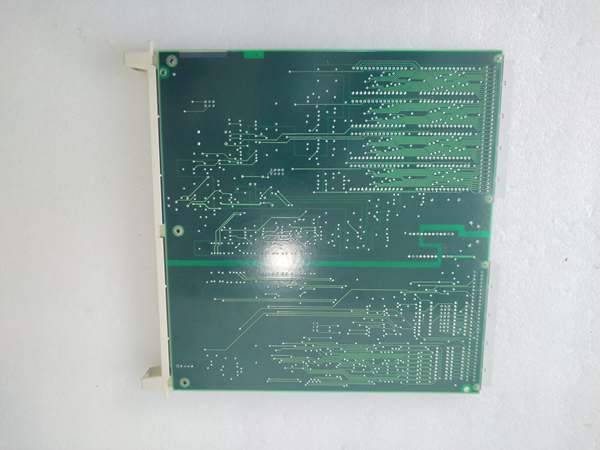
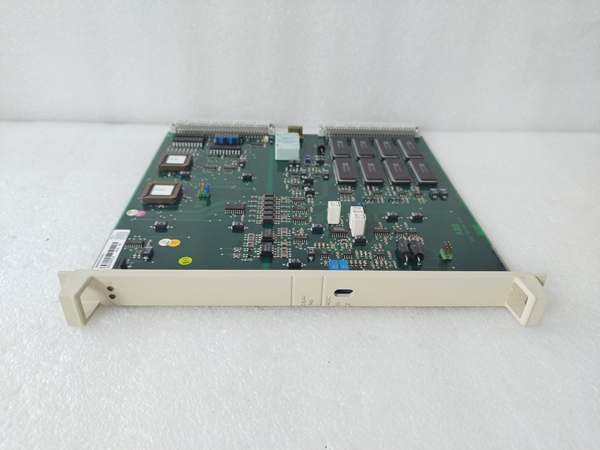
ABB DSAI146 | Symphony Plus Series 16-Channel Analog Input Module

  • Brand: ABB
  • Model: DSAI146
  • Product Type: Analog Input Module
  • Series: Symphony Plus I/O Series
  • Core Function: Provides 16-channel analog signal input (4-20mA, 0-10V, RTD) for ABB Symphony Plus DCS, converting sensor signals to digital data for process monitoring and control.
  • Key Specs: 16 channels, 0.1% measurement accuracy, channel-to-channel isolation (1500Vrms), -25°C to +60°C operating temperature.
Manufacturer:

Our extensive catalogue, including , is available now for dispatch to the worldwide.

Description

DSAI146: Product Overview
This component is a 16-channel analog input module within ABB’s Symphony Plus I/O Series, designed for industrial process signal acquisition in distributed control systems (DCS). In a DCS architecture, it functions as a field-to-controller interface, positioned in remote I/O stations or controller chassis to acquire analog signals from sensors (e.g., pressure transmitters, temperature transducers, level gauges). Its role is to condition low-level analog inputs (4-20mA, 0-10V, RTD), convert them to high-resolution digital data via 16-bit ADC, and transmit processed values to Symphony Plus controllers (e.g., HS-series) for real-time monitoring and control.
The core functionality involves signal conditioning (filtering, amplification, linearization) for multiple input types, cold-junction compensation for RTDs, and error checking (e.g., open-circuit detection). It supports 16 independent channels, each configurable via software for 4-20mA (2-wire/4-wire), 0-10V, or RTD (PT100) inputs. The module includes built-in diagnostics (e.g., sensor fault, signal saturation) and communicates with controllers via the S800 I/O bus, ensuring deterministic data transfer.
It belongs to the Symphony Plus I/O Series, optimized for modularity, backward compatibility, and integration with ABB’s legacy and current control systems. The platform’s benefits include standardized mounting to Symphony Plus I/O racks, seamless configuration via ABB’s Control Builder M software, and adherence to IEC 61131-2 (signal accuracy) and IEC 61000-4 (EMC)—ensuring interoperability with global sensor suppliers and simplified system upgrades.

ABB DSAI146

ABB DSAI146

DSAI146: Technical Specifications
  • Model Number: DSAI146
  • Manufacturer: ABB
  • Product Type: Analog Input Module
  • Number of Channels: 16 (independent, software-configurable)
  • Input Types: 4-20mA (2/4-wire), 0-10V DC, RTD (PT100, 2/3/4-wire)
  • Resolution: 16-bit ADC (65536 steps for precise measurement)
  • Accuracy: ±0.1% of reading (4-20mA/0-10V), ±0.2% of reading (RTD)
  • Electrical Isolation: Channel-to-channel and channel-to-bus (1500Vrms)
  • Power Supply: 24V DC (±10%, drawn from Symphony Plus I/O rack backplane)
  • Operating Temperature: -25°C to +60°C
  • Storage Temperature: -40°C to +85°C
  • Common Mode Rejection Ratio (CMRR): >90dB at 50/60Hz
  • Communication Interface: S800 I/O bus (proprietary, high-speed serial)
  • Dimensions: 198mm x 25mm x 120mm (WxHxD, S800 I/O form factor)
  • Weight: 0.28kg
Core Features & Customer Value
The module’s design prioritizes signal integrity, scalability, and operational efficiency. The 16-channel density reduces the number of I/O modules required per system—for example, a reactor requiring 32 analog inputs can be served by two DSAI146 modules instead of four lower-density alternatives, saving cabinet space and wiring costs. For engineers, this consolidation simplifies commissioning and inventory management.
Channel-to-channel isolation (1500Vrms) prevents ground loops and electromagnetic interference (EMI) from adjacent channels—essential in environments with heavy machinery (e.g., steel mills), where motor drives generate noise. This ensures accurate measurement of low-level signals (e.g., 4-20mA from a pressure transmitter near a VFD), avoiding false process alarms.
16-bit resolution and ±0.1% accuracy capture subtle signal variations critical for process control. In a chemical reactor, this precision distinguishes between normal temperature fluctuations and impending catalyst depletion, enabling proactive adjustments. RTD 3/4-wire support eliminates lead resistance errors in long cable runs (up to 500 meters), maintaining accuracy in large facilities like oil refineries.
Integration with Control Builder M software streamlines configuration: engineers define input types, scaling, and alarm thresholds via a graphical interface, with automatic generation of diagnostic tags. This consistency with other Symphony Plus I/O modules reduces training time and minimizes configuration errors. Built-in diagnostics (e.g., sensor open-circuit alerts) enable maintenance teams to replace faulty sensors before process drift occurs.
Typical Applications
In a petrochemical distillation column, the module acquires 16 4-20mA signals from temperature transmitters (TTs) and pressure transmitters (PTs) monitoring column stages. The 1500Vrms isolation prevents EMI from nearby pumps, while 0.1% accuracy detects minor temperature deviations indicating reflux ratio imbalance, preventing product contamination.
At a power plant’s boiler drum, it connects 8 RTD sensors (3-wire PT100) to monitor water level and 8 4-20mA pressure transmitters for steam drum pressure. The -25°C to +60°C operating range suits unheated control rooms, and diagnostics alert operators to a failed RTD (open circuit) before level control instability.
In a wastewater treatment plant, the module reads 16 0-10V signals from pH meters and turbidity sensors. The S800 I/O bus ensures fast data transfer to the Symphony Plus controller, which adjusts chemical dosing pumps in real time. Channel isolation prevents noise from variable frequency drives (VFDs) on aerators from corrupting pH measurements.

ABB DSAI146

ABB DSAI146