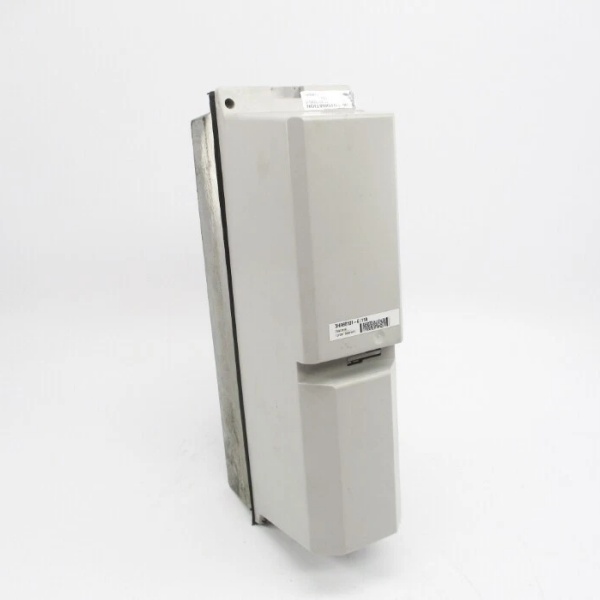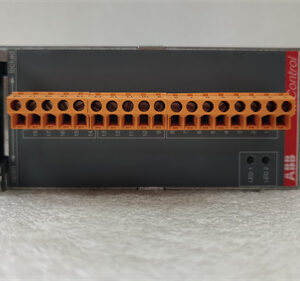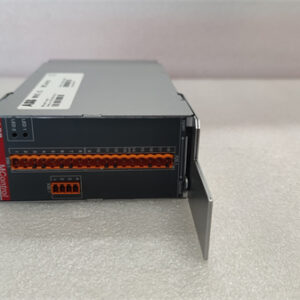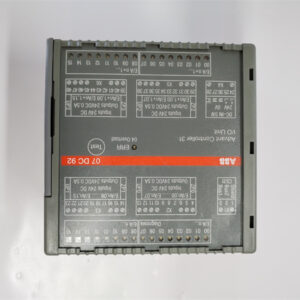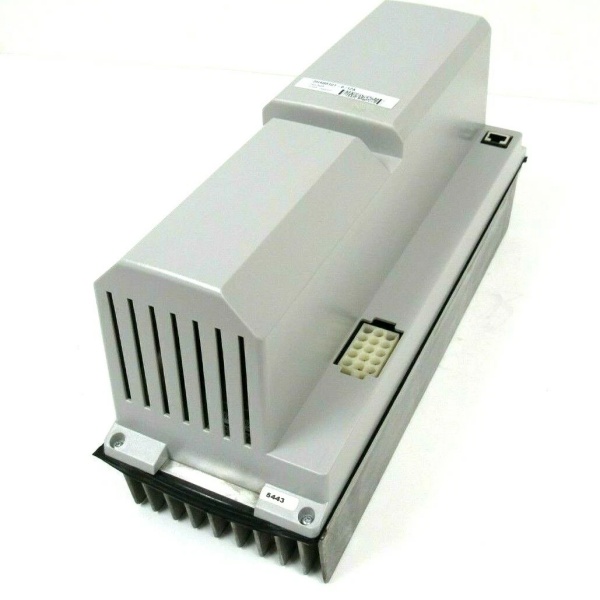
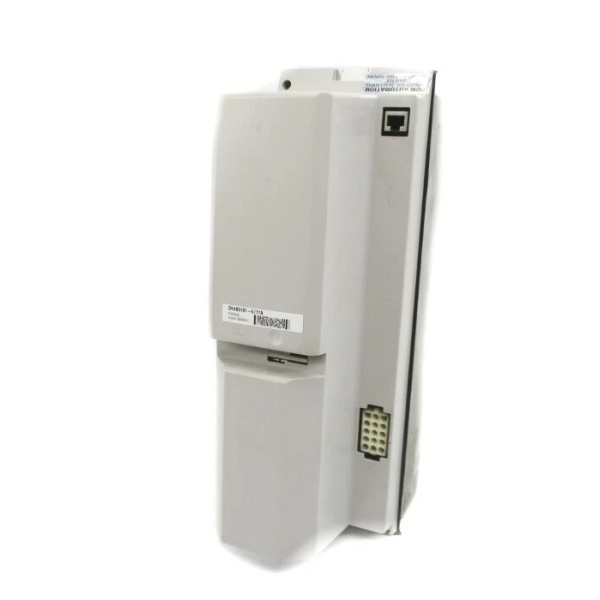
ABB DSQC346B | Industrial Robot I/O Interface for S3 Series Controllers

  • Brand: ABB
  • Model: DSQC346B
  • Product Type: Robot Controller Communication Module
  • Series: S3 Robot Controller Accessories
  • Core Function: Facilitates DeviceNet protocol communication between ABB S3 series robot controllers and distributed I/O modules/field devices; manages I/O signal mapping and data exchange.
  • Key Specs: DeviceNet (up to 500 kbps), 16 digital I/O channels (8 in/8 out), 500V AC isolation.
Manufacturer:

Our extensive catalogue, including , is available now for dispatch to the worldwide.

Description

DSQC346B: Product Overview
The DSQC346B is a communication module designed for integration with ABB S3 series robot controllers, serving as a protocol gateway to enable DeviceNet-based connectivity with distributed I/O systems. Its role is to bridge the robot controller with peripheral devices—such as sensors, actuators, and I/O stations—in automated manufacturing cells. In robotic applications like welding, assembly, or material handling, it ensures synchronized operation by exchanging discrete I/O signals (e.g., part presence, gripper status, safety interlocks) between the robot and its tooling or surrounding equipment.
Functionally, the module processes 16 digital I/O channels (8 inputs, 8 outputs) via DeviceNet (CIP protocol, up to 500 kbps), supporting cyclic data exchange for real-time control and acyclic messages for diagnostics. It belongs to the S3 robot controller accessory family, a platform known for modular expandability, compatibility with ABB RobotStudio simulation software, and seamless integration with factory automation networks. Benefits include reduced wiring complexity through standardized fieldbus communication, simplified system expansion via plug-and-play modules, and unified configuration workflows that minimize commissioning time.

ABB DSQC346B

ABB DSQC346B

DSQC346B: Technical Specifications
  • Model Number: DSQC346B
  • Manufacturer: ABB
  • Product Type: Robot Controller Communication Module
  • Protocol Support: DeviceNet (CIP, up to 500 kbps, V1-compliant)
  • Number of I/O Channels: 16 (8 digital inputs, 8 digital outputs)
  • Input Type: 24V DC, sinking/sourcing (configurable per channel)
  • Output Type: 24V DC, sourcing (0.5A max per channel)
  • Isolation Voltage: 500V AC (channel-to-bus, channel-to-channel)
  • Operating Temperature: 0°C to +55°C
  • Humidity Range: 5% to 95% non-condensing
  • Power Supply: 24V DC (from S3 controller backplane, 20.4-28.8V DC range)
  • Power Consumption: 2.0W (typical)
  • Dimensions: 160mm x 30mm x 100mm (width x height x depth)
  • Weight: 0.25kg
  • Certifications: CE, UL, cULus, RoHS
Core Features & Customer Value
The DSQC346B addresses key challenges in robotic I/O integration. Its 16-channel density (8 in/8 out) reduces the need for multiple adapters in systems with moderate I/O requirements—for example, a pick-and-place robot needing end-effector sensors and pneumatic valve controls. This consolidation simplifies wiring harnesses and lowers material costs.
Galvanic isolation (500V AC) protects the S3 controller from ground loops and voltage transients common in industrial environments, ensuring signal integrity for critical operations like part presence detection. Configurable sinking/sourcing inputs accommodate diverse field devices without external converters, streamlining retrofits of legacy sensors.
Hot-swap capability allows replacement without shutting down the robot, minimizing downtime during maintenance—a critical advantage in high-volume production lines. Built-in diagnostics (LED indicators for power, communication, and I/O status) enable quick fault identification; for instance, a faulty proximity switch can be isolated via error codes without disrupting production. Integration with ABB RobotStudio software permits virtual commissioning of I/O mappings, reducing on-site configuration time by 15-20%.

ABB DSQC346B

ABB DSQC346B

Typical Applications
The DSQC346B is deployed in S3-controlled robotic systems requiring DeviceNet communication. In an automotive assembly plant’s welding line, it connects an S3 controller to 8 weld gun proximity switches (inputs) and 8 pneumatic cylinder valves (outputs), synchronizing spot welding with part positioning.
In an electronics manufacturing facility, the module interfaces a pick-and-place robot’s controller with DeviceNet-linked vacuum sensors (inputs) and gripper actuators (outputs), ensuring precise component handling. Its 0°C cold-start capability supports climate-controlled cleanrooms.
In a logistics warehouse, a palletizing robot uses the module to communicate with DeviceNet I/O stations monitoring stack height sensors (inputs) and conveyor start/stop commands (outputs), optimizing throughput in high-volume operations.