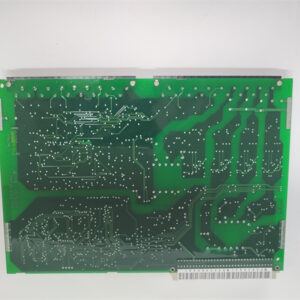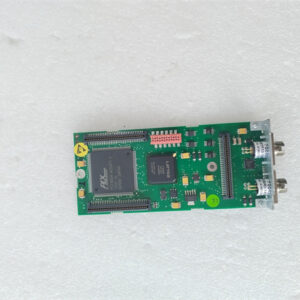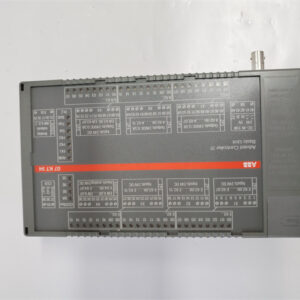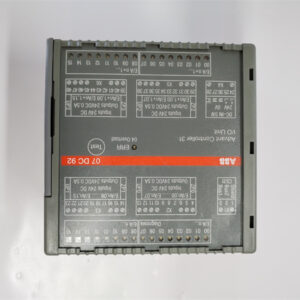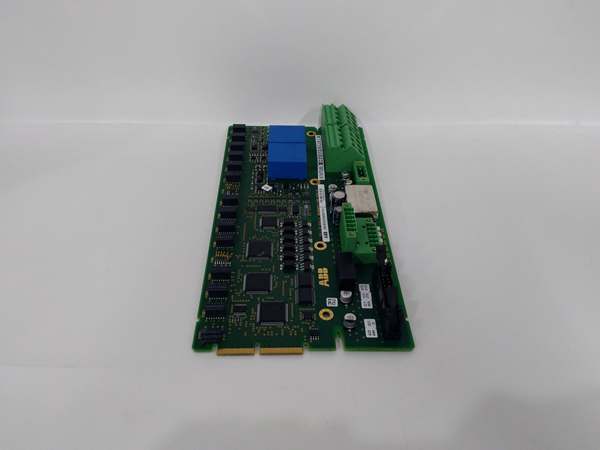
Description
Key Technical Specifications
Model Number: ABB GFD212A
Manufacturer: ABB
Module Type: Current control + digital I/O expansion module
Number of Channels: 2 (dual-channel control)
Input Voltage Range: 24V DC / 220V AC (selectable)
Output Signals: 0-10V DC or 4-20mA (configurable)
Rated Output Current: Up to 2A
Operating Temperature: -25°C to 70°C (-13°F to 158°F)
Storage Temperature: -40°C to 85°C (-40°F to 185°F)
Isolation: Channel-to-channel isolation >40:1
Communication Protocols: PROFINET, DeviceNet, CANopen, RS-485
防护等级 (IP Rating): IP65 (dust/water-resistant)
Mounting: DIN rail (standard industrial cabinet installation)
Power Consumption: 15W (max load)
Dimensions: 150mm x 100mm x 50mm
Weight: 0.5kg
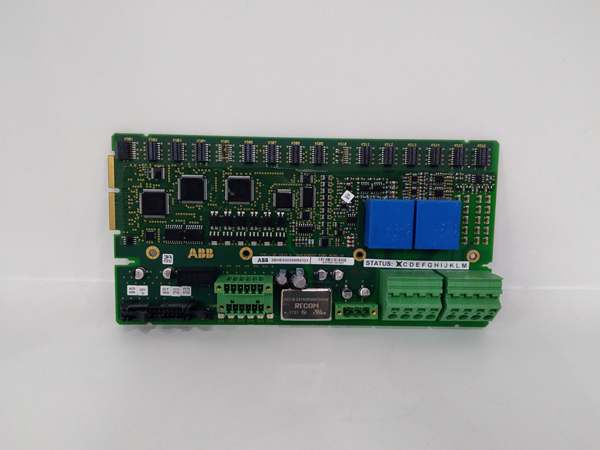
ABB GFD212A
Field Application & Problem Solved
In industrial automation—manufacturing plants, power stations, and process facilities—controlling motors, pumps, and compressors requires precise current regulation and flexible I/O integration. The challenge? Many control modules force a choice between current control or I/O expansion, requiring multiple units to handle mixed tasks. Others lack compatibility with ABB’s ACS880 drives (a workhorse in industrial settings) or fail to communicate with diverse system protocols, creating integration bottlenecks. The ABB GFD212A solves these gaps by combining dual-channel current control with I/O expansion and multi-protocol support in a compact form.
You’ll find this module in applications like regulating motor speed/torque for conveyor systems in manufacturing, controlling excitation current for generators in substations, or expanding I/O points for pump stations in water treatment plants. It’s a critical component in ABB ACS880 drive setups, where it adds precise current monitoring to motor control loops—ensuring energy efficiency and preventing overload damage. In industrial automation lines, it’s used to sync robotic arms with conveyor speeds, relying on its fast response time to maintain process alignment. It also excels in retrofits, where it integrates legacy sensors and actuators with modern control systems via PROFINET or CANopen.
Its core value is versatility and seamless integration. By combining current control and I/O expansion, it reduces cabinet space and wiring complexity—eliminating the need for separate modules. The multi-protocol support eliminates communication silos, allowing it to work with existing system architectures without costly upgrades. Built-in protection (overcurrent, short-circuit) prevents equipment damage during fault conditions, while its IP65 rating lets it operate in dusty or damp environments (e.g., outdoor pump stations) where standard modules fail. For plant operators, this means lower installation costs, fewer compatibility issues, and reliable performance across diverse applications.
Installation & Maintenance Pitfalls (Expert Tips)
Input Voltage Selection (Don’t Mix 24V DC/220V AC): The module supports both 24V DC and 220V AC input, but rookies often wire the wrong voltage without checking the selector switch (hidden on the side panel). Using 220V AC on a 24V DC setting fries the power module instantly; reverse the mistake, and the module won’t power on. Always verify the system’s power supply first, set the switch accordingly, and use a multimeter to confirm voltage before connecting.
Protocol Configuration Mismatch (No Communication = Dead Module): The GFD212A’s multi-protocol support requires software configuration (via ABB’s Control Builder) to match the system’s protocol (e.g., PROFINET vs. DeviceNet). Rookies often skip this step, leaving the module in default mode—resulting in no data exchange with the controller. After installation, access the module’s settings via the communication port, select the correct protocol, and match baud rates/addresses to the system master. Test communication with a laptop before commissioning to avoid downtime.
DIN Rail Mounting Torque (Loose = Vibration Damage): The module uses DIN rail mounting, but rookies often secure it with insufficient torque. Industrial environments have constant vibration, which loosens poorly mounted modules—causing intermittent connections or bent DIN rail clips. Use the supplied mounting clips and torque the retaining screws to 1.5 Nm. Ensure the module is seated flush against the rail; a tilted mount creates stress on wiring terminals over time.
Ignoring Terminal Wiring Gauge (Voltage Drop = Inaccurate Control): For current control channels (4-20mA), using undersized wire (22 AWG or smaller) over long runs (over 30 meters) causes voltage drop—leading to imprecise current regulation. The module’s output requires consistent voltage to maintain signal integrity. Use 18 AWG shielded twisted-pair wire for current control channels, and keep wiring away from high-voltage power lines (minimum 30cm separation) to avoid EMI-induced signal drift. For I/O wiring, 20 AWG is acceptable for runs under 50 meters.
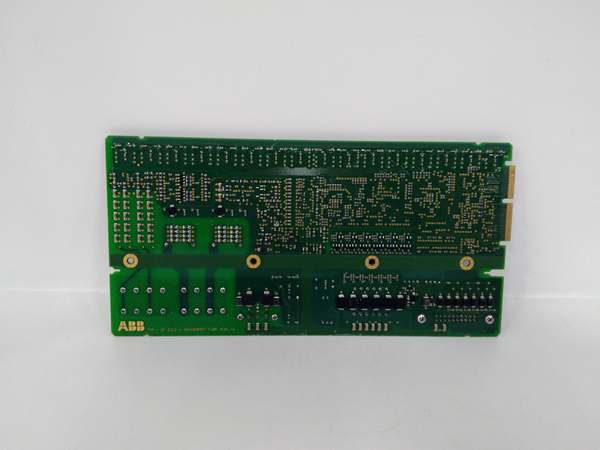
ABB GFD212A
Technical Deep Dive & Overview
The ABB GFD212A is a dual-purpose industrial control module engineered for flexibility in ABB-driven automation systems. It functions as both a precision current controller and a digital I/O expansion module, bridging the gap between sensors, actuators, and main controllers (e.g., ABB ACS880 drives). Its core design centers on a 32-bit microprocessor that handles real-time current regulation (500MS/s sampling rate) and I/O signal processing, ensuring fast response to dynamic process changes.
The module’s dual channels operate independently, each configurable for either current control (regulating motor excitation or actuator positioning) or I/O expansion (adding digital input/output points for status monitoring). The input stage accepts signals from sensors (e.g., current transducers, position switches), while the output stage delivers 0-10V DC or 4-20mA signals to actuators or drives. Internal signal conditioning filters out electromagnetic interference, maintaining signal accuracy in noisy industrial environments.
Communication with the main controller occurs via its multi-protocol interface, supporting PROFINET, DeviceNet, CANopen, and RS-485. This interface uses a dedicated processor to handle data transfer, ensuring control loop performance isn’t compromised by communication delays. The module’s power supply is isolated from the signal paths, preventing ground loops and voltage transients from affecting performance.
Built for ruggedness, the GFD212A features an IP65-rated aluminum housing that protects internal components from dust, water spray, and physical damage. Its compact dimensions (150mm x 100mm x 50mm) and DIN rail mounting make it ideal for space-constrained control cabinets. The module’s modular design allows hot-swapping (when used with compatible controllers), enabling replacement without shutting down the entire system—minimizing downtime during maintenance.
Protection circuits are integrated into each channel: overcurrent detection triggers within 10ms to cut power to the load, while short-circuit protection isolates faulty channels to prevent cascading failures. The module also includes a built-in diagnostic LED panel that indicates power status, communication health, and channel faults—allowing technicians to quickly identify issues without specialized tools.