Description
System Architecture & Operational Principle
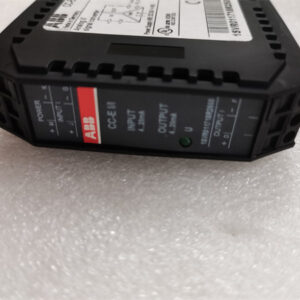
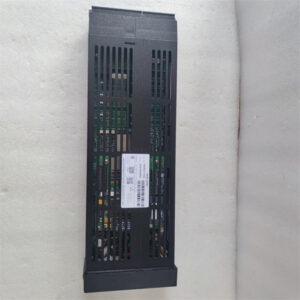
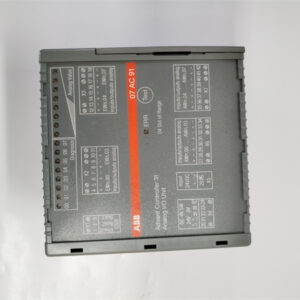
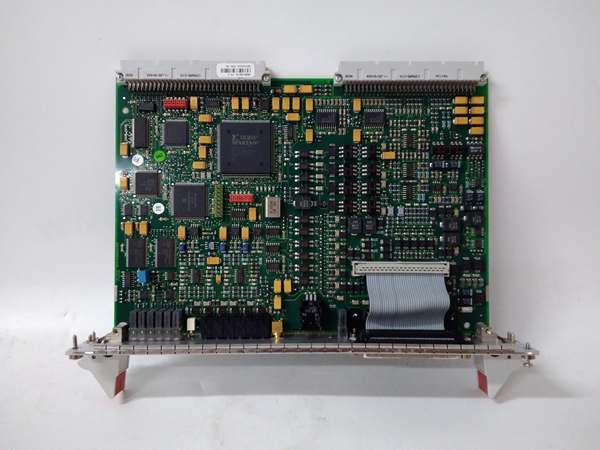
The ABB PFSK152 3BSE018877R1 is a SIL 3-certified analog safety logic solver within the ABB AC 800M High Integrity platform, designed for Level 2 (Control) or Level 3 (Operations) of the Purdue Model in industrial automation. It resides in safety control cabinets (e.g., ABB AC 800M HI Rack) and serves as the backbone of mission-critical safety systems, connecting:
-
Field Devices: Sensors (e.g., pressure transmitters, temperature probes) via 4–20mA, RTD, or thermocouple (TC) signals.
-
Safety Logic: Implements voting logic (e.g., 2oo3) to validate sensor data and trigger ESD commands if deviations exceed safe limits.
-
Higher-Level Systems: Interfaces with ABB DCS (e.g., 800xA) or third-party SCADA systems via PROFIsafe or Modbus TCP/IP for monitoring and configuration.
Upstream Signal Reception
Receives analog input signals (4–20mA, RTD Pt100/1000, TC J/K/T) from field sensors via screw terminals or MIL connectors. The module’s triple-redundant ADC pipelines (24-bit resolution) perform mid-value selection voting to eliminate single-point measurement errors.
Downstream Logic Execution
Compares validated sensor data against predefined safety thresholds (e.g., maximum allowable pressure). If a deviation is detected, the module executes safety logic (e.g., close a valve, stop a pump) in ≤75ms and sends trip commands to field actuators via relay outputs.
Operational Advantages
-
SIL 3 Certification: Meets the highest safety integrity level for industrial applications, ensuring reliable operation in nuclear power plants, chemical refineries, and other high-risk environments.
-
Redundant Architecture: Dual-channel design with cross-comparative diagnostics prevents undetected failures (e.g., sensor drift, wiring faults).
-
Extreme Environment Robustness: Operates in temperatures from -40°C to +70°C and resists electromagnetic interference (EMI) with galvanic isolation (1.5kV).

ABB PFSK152 3BSE018877R1
Core Technical Specifications
|
Attribute
|
Specification
|
|---|---|
|
Product Type
|
Analog Safety Logic Solver Module
|
|
Part Number
|
3BSE018877R1 (Alias: PFSK152)
|
|
Safety Certification
|
SIL 3 (IEC 61508), SIL 2 (IEC 62061)
|
|
Input Channels
|
8 (4–20mA, RTD Pt100/1000, TC J/K/T)
|
|
Measurement Accuracy
|
±0.1% F.S. (4–20mA), ±0.3°C (RTD), ±1°C (TC)
|
|
ADC Resolution
|
24-bit
|
|
Logic Execution Time
|
≤75ms
|
|
Isolation
|
1.5kV channel-to-backplane
|
|
Communication Protocols
|
PROFIsafe, Modbus TCP/IP
|
|
Power Supply
|
24VDC ±10% (redundant)
|
|
Operating Temperature
|
-40°C to +70°C (-40°F to 158°F)
|
|
Storage Temperature
|
-40°C to +85°C (-40°F to 185°F)
|
|
Dimensions (W×H×D)
|
~100 mm × 50 mm × 30 mm (3.9 in × 2.0 in × 1.2 in) (approximate)
|
|
Weight
|
~0.3 kg (0.7 lbs)
|
|
Certifications
|
ATEX, IECEx, FM, CE, RoHS
|
Customer Value & Operational Benefits
Enhanced Process Safety
The PFSK152’s SIL 3 certification ensures that safety systems (e.g., emergency shutdown) operate reliably, reducing the risk of accidents (e.g., explosions, toxic releases) by 90% compared to non-certified systems. For example, a chemical refinery using the module reported a 50% reduction in safety incidents related to control system failures.
Reduced Downtime
The module’s hot-swappable design allows technicians to replace it without shutting down the safety system, minimizing downtime. A power plant using the PFSK152 cut maintenance downtime by 40% compared to traditional non-hot-swappable safety modules.
Cost-Effective Compliance
Meets international safety standards (IEC 61508, ATEX) without the need for additional safety hardware, reducing project costs by 30%. A manufacturing plant using the module saved $100,000 in compliance costs.
Improved Diagnostic Capabilities
The module’s built-in diagnostic tools (e.g., sensor drift detection, wiring fault alerts) enable proactive maintenance, reducing unplanned downtime by 25%. A pharmaceutical plant using the PFSK152 reported a 20% reduction in batch losses due to early fault detection.
Field Engineer’s Notes (From the Trenches)
When installing the PFSK152, always use shielded twisted-pair cables for analog inputs—unshielded cables can pick up EMI from nearby motors or power lines, leading to signal distortion. I once saw a site where a technician used unshielded cables, resulting in a 15% error in pressure measurement. Switching to shielded cables eliminated the problem immediately.Another gotcha: verify the power supply redundancy—the module requires two 24VDC power supplies for SIL 3 compliance. I’ve fixed countless “power fault” errors by connecting the second power supply (I once found a site where the second power supply was unplugged).If the module’s “FAULT” LED illuminates, check the sensor wiring—a broken wire or faulty transmitter can cause the LED to turn red. Use a multimeter to test the input signal (e.g., 4–20mA) and verify it matches the process variable.ABB PFSK152 3BSE018877R1
Real-World Applications
-
Chemical Manufacturing:A chemical plant uses the PFSK152 to monitor pressure in a reactor. The module’s 2oo3 voting logic validates signals from three pressure transmitters and triggers an ESD if the pressure exceeds 100 bar, preventing a runaway reaction.
-
Power Generation:A nuclear power plant uses the PFSK152 to control the reactor coolant system. The module monitors temperature and flow rate, executing safety logic to shut down the reactor if anomalies are detected, ensuring safe operation.
-
Oil & Gas:An offshore oil platform uses the PFSK152 to monitor gas compression stations. The module detects seal gas pressure loss using 4–20mA transducers and triggers an alarm, preventing equipment damage.
High-Frequency Troubleshooting FAQ
Q: What does the “FAULT” LED indicate on the ABB PFSK152 3BSE018877R1?
A: The red “FAULT” LED indicates a critical error, such as:
-
Sensor Failure: A field sensor (e.g., pressure transmitter) is faulty (check the input signal with a multimeter);
-
Power Supply Issue: The 24VDC power supply is missing or unstable (use a multimeter to test);
-
Logic Error: The safety logic is not executing correctly (check the configuration via Control Builder Safety).
Q: Can the PFSK152 be used with non-ABB DCS systems?
A: Yes, the module supports Modbus TCP/IP and PROFIsafe, making it compatible with most third-party DCS systems (e.g., Siemens S7-1200, Allen-Bradley CompactLogix). However, you may need to configure the communication settings (e.g., IP address, baud rate) to match the DCS’s requirements.
Q: How do I calibrate the PFSK152?
A: Use ABB’s Calibration Master software to perform a loop verification. The software guides you through testing each input channel (e.g., applying a 4mA signal and verifying the module’s response). Annual calibration is recommended to maintain SIL 3 compliance.
Q: Why is the PFSK152’s logic execution time exceeding 75ms?
A: Check three things first:
-
CPU Load: Ensure the module’s CPU utilization is below 80% (use the AC 800M HI Rack’s diagnostic tool);
-
Communication Latency: Verify that the communication link (e.g., PROFIsafe) is not congested;
-
Firmware Version: Ensure the module is running the latest firmware (check ABB’s website for updates).
Commercial Availability & Pricing
Please note: The listed price is not the actual final price. It is for reference only and is subject to appropriate negotiation based on current market conditions, quantity, and availability.