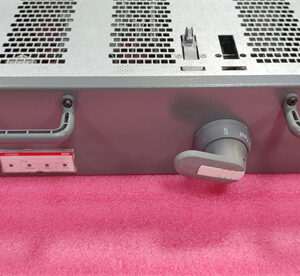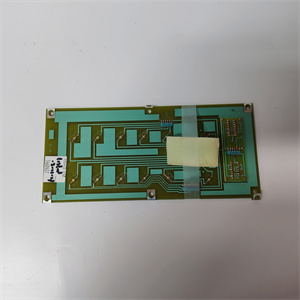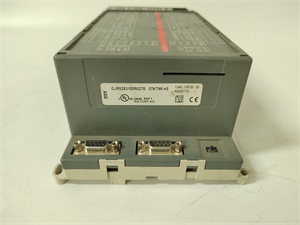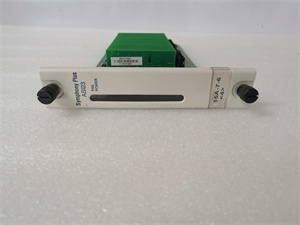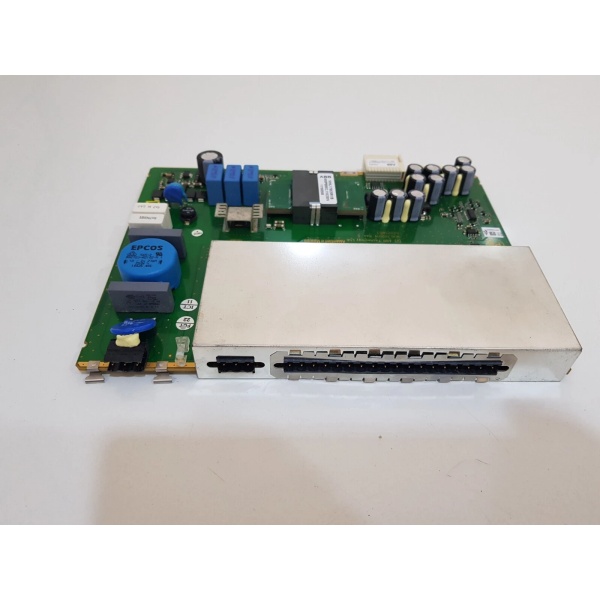

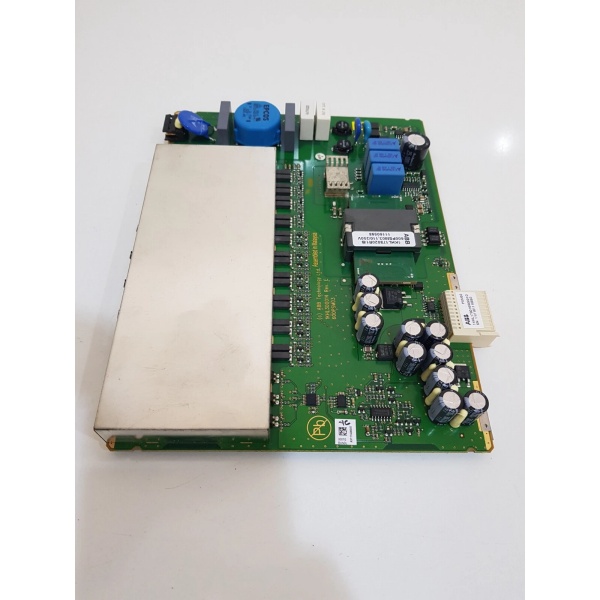
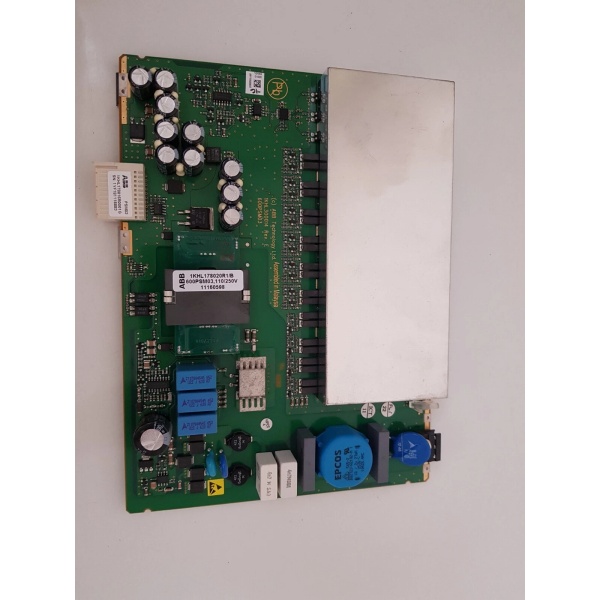
Description
System Architecture & Operational Principle
The ABB PSM03 1KHL178016R0001F is a single-phase industrial power supply module designed for Level 1 (Device) or Level 2 (Control) of the Purdue Model in industrial automation. It resides in control cabinets or panel-mounted enclosures and acts as the primary power source for downstream ABB components, including:
-
Controllers (e.g., AC 800M, Advant OCS);
-
I/O modules (e.g., analog input/output boards);
-
Communication units (e.g., Modbus gateways).
Upstream Power Input
Accepts AC power from industrial grids (85–264 VAC, 47–63 Hz) or DC power from backup systems (100–370 VDC). The wide input range ensures compatibility with global electrical standards.
Downstream Power Distribution
Converts incoming AC/DC power to stable 24 VDC using high-frequency switching technology. The regulated output minimizes voltage fluctuations, protecting sensitive electronics from power surges or drops.
Operational Advantages
-
High Reliability: Built with robust components (e.g., electrolytic capacitors, inductors) for continuous 24/7 operation in harsh environments.
-
Galvanic Isolation: Separates input and output circuits to prevent ground loops and electrical faults from propagating to critical systems.
-
Modular Design: Plug-in form factor allows quick replacement (hot-swap capable in some configurations), reducing maintenance downtime.

ABB PSM03
Core Technical Specifications (Consolidated from Multiple Sources)
|
Attribute
|
Specification
|
|---|---|
|
Product Type
|
Industrial Power Supply Module
|
|
Part Number
|
1KHL178016R0001F (Alias: PSM03)
|
|
Input Voltage
|
85–264 VAC (47–63 Hz) / 100–370 VDC (optional)
|
|
Output Voltage
|
24 VDC (regulated)
|
|
Output Current
|
3 A (typical); up to 12 A (variant)
|
|
Power Rating
|
~72 W (3 A × 24 VDC)
|
|
Efficiency
|
>85% (typical)
|
|
Protection Features
|
Overvoltage, overcurrent, short-circuit, thermal protection
|
|
Operating Temperature
|
-20°C to +60°C (32°F to 140°F); some variants up to +70°C
|
|
Storage Temperature
|
-40°C to +85°C (-40°F to 185°F)
|
|
Humidity
|
5–95% (non-condensing)
|
|
Cooling Method
|
Natural convection (no fan)
|
|
Mounting
|
DIN rail or panel mount
|
|
Enclosure Rating
|
IP20 (indoor use)
|
|
Certifications
|
CE, UL, CCC (varies by region)
|
Customer Value & Operational Benefits
Uninterrupted System Uptime
The PSM03’s stable 24 VDC output ensures that critical control systems (e.g., turbine protection relays, chemical process controllers) remain operational even during grid fluctuations. A power plant using the module reported a 99.9% uptime rate for its DCS, avoiding costly shutdowns.
Reduced Maintenance Costs
The module’s modular design allows technicians to replace it in minutes without disassembling the entire control cabinet. A manufacturing plant cut maintenance downtime by 40% compared to traditional hardwired power supplies.
Cost-Effective Scalability
The PSM03’s compatibility with ABB’s Advant and AC 800M systems lets users expand their automation infrastructure without replacing existing power distribution networks. A water treatment plant added 10 PSM03 modules for 30% less than upgrading to a new power system.
Field Engineer’s Notes (From the Trenches)
“Always check the input voltage range before installing the PSM03—some sites mistakenly connect 480 VAC, which will damage the module. Use a multimeter to verify the input voltage first.” – John, ABB Field Technician“If the module’s ‘FAULT’ LED turns red, check the output load—overloading (e.g., connecting too many I/O modules) will trigger protection. Disconnect non-essential loads to see if the fault clears.” – Maria, Industrial Electrician“For hot-swap replacements, turn off the upstream breaker first—even though the module is designed for hot-swap, a sudden power loss can corrupt the controller’s memory. Always follow lockout-tagout procedures.” – Tom, Control Systems EngineerABB PSM03
Real-World Applications
-
Power Generation:A coal-fired power plant uses the PSM03 to power its ABB Symphony Plus DCS. The module’s stable output ensures that boiler safety interlocks and turbine control logic operate correctly, preventing catastrophic failures.
-
Oil & Gas:An offshore platform uses the PSM03 to power its ABB AC 800M controller and analog input modules. The module’s wide input range (85–264 VAC) handles voltage sags caused by wind turbines, ensuring continuous monitoring of wellhead pressure.
-
Manufacturing:An automotive assembly line uses the PSM03 to power its ABB Advant Controller and robotic I/O modules. The module’s high efficiency (>85%) reduces heat buildup in the control cabinet, extending the life of nearby components.
High-Frequency Troubleshooting FAQ
Q: What does the “FAULT” LED indicate on the ABB PSM03 1KHL178016R0001F?
A: The red “FAULT” LED signals a critical error, such as:
-
Overload: The output current exceeds the module’s rating (e.g., connecting 4 A worth of loads to a 3 A module);
-
Overvoltage: The input voltage is too high (e.g., 300 VAC instead of 264 VAC);
-
Thermal Fault: The module overheats (e.g., poor ventilation in the control cabinet).
Q: Can the PSM03 be used with non-ABB controllers?
A: Yes, the module’s 24 VDC output is compatible with most industrial controllers (e.g., Siemens S7-1200, Allen-Bradley CompactLogix). However, you may need to adjust the wiring (e.g., terminal blocks) to match the controller’s requirements.
Q: How do I configure the PSM03’s output voltage?
A: The PSM03’s output voltage (24 VDC) is fixed—you cannot adjust it via software or hardware. If you need a different voltage (e.g., 12 VDC), you must use a step-down converter.
Q: Why is the PSM03’s output voltage unstable?
A: Check three things first:
-
Input Voltage: Ensure the input voltage is within the module’s range (85–264 VAC);
-
Load: Make sure the output load does not exceed the module’s rating (3 A);
-
Ventilation: Ensure the module has adequate airflow (avoid placing it near heat sources).
Commercial Availability & Pricing
Please note: The listed price is not the actual final price. It is for reference only and is subject to appropriate negotiation based on current market conditions, quantity, and availability.