Description
System Architecture & Operational Principle
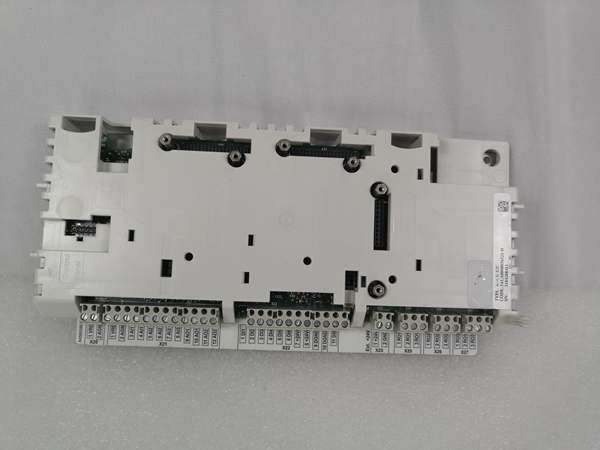
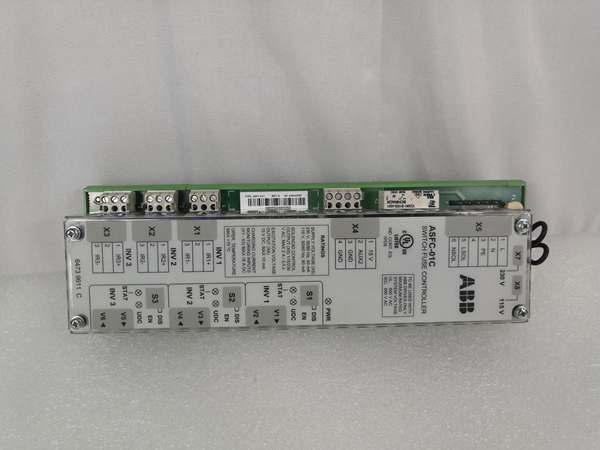
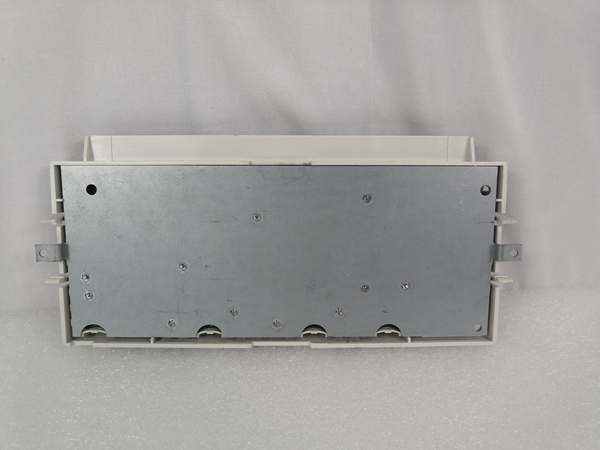
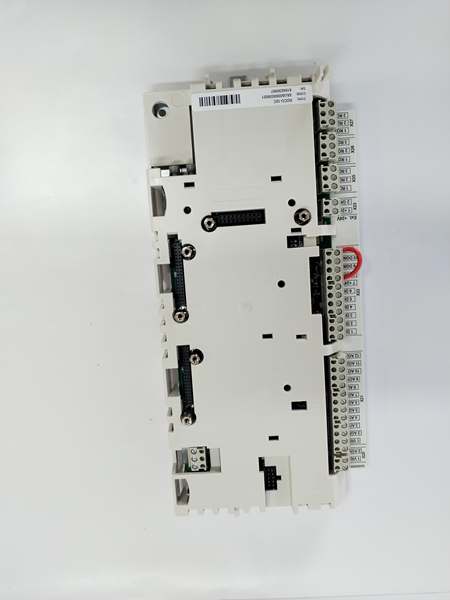
The ABB RDCU-12C 3AUA0000036521 is a core control board within the ABB ACS800 series inverters, designed for Level 1 (Device) or Level 2 (Control) of the Purdue Model in industrial automation. It resides in the inverter cabinet (typically mounted on the main control board) and serves as the “brain” of the inverter system, connecting:
-
Power Stage: IGBT modules (e.g., FS300R12KE3) for converting DC to AC power.
-
Control Interface: Receives commands from external systems (e.g., PLCs via Profibus DP) and sends status updates (e.g., motor speed, fault codes).
-
Motor: Drives AC motors (1.1-500kW) using ABB’s Direct Torque Control (DTC) algorithm for precise speed and torque regulation.
Upstream Communication
Receives control signals (e.g., speed references, start/stop commands) from external controllers (e.g., ABB AC 800M DCS) via Profibus DP or Modbus TCP protocols. These signals are processed by the RDCU-12C’s 32-bit microprocessor to generate PWM signals for the IGBT modules.
Downstream Communication
Transmits status updates (e.g., motor current, voltage, fault codes) to external systems via the same protocols. The RDCU-12C also manages the inverter’s I/O modules (e.g., digital inputs for emergency stops, analog outputs for speed feedback).
Operational Advantages
-
High Precision: DTC algorithm provides 0.01% static speed accuracy and <5ms torque response time, critical for applications like rolling mills and cranes.
-
Redundancy: Supports hot-swappable I/O modules and redundant power supplies, ensuring uninterrupted operation in mission-critical environments.
-
Flexibility: Compatible with a wide range of motors (induction, synchronous) and applications (variable speed drives, constant torque).

ABB RDCU-12C
Core Technical Specifications
|
Attribute
|
Specification
|
|---|---|
|
Product Type
|
Inverter Control Board (ACS800 Series)
|
|
Part Number
|
3AUA0000036521 (Alias: RDCU-12C)
|
|
Input Voltage
|
380-415V AC (3-phase) ±10%
|
|
Output Frequency
|
0-300Hz (adjustable)
|
|
Efficiency
|
>98% (at rated power)
|
|
Microprocessor
|
32-bit RISC (150 MHz)
|
|
Communication Protocols
|
Profibus DP, Modbus TCP, CANopen
|
|
Operating Temperature
|
-15°C to +50°C (5°F to 122°F)
|
|
Storage Temperature
|
-40°C to +70°C (-40°F to 158°F)
|
|
Humidity
|
5-95% non-condensing
|
|
Dimensions (W×H×D)
|
~200 mm × 150 mm × 50 mm (7.9 in × 5.9 in × 2.0 in) (approximate)
|
|
Weight
|
~1.2 kg (2.6 lbs)
|
|
Certifications
|
CE, UL, CSA, RoHS
|
Customer Value & Operational Benefits
Enhanced Motor Control Precision
The RDCU-12C’s DTC algorithm reduces motor speed variation by 50% compared to traditional V/f control, improving product quality in applications like paper mills and textile machines. For example, a paper mill using the RDCU-12C reported a 15% reduction in paper thickness variation.
Reduced Downtime
The board’s hot-swappable design allows technicians to replace faulty modules in minutes without shutting down the inverter. A chemical plant using the RDCU-12C cut maintenance downtime by 40% compared to traditional non-hot-swappable control boards.
Cost-Effective Integration
Compatible with ABB’s ACS800 series inverters and existing control systems (e.g., Siemens S7-1200 PLCs), the RDCU-12C eliminates the need for costly system upgrades. A manufacturing plant using the board saved $20,000 in integration costs by retaining its existing PLC infrastructure.
Field Engineer’s Notes (From the Trenches)
When installing the RDCU-12C, always verify the Profibus DP cable termination—an unterminated cable can cause communication errors (e.g., “CH0 COMM FAULT”). I once saw a site where a technician forgot to terminate the cable, resulting in a 2-hour delay in system startup. Using a Profibus tester to verify the termination fixed the issue immediately.Another gotcha: check the IGBT module connections—loose screws can cause intermittent faults (e.g., “CURR UNBLAC”). A power plant using the RDCU-12C experienced a 10% fault rate due to loose IGBT connections; tightening the screws eliminated the problem.If the RDCU-12C’s “FAULT” LED illuminates, check the fault code—the board stores detailed fault information (e.g., “AC OVERVOLTAGE”) that can be retrieved via ABB’s DriveWindow software. Use the software to diagnose the issue quickly and avoid unnecessary part replacements.ABB RDCU-12C
Real-World Applications
-
Paper Mill Variable Speed Drives:A paper mill uses the RDCU-12C to control the speed of its paper machine’s rollers. The board’s DTC algorithm ensures precise speed control, reducing paper breakage by 20%.
-
Chemical Plant Pump Control:A chemical plant uses the RDCU-12C to control the flow of corrosive liquids via variable speed pumps. The board’s corrosion-resistant design (conformal coating) ensures reliable operation in harsh chemical environments.
-
Wind Turbine Pitch Control:A wind farm uses the RDCU-12C to adjust the pitch of wind turbine blades. The board’s fast response time (<5ms) ensures optimal power generation in changing wind conditions.
High-Frequency Troubleshooting FAQ
Q: What does the “FAULT” LED indicate on the ABB RDCU-12C 3AUA0000036521?
A: The red “FAULT” LED indicates a critical error, such as:
-
AC Overvoltage: The input voltage exceeds 415V AC (check the grid voltage with a multimeter);
-
Communication Error: The Profibus DP cable is unterminated or damaged (use a Profibus tester to verify);
-
IGBT Fault: The IGBT module is overheating or has failed (check the IGBT temperature with a thermal camera).
Q: Can the RDCU-12C be used with non-ABB inverters?
A: No, the RDCU-12C is designed exclusively for ABB ACS800 series inverters. Non-ABB inverters may not provide the correct signals or power supply, leading to board failure.
Q: How do I update the RDCU-12C’s firmware?
A: Use ABB’s DriveWindow software to download the latest firmware from ABB’s website. Connect the RDCU-12C to a PC via USB and follow the software’s instructions to update the firmware.
Q: Why is the RDCU-12C’s output frequency unstable?
A: Check three things first:
-
Input Voltage: Ensure the input voltage is stable (380-415V AC ±10%);
-
Motor Load: Verify the motor is not overloaded (check the motor current with a multimeter);
-
Communication: Ensure the Profibus DP communication is working correctly (check the fault logs via DriveWindow).
Commercial Availability & Pricing
Please note: The listed price is not the actual final price. It is for reference only and is subject to appropriate negotiation based on current market conditions, quantity, and availability.