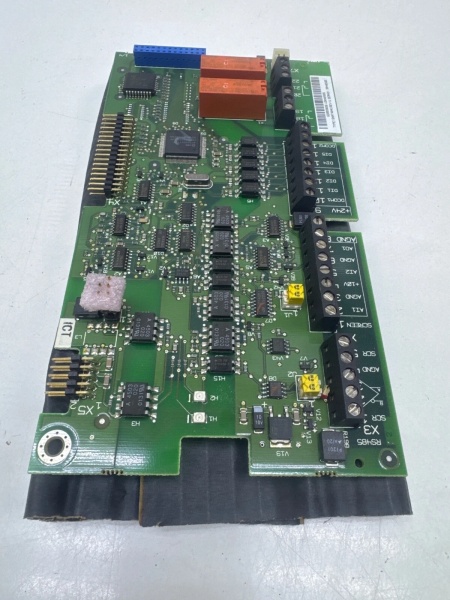
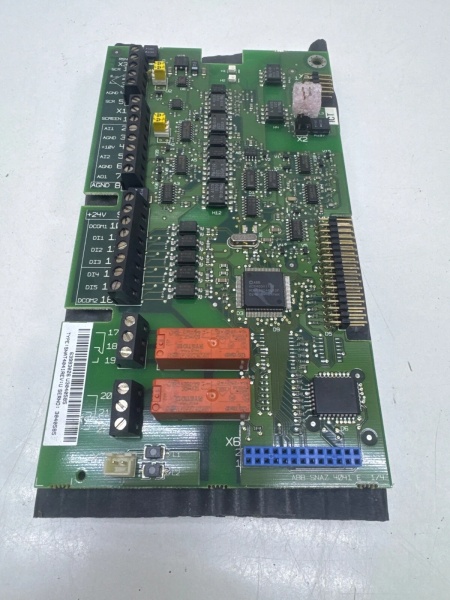
Description
SNAT-11: Product Overview
The module operates within the safety instrumented system (SIS) layer of industrial automation architectures, serving as a logic processor for safety-critical functions. Positioned between field safety devices (e.g., emergency stop buttons, safety gate switches, light curtains) and final control elements (e.g., safety relays, solenoid valves), its role is to evaluate input signals against predefined safety logic (e.g., interlocking, trip conditions) and generate fail-safe outputs to prevent hazardous events. In a typical SIS topology, it integrates with ABB 800xA Safety or third-party safety PLCs for coordinated shutdown sequences.
Core functionality includes dual-channel signal monitoring (cross-checking inputs to detect single faults), processing 8 safety inputs (24V DC) and 4 safety outputs (relay contacts), and executing safety functions compliant with SIL3 (IEC 61508) and PLe (EN ISO 13849-1) standards. It provides diagnostic coverage for wire breaks, short circuits, and component failures, with built-in self-test routines to ensure ongoing reliability. The module belongs to the ABB Safety Series, a platform optimized for high-integrity safety applications. Benefits of this series include modular scalability (adding logic units for expanded functions), compatibility with ABB’s Safety Builder configuration software, and hot-swappable components to minimize downtime during maintenance.

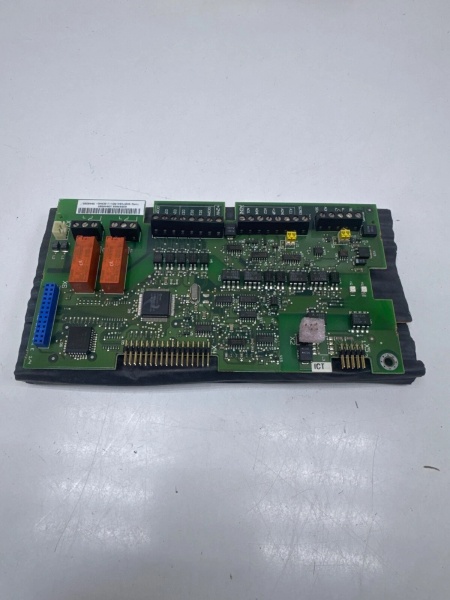
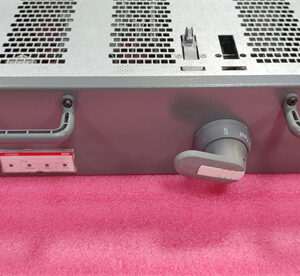
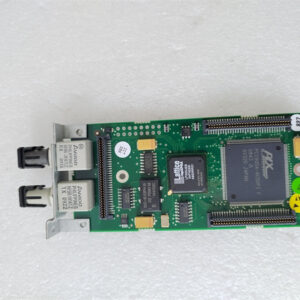
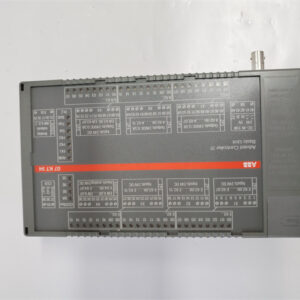
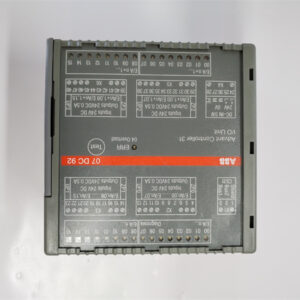
ABB SNAT-11
SNAT-11: Technical Specifications
-
Model Number: SNAT-11
-
Manufacturer: ABB Ltd.
-
Product Type: Safety Logic Module
-
Safety Standard: IEC 61508 SIL3, EN ISO 13849-1 PLe, IEC 62061 SIL CL3
-
Number of Inputs: 8 (safety, 24V DC, dry contact/transistor)
-
Number of Outputs: 4 (safety, relay contacts, 5A @ 250V AC)
-
Power Supply: 24V DC (±10%, 1.5W max)
-
Dual-Channel Monitoring: Yes (cross-checking for single-fault tolerance)
-
Response Time: ≤20ms (input-to-output)
-
Operating Temperature: -25°C to +60°C
-
Storage Temperature: -40°C to +85°C
-
Protection Rating: IP20 (enclosure)
-
Dimensions: 100mm (H) x 50mm (W) x 75mm (D)
-
Weight: ~0.4kg
-
Certifications: CE, UL (cULus Listed), TÜV Rheinland, RoHS
Core Features & Customer Value
Dual-channel monitoring ensures single-fault tolerance, meaning a failure in one input channel does not compromise safety. For engineers, this reduces the risk of undetected faults in high-consequence applications like chemical reactor shutdown systems, where a missed trip could lead to overpressure hazards. The SIL3 certification validates suitability for SIS with risk reduction factors up to 10,000, meeting regulatory requirements in oil refining and nuclear facilities.
Modular design allows adding multiple SNAT-11 units to implement complex safety functions (e.g., sequential interlocks for a paper machine dryer section) without replacing the entire SIS. This scalability preserves capital investment in existing systems. Hot-swappable functionality enables module replacement during operation when paired with redundant logic units, critical for 24/7 facilities like power plants where unplanned shutdowns incur significant costs.
Built-in diagnostics (via LED indicators and ABB Safety Builder software) pinpoint faults such as “input 3 wire break” or “output 2 contact welding,” reducing mean time to repair (MTTR) for maintenance teams. Compatibility with ABB 800xA Safety integrates safety data into the broader DCS, enabling unified alarm management and compliance reporting.
Typical Applications
In a chemical plant, the module monitors 8 emergency stop buttons and 4 safety gate switches around a polymerization reactor. If any input triggers, it activates 4 safety outputs to close feed valves and start cooling systems, with dual-channel verification preventing spurious trips from noisy signals.
At an automotive assembly line, it interfaces with light curtains and door switches on a robotic welding cell. The SIL3 logic ensures the robot halts within 20ms if a worker enters the safeguarded area, with relay outputs de-energizing the robot controller’s enable circuit.
In an oil refinery, the module controls 4 solenoid valves in a flare gas knockout drum. It processes pressure transmitter interlocks (via external safety PLC) and local emergency stops, ensuring valves close to prevent hydrocarbon release during overpressure events. The -25°C cold-start capability supports outdoor installation in arctic climates.