Description
3.1 Product Overview
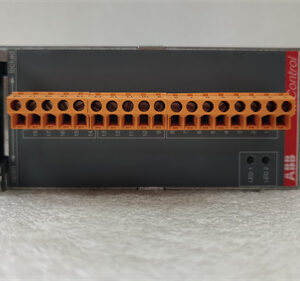
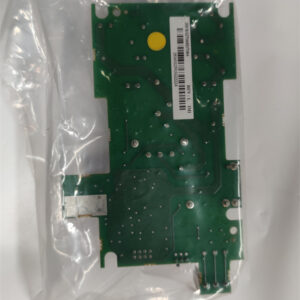
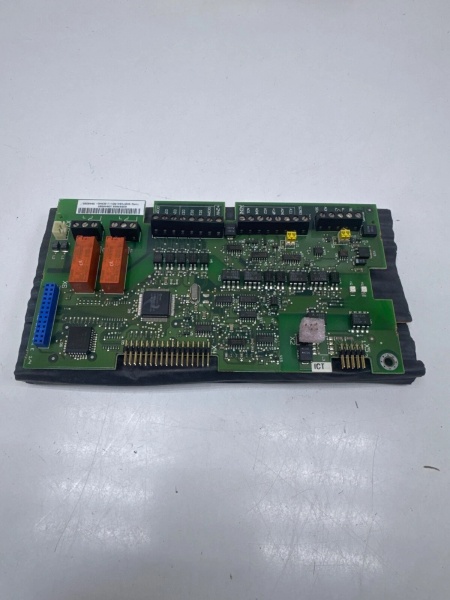
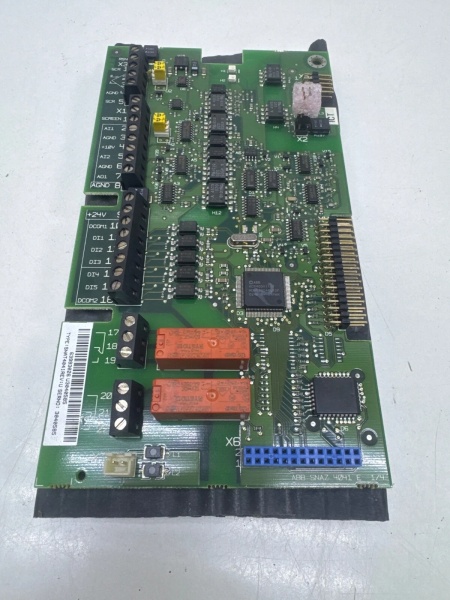
The ABB SNAT-2103 BDB is a specialized circuit board developed by ABB for advanced industrial control systems. It is engineered to deliver reliable signal processing and electrical interfacing, serving as a backbone for complex automation applications such as manufacturing, process control, and robotics. The board’s robust design ensures consistent performance in harsh industrial environments, where factors like vibration, temperature fluctuations, and EMI are common.
Role in Automation Systems:
The SNAT-2103 BDB acts as a “signal hub” in industrial control systems, performing three primary functions:
-
Signal Reception: Accepts analog and digital signals from sensors, actuators, and other field devices.
-
Signal Processing: Filters, amplifies, and converts signals to meet the requirements of the control system (e.g., converting a 4-20 mA analog signal to a digital value for PLC processing).
-
Signal Transmission: Sends processed signals to the main controller (e.g., ABB’s S7-1200 PLC) or peripheral devices, enabling coordinated action (e.g., adjusting a motor’s speed based on sensor feedback).
Core Functionality:
-
Analog/Digital Signal Support: Handles both analog (e.g., 0-10 V, 4-20 mA) and digital (e.g., 24 V DC) signals, making it versatile for various industrial applications.
-
EMI Shielding: Equipped with shielded components and grounding features to minimize electromagnetic interference, ensuring signal integrity.
-
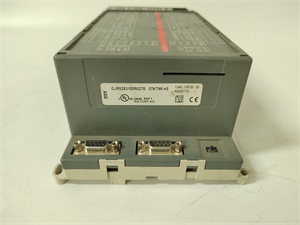
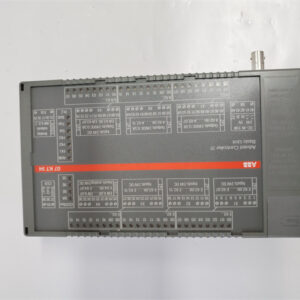
Plug-and-Play Compatibility: Uses standardized connectors (e.g., D-sub, terminal blocks) that integrate seamlessly with ABB’s control systems and third-party devices.
Platform Benefits (ABB Industrial Automation):
The SNAT-2103 BDB leverages ABB’s expertise in industrial automation, offering:
-
Reliability: Genuine ABB components ensure compatibility and performance parity with original equipment, reducing the risk of integration issues.
-
Minimal Downtime: Quick replacement of faulty boards minimizes system downtime, which is critical for high-volume production lines.
- Scalability: Adapts to evolving automation needs (e.g., adding new sensors or expanding production capacity) without replacing the entire control system.

ABB SNAT-2103
3.2 Technical Specifications
The following specifications are derived from supplier listings and ABB’s industrial product standards:
|
Parameter
|
Specification
|
|---|---|
|
Model Number
|
SNAT 2103 BDB
|
|
Manufacturer
|
ABB
|
|
Product Type
|
Industrial Control Circuit Board
|
|
Operating Voltage
|
24 V DC ±10%
|
|
Operating Temperature
|
-20°C to +70°C (-4°F to 158°F)
|
|
Storage Temperature
|
-40°C to +85°C (-40°F to 185°F)
|
|
Dimensions (L x W x H)
|
150 mm x 100 mm x 25 mm (5.9 in x 3.9 in x 1.0 in)
|
|
Weight
|
0.3 kg (0.66 lbs)
|
|
Interface Type
|
Digital/Analog Signal Processing (supports 4-20 mA, 0-10 V, and 24 V DC signals)
|
|
Compliance
|
CE Certified (inferred from ABB’s industrial product standards)
|
|
Connector Type
|
Standardized industrial connectors (compatible with ABB control cabinets)
|
3.3 Core Features & Customer Value
1. High-Precision Signal Processing:
The SNAT-2103 BDB uses advanced signal processing algorithms to filter out noise and amplify weak signals, ensuring accurate data transmission. This is critical for applications like precision manufacturing, where even minor signal errors can lead to defective products.
2. Robust Electrical Isolation:
The board features optocouplers and isolation transformers to separate low-voltage control circuits from high-voltage field devices. This protects sensitive components from voltage surges (e.g., lightning strikes, motor start-ups) and reduces the risk of equipment damage.
3. Compact & Durable Design:
The board’s small form factor (150 mm x 100 mm) allows it to fit into tight spaces within electrical cabinets. Its rugged construction (e.g., reinforced PCB, conformal coating) resists vibration and moisture, making it suitable for use in harsh environments like steel mills and chemical plants.
4. Easy Integration:
The SNAT-2103 BDB uses standardized connectors (e.g., D-sub 9-pin, terminal blocks) that are compatible with ABB’s control systems (e.g., S7-1200, S7-1500 PLCs) and third-party devices. This reduces installation time and eliminates the need for custom wiring.
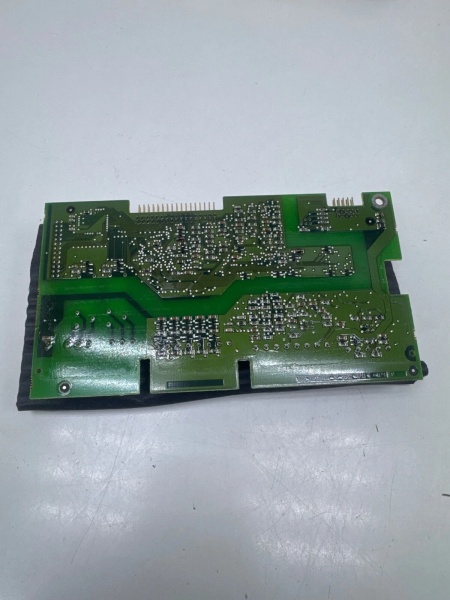
ABB SNAT-2103
3.4 Typical Applications
The ABB SNAT-2103 BDB is widely used in industries that rely on ABB’s industrial automation solutions:
-
Manufacturing Automation:
-
Used in assembly lines to process signals from sensors (e.g., proximity sensors, photoelectric sensors) and actuators (e.g., servo motors, solenoids).
-
Example: In an automotive assembly plant, the board processes signals from a torque sensor to ensure that bolts are tightened to the correct specification.
-
-
Process Control:
-
Deployed in chemical and pharmaceutical plants to monitor and control process variables (e.g., temperature, pressure, flow rate).
-
Example: In a chemical reactor, the board receives signals from a temperature sensor and sends commands to a heating element to maintain the desired reaction temperature.
-
-
Robotics:
-
Integrated into ABB robots (e.g., IRB series) to process signals from end-effectors (e.g., grippers, welding torches) and send feedback to the robot controller.
-
Example: In a welding application, the board processes signals from a weld seam sensor to adjust the robot’s path for precise welding.
-