Description
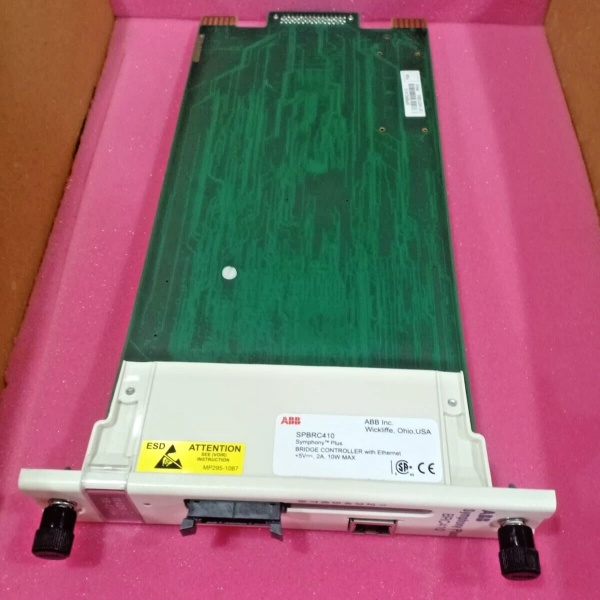
SPBRC410: Product Overview
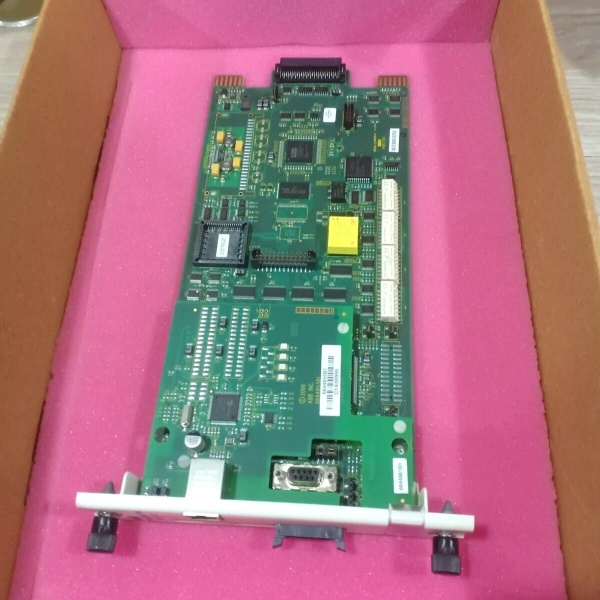
ABB SPBRC410R
SPBRC410: Technical Specifications
-
Model Number: SPBRC410 -
Manufacturer: ABB -
Product Type: Industrial Automation Controller (Bridge Controller/PLC) -
Series: Symphony Plus Series (formerly Bailey INFI 90) -
Power Supply: 24V DC (nominal), with a tolerance of ±15% -
Input Current: Maximum 10mA (operating), 20mA (startup) -
Output Frequency: Up to 1kHz (for digital outputs) -
Communication Protocols: Modbus TCP (primary), Ethernet/IP, Profibus DP, RS-485 (for Modbus RTU) -
Control Capability: Supports up to 30,000 function blocks (for complex logic), 16 digital inputs (24V DC), 16 digital outputs (relay/TTL), 2 analog inputs (4-20mA), 2 analog outputs (0-10V) -
Operating Temperature: -25°C to +70°C (wide range for harsh environments) -
Storage Temperature: -40°C to +85°C -
Humidity: 0% to 95% (non-condensing) -
Vibration Resistance: 0.5g RMS (10-500 Hz) -
Shock Resistance: 10g (20 ms) -
Dimensions: 127 x 61 x 32 mm (DIN rail mounting) -
Weight: 0.5 kg -
Protection Rating: IP20 (dust-protected) -
Certifications: CE, UL, CSA (compliant with EU and North American safety standards)
SPBRC410: Core Features & Customer Value
-
Dual-Redundancy Design: The SPBRC410 can operate in a primary/secondary configuration, ensuring continuous operation even if one controller fails. This is critical for applications like power generation or railway systems, where downtime can result in significant financial losses or safety risks. For example, in a substation, the SPBRC410 can act as a redundant controller for circuit breaker protection, minimizing the impact of faults on the grid. -
Real-Time Fault Monitoring: Built-in sensors and diagnostic tools allow the SPBRC410 to detect issues like communication errors, device failures, or process anomalies in real time. It can send alerts to operators via email, SMS, or SCADA, enabling proactive maintenance and reducing the risk of unplanned downtime. This feature is particularly valuable in remote locations (e.g., oil pipelines) where on-site maintenance is difficult. -
Wide Temperature Range: The controller operates in temperatures from -25°C to +70°C, making it suitable for harsh industrial environments like steel mills, chemical plants, or outdoor railway systems. This eliminates the need for expensive heating or cooling systems in control cabinets, reducing overall system costs. -
Multi-Protocol Support: The SPBRC410 supports Modbus TCP, Ethernet/IP, Profibus DP, and RS-485 (Modbus RTU), allowing it to integrate with a wide range of industrial devices (e.g., sensors, actuators, variable frequency drives) and systems (e.g., DCS, SCADA). This flexibility makes it an ideal choice for upgrading legacy systems or deploying new automation solutions. -
Compact and Easy to Install: The controller’s small size (127 x 61 x 32 mm) and DIN rail mounting make it easy to install in control cabinets, even in space-constrained environments. Its IP20 protection ensures it can withstand dusty or moderately harsh conditions, reducing the need for additional enclosures. 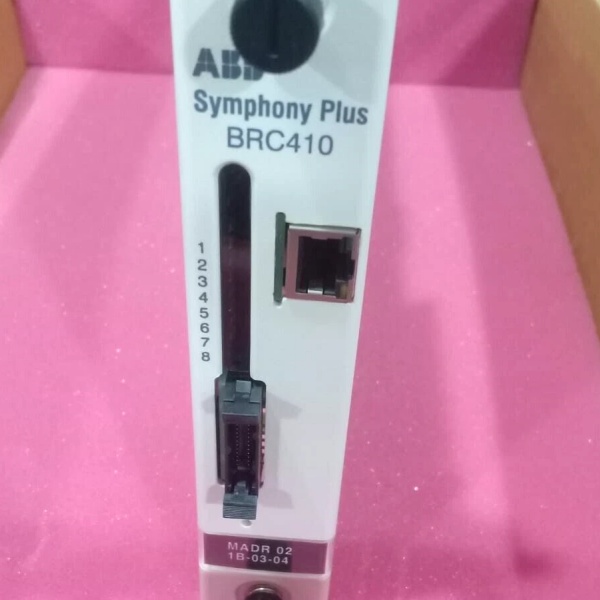
ABB SPBRC410R
SPBRC410: Typical Applications
-
Energy Sector: Power generation (e.g., wind turbines, solar farms), substation automation (circuit breaker protection, transformer monitoring), and renewable energy systems (e.g., battery storage). For example, in a wind farm, the SPBRC410 can act as a bridge between wind turbine controllers and the SCADA system, enabling real-time monitoring of turbine performance and fault detection. -
Transportation: Railway systems (e.g., signaling, traction power control), electric vehicle (EV) charging stations, and marine automation (e.g., ship propulsion systems). In railway signaling, the SPBRC410 can provide redundant control for signal lights, ensuring safe train operations even if one controller fails. -
Manufacturing: Automated production lines (e.g., automotive assembly, food and beverage processing), robotic systems, and machine tool control. In an automotive plant, the SPBRC410 can integrate with PLCs and robots to control the assembly line, monitor product quality, and adjust parameters in real time. -
Oil and Gas: Pipeline monitoring (e.g., pressure, temperature, flow), refinery automation, and offshore platform control. In a pipeline system, the SPBRC410 can act as a bridge between sensors (e.g., pressure transducers) and the SCADA system, enabling real-time monitoring of pipeline conditions and fault detection (e.g., leaks).
SPBRC410: Core Features & Customer Value (Expanded)
-
Modular Expansion: The SPBRC410 supports modular expansion, allowing users to add I/O modules (e.g., digital inputs, analog outputs) or communication modules (e.g., Wi-Fi, 4G) as needed. This makes it a flexible solution for evolving automation needs—for example, adding a 4G module to enable remote access in a remote oil field. -
Cybersecurity: The controller includes built-in cybersecurity features like secure boot, encryption (AES-256), and access control (role-based authentication). This protects against cyber threats like hacking or malware, which are increasingly common in industrial systems. For example, in a power plant, the SPBRC410’s secure boot feature ensures that only authorized firmware can be loaded, preventing malicious attacks. -
Low Power Consumption: The controller operates on 24V DC and has a low input current (maximum 10mA), making it energy-efficient. This is important for applications like renewable energy systems (e.g., solar farms) where power consumption is a key concern. -
Easy Programming: The SPBRC410 supports ladder logic programming (via ABB’s Automation Builder software), making it easy for engineers to develop and modify control logic. This reduces development time and costs, especially for companies with existing ABB automation systems.