Description
UAD154A: Product Overview
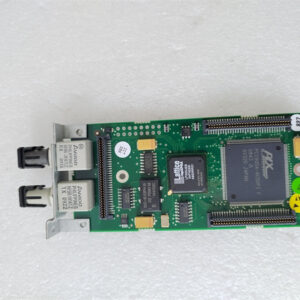
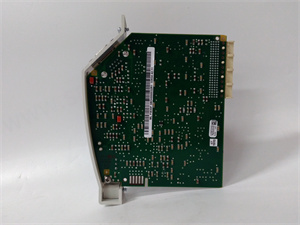
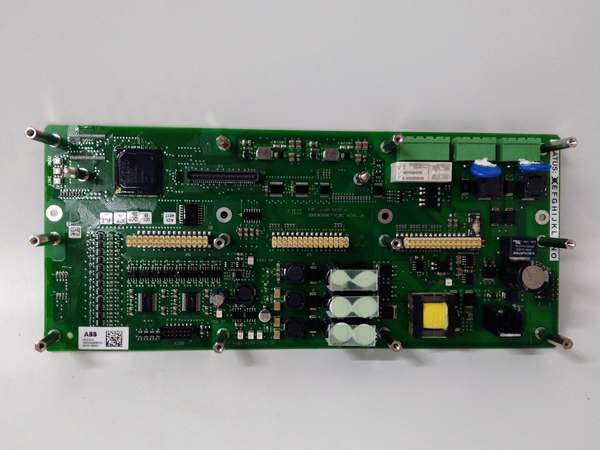
The ABB UAD154A is a specialized signal interface board designed for integration into ABB’s AC800PE series of industrial control systems. As a core component of the AC800PE ecosystem, it serves as a “bridge” between field devices (e.g., pressure sensors, temperature transmitters, solenoid valves) and the DCS controller, enabling real-time signal acquisition and transmission.
Role in Automation Systems:
Positioned as a “field-to-controller” interface, the UAD154A performs two primary functions:
-
Signal Conversion: Converts analog signals (4–20 mA, 0–10 V) from field devices into digital data for processing by the AC800PE controller. It also converts digital signals from the controller into analog outputs (e.g., 4–20 mA) to drive actuators (e.g., valve positioners).
-
Communication Handling: Supports Modbus/RTU protocol over RS-485, allowing seamless integration with third-party devices (e.g., PLCs, HMIs) and ensuring reliable data transmission in harsh industrial environments.
Core Functionality:
-
Multi-Signal Support: Accommodates 8 digital input (DI) channels (24 V DC) and 4 analog input (AI) channels (4–20 mA, 0–10 V), making it versatile for diverse field device requirements.
-
Hot-Swappable Design: Allows for replacement without shutting down the system, minimizing downtime during maintenance—critical for 24/7 operations like power generation or chemical processing.
-
Diagnostic Indicators: Includes LED indicators for power, communication, and fault status, simplifying troubleshooting for engineers.
Platform Benefits (AC800PE Series):
The UAD154A leverages ABB’s AC800PE platform, which is renowned for:
-
Scalability: Supports expansion with additional I/O modules to accommodate growing operational needs (e.g., adding more sensors or actuators).
-
Reliability: Industrial-grade components and a rugged design ensure 24/7 operation in harsh environments (e.g., high temperature, vibration).
-
Integration: Seamlessly integrates with ABB’s other AC800PE components (e.g., controllers, power supplies), reducing setup time and effort.

ABB UAD154A
Technical Specifications
Model Number: UAD154A
Manufacturer: ABB
Product Type: Signal Interface Board
-
Input Voltage: 220V AC (±10%)
-
Communication Protocol: Modbus/RTU (RS-485)
-
Digital Input (DI): 8 channels (24 V DC, sink/source)
-
Analog Input (AI): 4 channels (4–20 mA, 0–10 V)
-
Analog Output (AO): 2 channels (4–20 mA, 0–10 V)
-
Operating Temperature: -25°C to +70°C (-13°F to 158°F)
-
Storage Temperature: -40°C to +85°C (-40°F to 185°F)
-
Humidity: 5–95% non-condensing
-
Dimensions (W×H×D): 100 mm × 75 mm × 20 mm (3.94 in × 2.95 in × 0.79 in)
-
Weight: 0.2 kg (0.44 lbs)
-
Certifications: CE, UL (inferred from ABB industrial product standards)
Core Features & Customer Value
1. Reliable Signal Conversion:
The UAD154A’s high-precision signal conversion (±0.1% accuracy for analog signals) ensures that critical process variables (e.g., pressure, temperature) are measured and transmitted accurately. For example, in a chemical plant, this accuracy prevents incorrect adjustments to reactor temperature, avoiding product defects.
2. Flexible Communication:
Support for Modbus/RTU protocol allows the UAD154A to integrate with a wide range of third-party devices, reducing the need for custom communication interfaces. This flexibility is particularly valuable for facilities with mixed-vendor equipment (e.g., Siemens sensors, Schneider actuators).
3. Minimized Downtime with Hot-Swap Design:
The UAD154A’s hot-swappable design allows technicians to replace faulty boards without shutting down the system. In a power plant, this means that maintenance can be performed during operation, avoiding costly unplanned downtime.
4. Easy Troubleshooting with Diagnostics:
Built-in LED indicators provide instant feedback on power, communication, and fault status. For instance, if a field device fails, the fault LED will illuminate, allowing engineers to quickly identify and resolve the issue—reducing mean time to repair (MTTR).
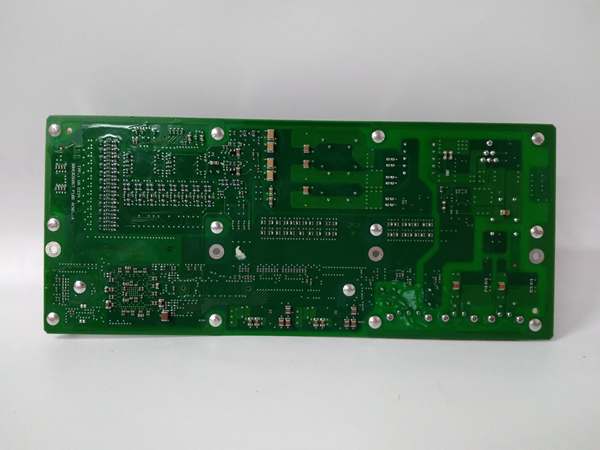
ABB UAD154A
Typical Applications
The ABB UAD154A is widely used in industries requiring reliable signal interface for process automation:
-
Chemical Processing:
-
Connects pressure transmitters and temperature sensors to the AC800PE controller, enabling real-time monitoring of reactor conditions.
-
Example: In a petrochemical refinery, the UAD154A transmits pressure data from a reactor to the controller, which adjusts the flow of reactants to maintain optimal reaction conditions.
-
-
Power Generation:
-
Interfaces with turbine sensors (e.g., temperature, vibration) and actuator (e.g., governor valves) to maintain optimal power output.
-
Example: In a thermal power plant, the UAD154A acquires temperature signals from a turbine and transmits them to the controller, which adjusts the fuel flow to maintain efficiency.
-
-
Manufacturing:
-
Integrates PLCs with legacy DCS systems for hybrid control architectures. In an automotive plant, the UAD154A synchronizes robotic arms (PLC-controlled) with DCS-managed assembly line processes.
-