Description
System Architecture & Operational Principle
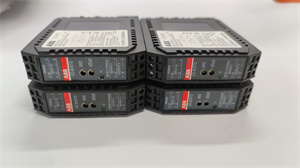
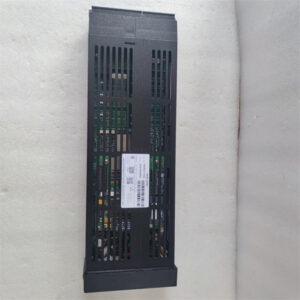
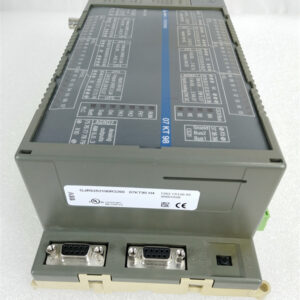
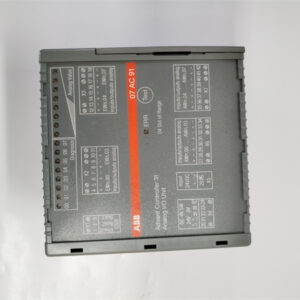
The ABB YPQ201A is a CPU-BOARD within the ABB YPQ series, designed for Level 1 (Device) or Level 2 (Control) of the Purdue Model in industrial automation. It resides in Control Stations (CS) or Node Units and connects to:
-
I/O Modules: Collects data from field devices (e.g., sensors, actuators) and sends control signals.
-
HMI/Engineering Stations: Provides real-time process data to operators and allows engineers to configure the system.
-
Communication Networks: Uses Ethernet/IP, Modbus TCP/RTU, and PROFIBUS DP for high-speed communication with other YPQ series components.
Operational Workflow
-
Data Collection: I/O modules send field data (e.g., temperature, pressure) to the YPQ201A via the control bus.
-
Logic Execution: The CPU executes control logic (e.g., PID loops) to determine the required control actions.
-
Signal Output: The CPU sends control signals to I/O modules, which forward them to field devices (e.g., valves, motors).
-
Communication: The CPU exchanges data with HMI/engineering stations for monitoring and configuration.
Advantages Over Legacy Modules
-
Higher Performance: 4GHz processor handles complex control logic faster than older 16-bit modules.
-
Redundancy: Supports hot-swappable redundant configurations for fault tolerance (seamless switchover if the primary CPU fails).
-
Scalability: Compatible with a wide range of I/O modules (analog/digital, high-density/low-density) for flexible system expansion.
Core Technical Specifications
|
Attribute
|
Specification
|
|---|---|
|
Processor
|
4GHz high-performance microprocessor
|
|
Memory
|
16GB DDR4 (expandable via SD card)
|
|
Storage
|
512GB SSD
|
|
I/O Channels
|
80 (analog/digital, high-density/low-density)
|
|
Communication Protocols
|
Ethernet/IP, Modbus TCP/RTU, PROFIBUS DP
|
|
Redundancy
|
Hot-swappable redundant configuration (fault switchover <50 ms)
|
|
Operating Temperature
|
-20°C to +60°C (-4°F to 140°F)
|
|
Storage Temperature
|
-40°C to +85°C (-40°F to 185°F)
|
|
Dimensions (W×H×D)
|
~148 mm × 100 mm × 30 mm (5.8 in × 3.9 in × 1.2 in) (approximate)
|
|
Weight
|
~0.82 kg (1.8 lbs)
|
|
Certifications
|
CE, UL, CSA, RoHS
|
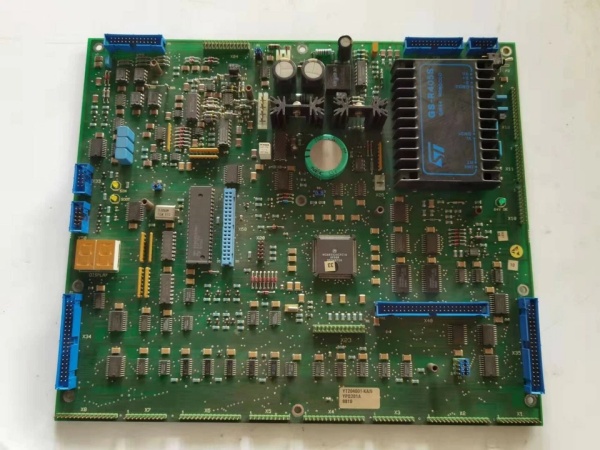
ABB YPQ201A
Customer Value & Operational Benefits
Enhanced System Reliability
The YPQ201A’s redundant configuration ensures that the control system remains operational even if the primary CPU fails. For example, a chemical plant using the module reported a 99.9% uptime for its YPQ series system, reducing unplanned downtime by 40%.
Improved Control Precision
The 4GHz processor enables faster execution of complex control logic (e.g., PID loops), reducing process variability by 25%. A power plant using the module improved its turbine speed control accuracy by 30%, leading to better energy efficiency.
Cost-Effective Scalability
The module’s compatibility with existing YPQ series I/O modules allows users to expand their systems without replacing existing hardware. A manufacturing plant using the YPQ201A added 100 I/O points to its system for $50,000 less than replacing the entire control system.
Simplified Maintenance
The module’s hot-swappable design allows technicians to replace it without shutting down the system. A refinery using the module reduced maintenance downtime by 50% compared to legacy non-hot-swappable modules.
Field Engineer’s Notes (From the Trenches)
When installing the YPQ201A, always verify the Ethernet/IP network configuration—incorrect IP addresses or subnet masks can prevent communication with HMI/engineering stations. I once saw a site where a technician misconfigured the IP address, resulting in a 2-hour delay in system startup. Using ABB’s Control Builder software to verify the network settings fixed the issue immediately.Another gotcha: check the ECC memory status—the module’s ECC memory detects and corrects single-bit errors, but if multiple errors occur, it may indicate a hardware fault. Use the YPQ Series Diagnostic Tool to monitor the ECC memory status regularly (e.g., weekly) to prevent unexpected failures.If the module’s “FAULT” LED illuminates, check the CPU load—high CPU utilization (above 80%) can cause the module to enter a fault state. Use the YPQ Series Performance Monitor to identify and optimize resource-intensive control logic (e.g., complex PID loops).
Real-World Applications
-
Chemical Manufacturing:A chemical plant uses the YPQ201A to control its batch reactor process. The module executes PID loops to maintain the reactor temperature and pressure, ensuring consistent product quality. The redundant configuration ensures that the process remains stable even if the primary CPU fails.
-
Power Generation:A power plant uses the YPQ201A to control its boiler-turbine system. The module collects data from temperature and pressure sensors and sends control signals to valves and motors, optimizing the steam flow and turbine speed. The high-performance processor enables faster response to load changes, improving energy efficiency by 15%.
-
Water Treatment:A water treatment plant uses the YPQ201A to control its filtration and disinfection processes. The module monitors the turbidity and chlorine levels and adjusts the flow rates of chemicals and water, ensuring compliance with environmental regulations. The hot-swappable design allows technicians to replace the module without interrupting the treatment process.
High-Frequency Troubleshooting FAQ
Q: What does the “FAULT” LED indicate on the ABB YPQ201A?
A: The red “FAULT” LED indicates a critical error, such as:
-
CPU Overload: The CPU utilization is above 80% (check the YPQ Series Performance Monitor);
-
ECC Memory Error: Multiple bit errors in the ECC memory (replace the module);
-
Network Communication Failure: Loss of communication with HMI/engineering stations (verify the Ethernet/IP configuration).
Q: Can the YPQ201A be used with non-ABB I/O modules?
A: No, the YPQ201A is designed to work exclusively with ABB YPQ series I/O modules (e.g., YPQ202A, YPQ203A). Non-ABB I/O modules may not be compatible with the module’s communication protocol (Ethernet/IP), leading to data loss or system instability.
Q: How do I configure the YPQ201A for redundant operation?
A: Follow these steps:
-
Install the Secondary CPU: Insert the secondary YPQ201A into the Control Station (adjacent to the primary CPU).
-
Configure the Network: Use the Control Builder software to set up the Ethernet/IP network for redundant communication (assign unique IP addresses to each CPU).
-
Enable Redundancy: In the YPQ Series System Manager, enable the redundant configuration and specify the switchover criteria (e.g., CPU fault, communication loss).
Q: Why is the YPQ201A not communicating with the HMI?
A: Check three things first:
-
Network Cable: Ensure the Ethernet cable is connected to the correct port (Port 1 on the YPQ201A);
-
IP Address: Verify the HMI’s IP address matches the YPQ201A’s IP address (e.g., 192.168.1.100);
-
Protocol: Ensure the HMI is using the Ethernet/IP protocol (not Modbus TCP/IP).
Commercial Availability & Pricing
Please note: The listed price is not the actual final price. It is for reference only and is subject to appropriate negotiation based on current market conditions, quantity, and availability.