Description
System Architecture & Operational Principle
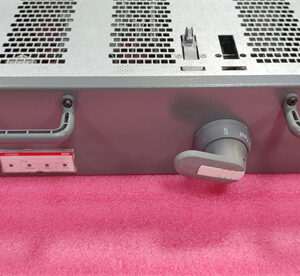
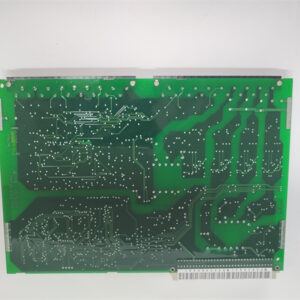
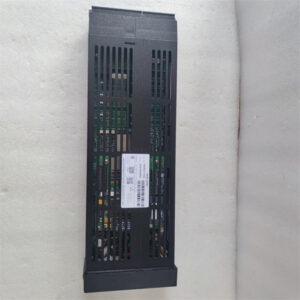
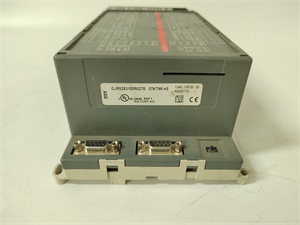
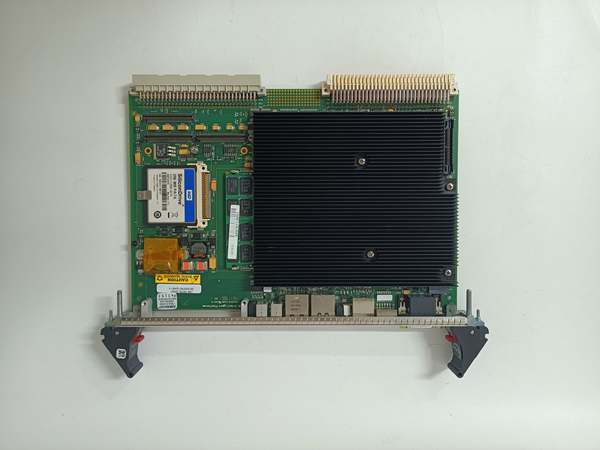
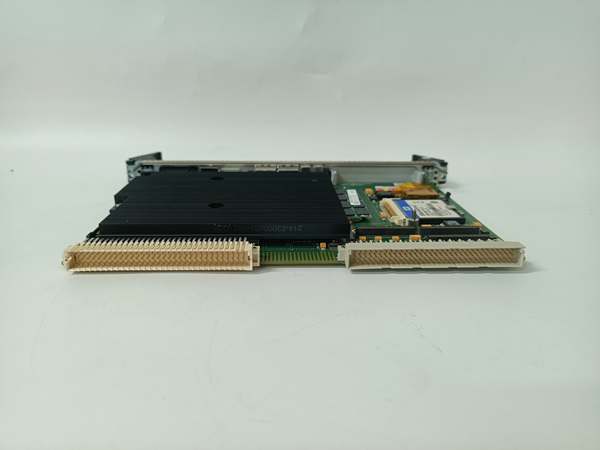
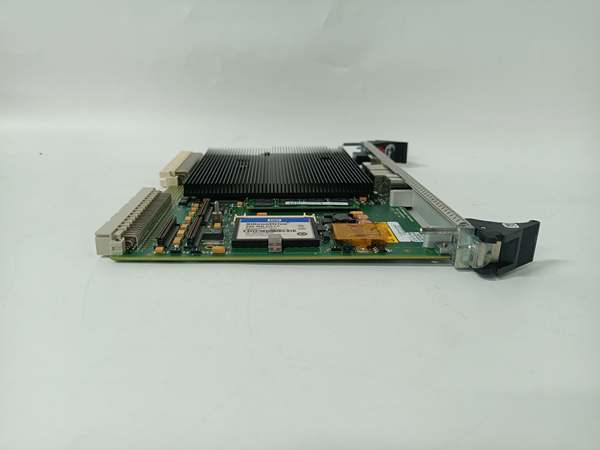
The GE VMIVME-7807RC is a VMEbus-compliant single board computer (SBC) designed for industrial and embedded applications requiring high performance and reliability. It is based on the Intel Pentium M processor (1.1–1.8 GHz) and uses the Intel 855GME chipset for enhanced graphics and storage support. The module is housed in a 6U VME Eurocard form factor and fits into standard VME racks (Purdue Level 1–2 boundary).
Core Functional Blocks
The VMIVME-7807RC consists of three main functional blocks:
-
Processing Unit: The Intel Pentium M processor (with up to 2 MB L2 cache) provides high-speed computation for control logic, data processing, and communication tasks.
-
Memory Subsystem: Supports up to 1.5 GB of DDR SDRAM (via a 200-pin SODIMM socket and optional soldered memory) for fast data access.
-
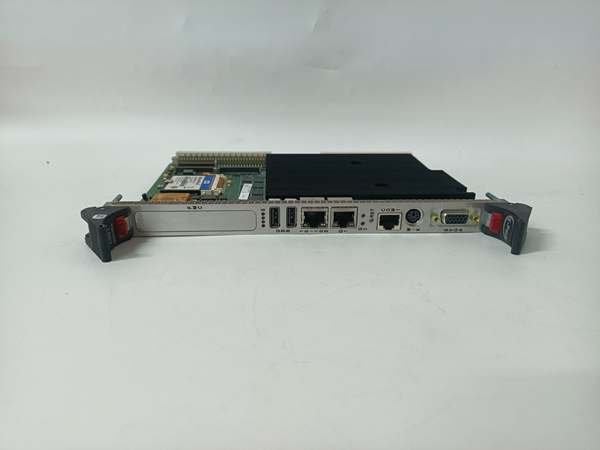
I/O Interfaces: Includes dual Gigabit Ethernet ports (10/100/1000 Mbps), 4x USB 2.0 ports, 4x serial ports (RS-232/422), and SVGA/DVI-D video outputs for connecting to external devices (e.g., HMIs, SCADA systems, I/O modules).
Operational Workflow
-
Power-Up: The module draws power from the VMEbus backplane (supports 5V DC) and initializes the BIOS.
-
Boot Process: The BIOS configures the processor, memory, and I/O interfaces, then boots the operating system (e.g., Windows XP, Linux, VxWorks).
-
Task Execution: The processor executes user-defined control programs (downloaded via the VMEbus) and communicates with I/O modules (e.g., analog/digital I/O cards) to collect data and send control signals.
-
Communication: The dual Gigabit Ethernet ports enable high-speed data transfer with external systems (e.g., enterprise networks, cloud platforms), while the serial ports support legacy device integration.
Key Architectural Advantages
-
VME64 Compliance: Supports VME64 mode (A32/A24/D32/D08) for high-bandwidth data transfer with VMEbus devices.
-
Hot-Swappable: Can be replaced without shutting down the VME rack, minimizing downtime in 24/7 applications.
-
Rugged Design: Built to withstand harsh industrial environments (vibration, temperature extremes) with a conduction-cooled chassis (no moving parts).
Core Technical Specifications
|
Parameter
|
Specification
|
|---|---|
|
Processor
|
Intel Pentium M (1.1–1.8 GHz, up to 2 MB L2 cache)
|
|
Chipset
|
Intel 855GME
|
|
Memory
|
Up to 1.5 GB DDR SDRAM (200-pin SODIMM + optional soldered memory)
|
|
Storage
|
Supports up to 2 GB CompactFlash (bootable)
|
|
Ethernet
|
2x Gigabit Ethernet ports (10/100/1000 Mbps), 1x 10/100 Mbit Ethernet (front panel)
|
|
USB
|
4x USB 2.0 ports (2 front, 2 rear)
|
|
Serial Ports
|
4x 16550-compatible serial ports (RS-232/422), 1x front panel (RJ45)
|
|
Video
|
SVGA (front panel), DVI-D (rear, dual-head support)
|
|
VMEbus Interface
|
VME64 compliant (A32/A24/D32/D08), Tundra Universe II VME bridge
|
|
Operating Temperature
|
-40°C to +55°C (-40°F to +131°F)
|
|
Power Consumption
|
~15 W (typical), 25 W (max)
|
|
Dimensions
|
6U VME (160 mm × 233.5 mm × 41 mm)
|
|
Weight
|
~1.2 kg (2.6 lbs)
|
|
Certifications
|
CE, UL, RoHS, MIL-STD-810 (vibration/shock)
|
GE VMIVME-7807RC
Customer Value & Operational Benefits
1. High Performance for Complex Control Tasks
The Intel Pentium M processor (1.8 GHz) and 1.5 GB DDR memory enable the VMIVME-7807RC to handle complex control algorithms (e.g., PID loops, motion control) and large datasets (e.g., from 100+ I/O channels). This is critical for applications like power generation (turbine control) or industrial automation (robotics).
2. Rugged Reliability for Harsh Environments
The conduction-cooled chassis and MIL-STD-810 compliance make the VMIVME-7807RC suitable for outdoor substations, offshore oil platforms, or factory floors where temperature extremes and vibration are common. The hot-swap design minimizes downtime during maintenance.
3. Flexible Communication for System Integration
The dual Gigabit Ethernet ports and 4x USB 2.0 ports allow the VMIVME-7807RC to integrate with modern SCADA systems (e.g., Wonderware, Ignition) and legacy devices (e.g., serial RTUs). This flexibility reduces the need for additional communication gateways, lowering costs.
4. Easy Diagnostics with Visual Indicators
The front panel includes status LEDs (power, Ethernet, disk activity) and a reset switch for quick troubleshooting. The BIOS setup utility (accessible via the front panel) allows users to configure parameters (e.g., boot order, memory timings) without additional tools.
Field Engineer’s Notes (From the Trenches)
When installing the VMIVME-7807RC, always use a torque wrench to tighten the VMEbus connectors—over-tightening can damage the pins, while under-tightening can cause intermittent communication. I once saw a technician strip the VMEbus pins because he used a pipe wrench instead of the recommended tool.Verify the memory configuration (SODIMM + soldered memory) before powering up—mismatched memory can cause the BIOS to fail. Use a multimeter to test the memory slots for continuity if you’re unsure.Test the Ethernet ports (ping the device’s IP address) after installation—use a crossover cable if you’re connecting directly to a laptop. I’ve spent hours troubleshooting “no comms” faults only to find a bad Ethernet cable.GE VMIVME-7807RC
Real-World Applications
1. Power Generation: Turbine Control
A natural gas power plant uses the VMIVME-7807RC to control a 500 MW gas turbine. The module executes PID loops to adjust fuel flow and turbine speed, maintaining grid frequency (50/60 Hz) within strict limits. The dual Gigabit Ethernet ports enable remote monitoring via the plant’s SCADA system.
2. Industrial Automation: Robotic Welding Line
An automotive plant uses the VMIVME-7807RC to control a robotic welding line with 12 servo axes. The module’s fast processing speed (1.8 GHz) ensures precise motion control, while the 4x USB 2.0 ports connect to the robot controllers. The hot-swap design allows technicians to replace the module during lunch breaks, minimizing downtime.
3. Oil & Gas: Pipeline Monitoring
A pipeline company uses the VMIVME-7807RC to monitor pressure and flow in a 100-mile gas pipeline. The module collects data from field sensors (via VME I/O modules) and transmits it to the company’s enterprise network using Modbus TCP. The wide operating temperature range (-40°C to +55°C) ensures reliable operation in remote areas.