Description
System Architecture & Operational Principle
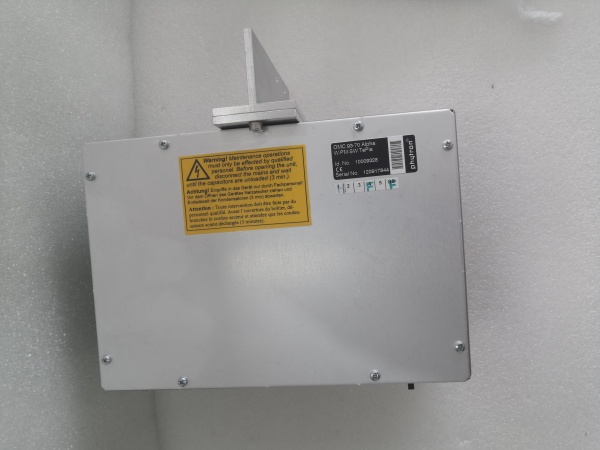
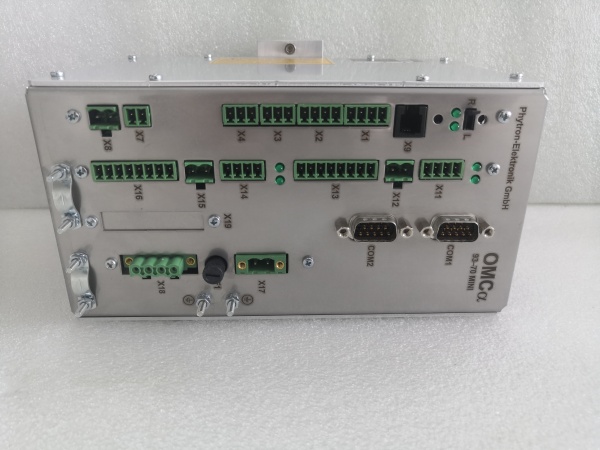
The OMC OMC93-70 MINI is a miniature stepper motor designed for Purdue Model Level 1 (Process Control) in industrial automation. It serves as the critical interface between control systems (e.g., PLCs, microcontrollers) and mechanical loads (e.g., robotic arms, conveyor belts), enabling precise motion control through open-loop stepping.
Core Functional Blocks
-
Stator: Consists of two pairs of windings (phases A and B) wound around a laminated iron core. When energized sequentially, the stator generates a rotating magnetic field that interacts with the rotor.
-
Rotor: A permanent magnet with 50 teeth (for 1.8° step angle), which aligns with the stator’s magnetic field to produce motion.
-
Winding Connections: Four leads (A+, A-, B+, B-) connect to a stepper drive, which supplies current to the windings in a specific sequence (e.g., A+ → B+ → A- → B-) to rotate the rotor.
-
Housing: Aluminum alloy casing for heat dissipation and mechanical protection, with a compact form factor (≈40 mm × 40 mm × 20 mm) for space-constrained applications.
Operational Workflow
-
Command Reception: The stepper drive receives pulse signals from the control system (e.g., PLC), where each pulse corresponds to a 1.8° rotation of the motor shaft.
-
Current Sequencing: The drive energizes the stator windings in the correct sequence (e.g., A+ → B+ → A- → B-) to create a rotating magnetic field.
-
Rotor Movement: The rotor’s permanent magnet aligns with the stator’s magnetic field, causing the shaft to rotate by 1.8° per pulse.
-
Feedback Loop: Although open-loop, the control system can monitor the motor’s position via an encoder (optional) to ensure accuracy.

OMC OMC93-70 MINI
Core Technical Specifications
|
Parameter
|
Specification
|
|---|---|
|
Step Angle
|
1.8° (full step) / 0.9° (half step)
|
|
Current per Phase
|
0.5 A (max)
|
|
Operating Voltage
|
5 VDC
|
|
Holding Torque
|
10 N·cm (at 0.5 A)
|
|
Max Speed
|
300 RPM (at 5 VDC)
|
|
Leads
|
4 (A+, A-, B+, B-)
|
|
Form Factor
|
≈40 mm × 40 mm × 20 mm (compact)
|
|
Weight
|
~0.2 kg (0.44 lbs)
|
|
Certifications
|
CE, RoHS
|
Customer Value & Operational Benefits
1. Compact Size for Space-Constrained Applications
The OMC93-70 MINI’s small form factor (≈40 mm × 40 mm × 20 mm) makes it ideal for space-constrained applications like pick-and-place robots (e.g., assembling small electronics) or CNC milling machines (e.g., positioning cutting tools). Its compact size allows for dense integration in multi-axis systems, reducing the overall footprint of the automation setup.
2. Precise Positioning for Critical Tasks
With a 1.8° step angle (and 0.9° half-step), the motor provides precise positioning (±0.05 mm per revolution), critical for applications like semiconductor manufacturing (e.g., placing wafers on a chuck) or medical device assembly (e.g., inserting components into a syringe). The open-loop control ensures repeatability, reducing human error in quality control.
3. Low Power Consumption for Energy Efficiency
The 5 VDC operating voltage and 0.5 A current per phase result in low power consumption (≈2.5 W), making it suitable for battery-powered applications (e.g., portable automation equipment) or energy-efficient factories. This reduces operating costs and aligns with sustainability goals.
4. Easy Integration with Existing Systems
The motor’s 4-lead configuration (A+, A-, B+, B-) is compatible with standard stepper drives (e.g., A4988, DRV8825), allowing seamless integration with existing control systems (e.g., Arduino, Raspberry Pi, PLCs). This flexibility reduces the need for custom hardware, cutting integration time and cost.
OMC OMC93-70 MINI
Field Engineer’s Notes (From the Trenches)
When installing the OMC93-70 MINI, always use a current-limited power supply (0.5 A max) to prevent overheating. I once saw a site burn out a motor because they used a 2 A power supply, which exceeded the winding’s current rating.Secure the motor shaft with a setscrew or keyway to prevent slippage under load. A loose shaft can cause positional errors, especially in high-torque applications like conveyor belt drives.Lubricate the bearings every 6 months with a light machine oil (e.g., 10W-30) to reduce friction and extend the motor’s life. A dry bearing can increase noise and reduce torque output.Check the lead wires for wear and tear regularly—frayed wires can cause intermittent connections, leading to missed steps. Use heat-shrink tubing to insulate the connections and prevent short circuits.
Real-World Applications
1. Pick-and-Place Robots in Electronics Manufacturing
A electronics manufacturer uses the OMC93-70 MINI to drive the X-Y axes of a pick-and-place robot. The motor’s precise positioning (±0.05 mm) ensures that components (e.g., resistors, capacitors) are placed accurately on PCBs, reducing assembly errors by 20%. The compact size allows the robot to fit in tight spaces between conveyor belts.
2. CNC Milling Machines for Small Parts
A job shop uses the OMC93-70 MINI to drive the Z-axis of a CNC milling machine. The motor’s 10 N·cm holding torque ensures that the cutting tool remains in position during milling, producing parts with smooth surfaces (Ra 0.8 μm). The low power consumption (2.5 W) reduces the machine’s energy costs by 15% compared to larger motors.
3. Medical Device Assembly Lines
A medical device manufacturer uses the OMC93-70 MINI to drive the rotary table of an assembly line. The motor’s precise rotation (1.8° per pulse) ensures that syringes are filled with the correct amount of medication (±0.1 mL), meeting FDA regulations. The aluminum housing resists corrosion from cleaning agents, making it suitable for sterile environments.