Description
Product Overview
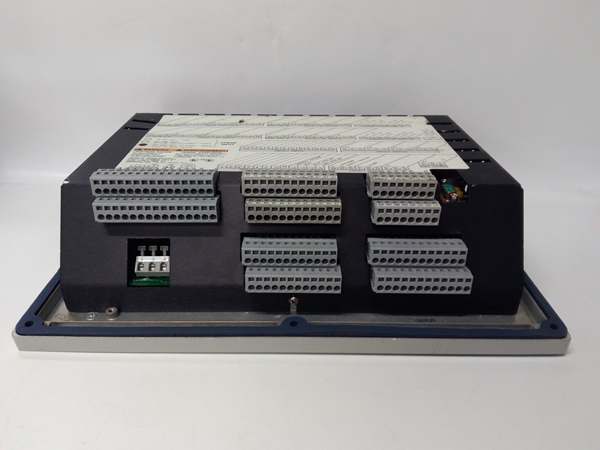
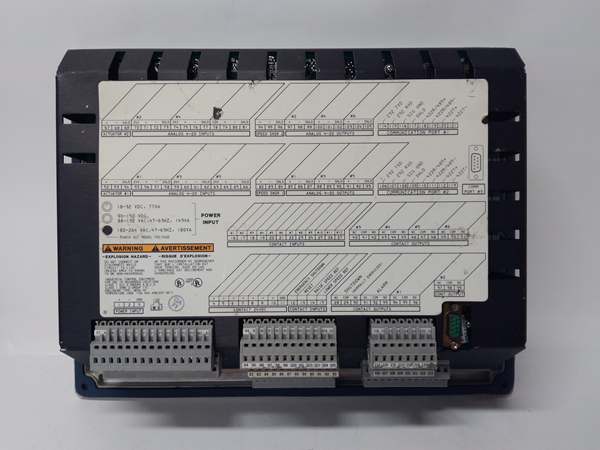
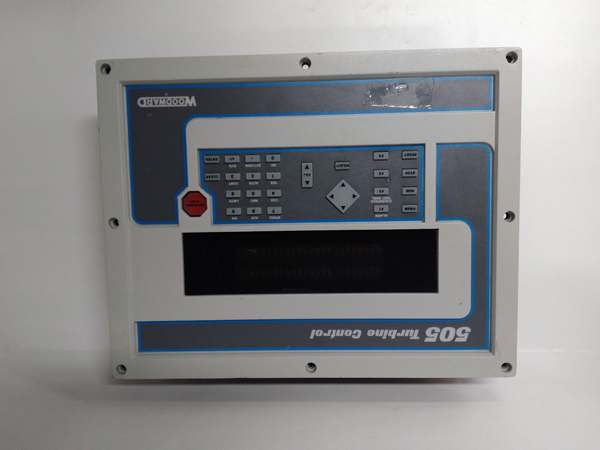
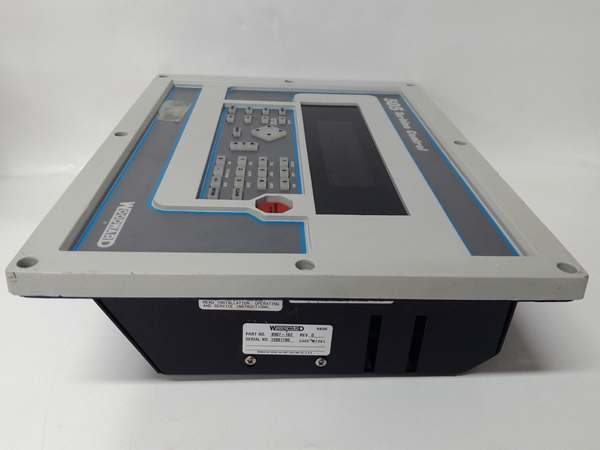
The Woodward 9907-162 is a 505 series digital governor designed specifically for steam turbine control in industrial and power generation applications. As a microprocessor-based device, it replaces traditional mechanical governors with advanced digital algorithms, enabling precise speed regulation, load sharing, and fault diagnostics. The 9907-162 is widely used in scenarios where stable turbine operation is critical—such as coal-fired power plants, marine auxiliary turbines, and industrial cogeneration facilities.
Its primary role is to maintain constant turbine speed (e.g., 3000 rpm for 50 Hz grids) or adjust speed based on load demand (e.g., during peak power demand). The module integrates with steam valves (via actuators) to adjust steam flow, ensuring optimal turbine efficiency and preventing overspeed conditions.
Key Technical Specifications
The 9907-162’s technical parameters are tailored for harsh industrial environments and high-precision control, with insights from Woodward 505 series documentation and industrial supplier listings:
-
Input Voltage: 18–32 VDC (nominal 24 VDC) – compatible with global industrial power systems.
-
Output Signals:
-
2 actuator outputs (0–200 mA sink/source) – drives Woodward proportional actuators (e.g., EG-3P) for steam valve positioning.
-
8 relay outputs (250 VAC/5 A) – for alarms, trips, or interlock signals.
-
6 programmable current outputs (4–20 mA) – for remote monitoring of turbine parameters (e.g., speed, load).
-
-
Control Modes:
-
Isochronous Mode: Maintains constant turbine speed (±0.25% tolerance) for standalone operation.
-
Droop Mode: Adjusts speed based on load (adjustable droop percentage, 0–10%) for parallel operation with other turbines.
-
-
Communication Interfaces:
-
2 Modbus RTU ports (RS-232/RS-422/RS-485) – connects to plant DCS/SCADA systems for remote monitoring and control.
-
Optional Ethernet/IP or PROFIBUS modules – for integration with modern industrial networks.
-
-
Operating Temperature: -20°C to +60°C (-4°F to +140°F) – suitable for most industrial environments (extended temperature range available with optional NEMA 4X enclosure).
-
Certifications: CE, UL, CSA – compliant with international industrial safety standards.
-
Dimensions: 11 in x 14 in x 4 in (279 mm x 356 mm x 102 mm) – fits standard industrial control cabinets.
-
Weight: ~9.11 lbs (4.13 kg) – lightweight for easy handling during maintenance.

Woodward 9907-162
Field Application & Problem Solved
In industrial steam turbine systems, unstable speed (due to load changes or grid fluctuations) and inefficient steam flow (due to mechanical governor limitations) can lead to:
-
Grid frequency deviations (triggering penalties or equipment shutdowns).
-
Reduced turbine efficiency (increasing fuel consumption by 5–10%).
-
Increased maintenance costs (due to mechanical wear on valves and governors).
The 9907-162 addresses these challenges through:
-
Precision Speed Regulation:The module uses PID (Proportional-Integral-Derivative) algorithms to maintain speed within ±0.25% of the setpoint (isochronous mode). This stability is critical for power plants, where frequency deviations of ±0.5 Hz can trigger grid penalties.
-
Load Sharing:In parallel operation (droop mode), the 9907-162 distributes load evenly across turbines (±1% accuracy). For example, a marine vessel using two turbines with the 9907-162 reduced fuel consumption by 8% due to balanced load distribution.
-
Fault Diagnostics:The module continuously monitors for faults (e.g., overspeed, low oil pressure, actuator failure) and triggers alarms or trips to prevent damage. A first-out trip indicator simplifies troubleshooting by identifying the root cause of a shutdown.
Typical Applications:
-
Power Generation: Controlling steam turbines in coal-fired/gas-fired power plants to maintain grid frequency stability.
-
Marine Propulsion: Controlling shipboard turbines for auxiliary power generation (e.g., lighting, HVAC).
-
Industrial Cogeneration: Balancing electrical load and thermal steam demand in refineries or chemical plants.
Installation & Maintenance Pitfalls (Expert Tips)
To ensure optimal performance and reliability of the 9907-162, follow these best practices:
-
Verify Power Supply Compatibility:
-
Confirm that the input voltage (18–32 VDC) matches the module’s rating. Mismatched voltage can damage the internal circuitry—use a multimeter to check the input voltage before installation.
-
-
Calibrate Speed Sensors:
-
Use a precision tachometer to calibrate the turbine’s speed sensor (e.g., magnetic pickup) before installing the 9907-162. Incorrect sensor calibration can lead to speed deviations—verify with a multimeter.
-
-
Test Actuator Response:
-
After installation, test the actuator response using a signal generator. Verify that the 9907-162 sends the correct current signal (0–200 mA) to the actuator—this step prevents issues like “valve not opening/closing properly” during operation.
-
-
Perform Regular Firmware Updates:
-
Check Woodward’s website for firmware updates (e.g., bug fixes, new features). Install updates using Woodward’s 505View software to ensure the module operates with the latest algorithms.
Woodward 9907-162
-
Comparison with Similar Models (e.g., 9907-018)
To clarify the difference between the 9907-162 and the previously discussed 9907-018:
|
Feature
|
Woodward 9907-162
|
Woodward 9907-018
|
|---|---|---|
|
Series
|
505 (Digital Governor for Steam Turbines)
|
2301A (Mechanical Load Sharing Module)
|
|
Control Type
|
Digital (microprocessor-based)
|
Mechanical (hydraulic/electromechanical)
|
|
Primary Use
|
Steam turbine speed/load control
|
Diesel/gas engine load sharing
|
|
Input Voltage
|
18–32 VDC
|
10–40 VDC
|
|
Output Signal
|
0–200 mA (actuator control)
|
0–200 mA (actuator control)
|
|
Key Advantage
|
Precision digital control
|
Simple, robust mechanical design
|
Final Notes
The Woodward 9907-162 is a reliable and essential component of Woodward’s 505 series, enabling precise speed regulation and load management for steam turbines. Its digital architecture, combined with flexible communication options and robust fault diagnostics, makes it ideal for mission-critical applications where stable turbine operation is non-negotiable.
When installing or maintaining the 9907-162, always adhere to Woodward’s guidelines and consult with a certified technician to ensure optimal performance. For more detailed information, refer to Woodward’s official 505 Series Digital Governor Manual (Document # 505-OM-001) or contact Woodward’s customer support for application-specific advice.