Description
System Architecture & Operational Principle
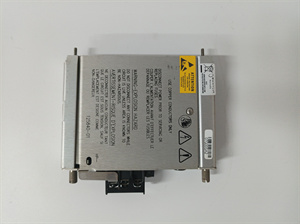
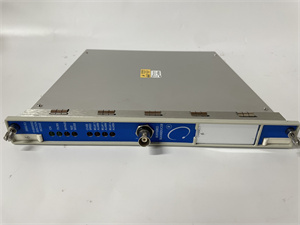
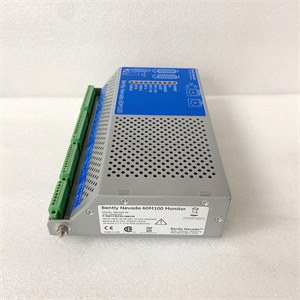
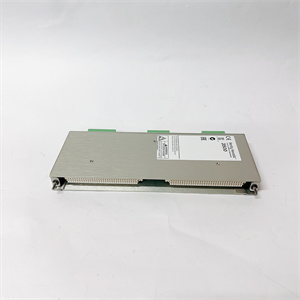
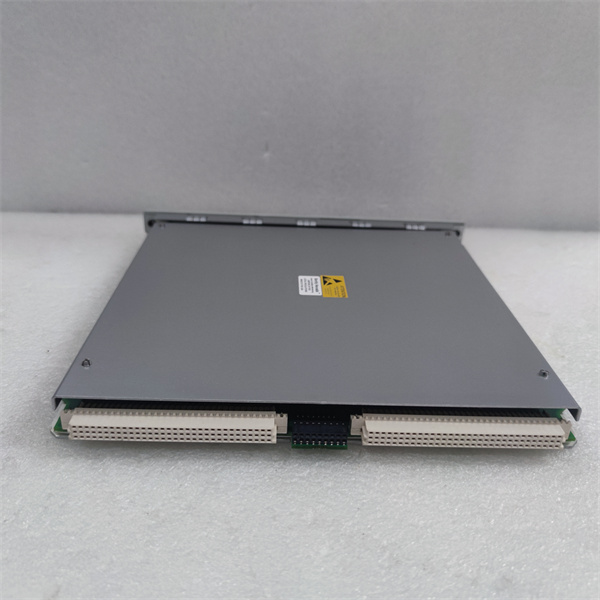
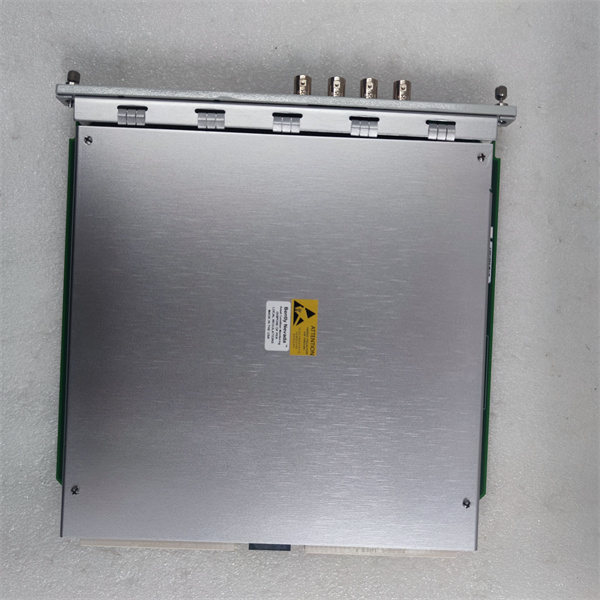
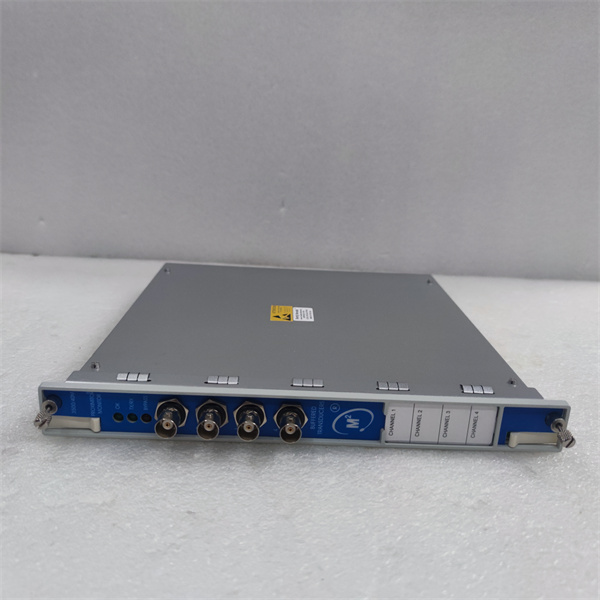
The Bently 176449-01 is a 4-channel proximitor monitor module within the Bently Nevada 3500 Series Machinery Protection System, designed for Level 1 (Device) or Level 2 (Control) of the Purdue Model in industrial automation. It resides in the 3500 Series rack (typically in Slots 3–14, adjacent to relay or communication modules) and serves as the bridge between proximity probes (e.g., 3300 XL 8mm) and higher-level systems (e.g., DCS, SCADA).
Upstream Communication
Receives raw signals from up to four proximity probes via the 3500 rack’s backplane. These probes measure shaft vibration, displacement, or eccentricity by detecting changes in eddy currents induced by the rotating shaft.
Downstream Communication
Transmits processed data (e.g., peak vibration amplitude, phase angle, shaft position) to:
-
3500 Series Relay Modules (e.g., 3500/32): Trigger alarms or shutdowns if parameters exceed thresholds.
-
External Systems (e.g., Emerson DeltaV, Siemens S7-1500): Send real-time data for monitoring or analytics via Modbus TCP/IP or proprietary protocols.
Operational Advantages
-
High Precision: Measures shaft displacement with 0.01 mm accuracy, critical for detecting incipient faults (e.g., bearing wear, rotor imbalance).
-
Hot-Swappable: Can be replaced without shutting down the 3500 system, minimizing downtime during maintenance.
-
Redundancy Support: Compatible with triple modular redundant (TMR) configurations for mission-critical applications (e.g., power generation turbines).
Core Technical Specifications
|
Attribute
|
Specification
|
|---|---|
|
Channel Count
|
4 independent channels
|
|
Input Type
|
Proximity probe signals (Bently Nevada 3300 XL series)
|
|
Measurement Parameters
|
Radial vibration, axial position, differential expansion, eccentricity
|
|
Accuracy
|
±0.5% of full scale (typical)
|
|
Power Supply
|
24 VDC (from 3500 rack)
|
|
Operating Temperature
|
-30°C to +65°C (-22°F to 149°F)
|
|
Storage Temperature
|
-40°C to +85°C (-40°F to 185°F)
|
|
Dimensions (W×H×D)
|
241.3 mm × 24.4 mm × 241.8 mm (9.50 in × 0.96 in × 9.52 in)
|
|
Weight
|
0.91 kg (2.0 lbs)
|
|
Certifications
|
CE, UL, CSA, ATEX, DNV (maritime applications)
|
|
Compatibility
|
3500 Series racks; works with 3500/20 RIM for communication
|
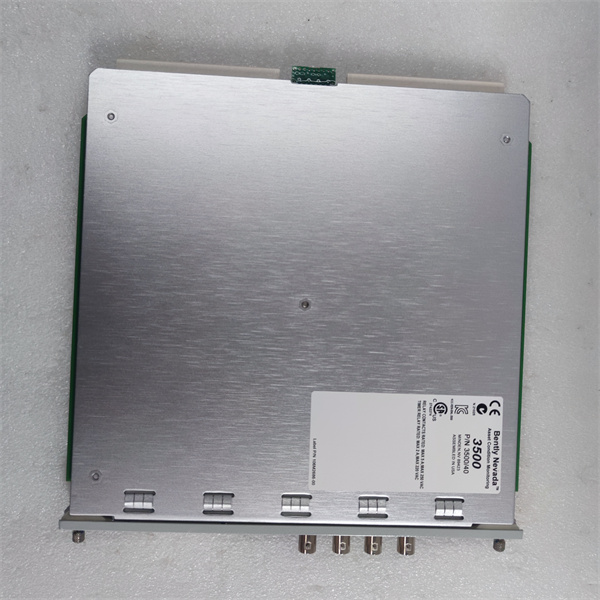
BENTLY 3500/40M 176449-01
Customer Value & Operational Benefits
Enhanced Machinery Protection
The 176449-01’s high-precision measurements enable early detection of incipient faults (e.g., bearing pitting, rotor imbalance), preventing catastrophic failures and reducing unplanned downtime. For example, a power plant using the module to monitor a steam turbine can detect abnormal vibration patterns during start-up and shut down the turbine before damage occurs.
Seamless Integration with 3500 Series
As a core component of the 3500 Series, the 176449-01 integrates seamlessly with other 3500 modules (e.g., 3500/32 relays, 3500/92 communication gateway). This eliminates the need for custom wiring or protocol converters, reducing integration time and costs.
Reduced Maintenance Costs
The hot-swappable design allows technicians to replace a faulty module in minutes without interrupting the 3500 system’s operation. This minimizes labor costs and production losses—critical for facilities with tight maintenance budgets.
Compliance with Industry Standards
The module complies with API 670 (American Petroleum Institute standard for machinery protection systems), ensuring it meets the rigorous requirements of industries like oil & gas, power generation, and chemical processing.
Field Engineer’s Notes (From the Trenches)
When installing the 176449-01, always verify the proximity probe gap—the gap between the probe and the shaft must be set to the manufacturer’s specification (typically 0.5–1.0 mm for 3300 XL probes). An incorrect gap will cause the module to misinterpret signals, leading to false alarms. I once saw a site where a contractor set the gap too wide, resulting in missed faults and a damaged turbine.Another gotcha: ground the module properly—the 3500 system’s IP65 rating requires a proper ground connection to protect against electric shock and EMI. I’ve fixed countless “ghost” faults (e.g., random communication drops) by ensuring the module’s ground wire is connected to the cabinet’s earth ground.If the module’s “FAULT” LED is red, check the probe wiring—loose or reversed wires are a common cause of faults. Use a multimeter to test for continuity between the probe and the module’s input terminals. Also, ensure the probe’s shield is grounded to the 3500 rack’s earth ground to reduce EMI.
Real-World Applications
-
Power Generation: Steam Turbine MonitoringA coal-fired power plant uses the 176449-01 to monitor a steam turbine’s shaft vibration. The module processes signals from four 3300 XL proximity probes (installed at 90-degree intervals) to measure radial vibration. If the vibration exceeds the trip threshold (e.g., 12 mils), the module sends a signal to a 3500/32 relay module, which triggers an emergency shutdown.
-
Oil & Gas: Centrifugal Compressor ProtectionAn offshore oil platform uses the 176449-01 to monitor a centrifugal compressor’s shaft displacement. The module receives signals from two proximity probes (installed on the compressor’s shaft) and transmits data to a Siemens S7-1500 PLC via Modbus TCP/IP. The PLC uses this data to adjust the compressor’s inlet guide vanes, preventing surge events.

BENTLY 3500/40M 176449-01
High-Frequency Troubleshooting FAQ
Q: What does the “FAULT” LED indicate on the 176449-01?
A: The red “FAULT” LED indicates a critical error, such as:
-
Proximity probe failure (e.g., broken wire, faulty probe).
-
Input signal out of range (e.g., too high or too low voltage).
-
Module hardware failure (e.g., corrupted firmware, damaged components).Check the 3500 Rack Configuration Software for detailed fault codes and follow the manufacturer’s troubleshooting steps.
Q: Can the 176449-01 be used with non-Bently probes?
A: No, the module is designed to work exclusively with Bently Nevada proximity probes (e.g., 3300 XL series). Non-Bently probes may not meet the required signal specifications, leading to inaccurate measurements or module failure.
Q: How do I calibrate the 176449-01?
A: The module does not require regular calibration if the probes are properly installed and maintained. However, if you suspect a calibration issue, use a proximity probe simulator (e.g., Bently’s 3300 XL Simulator) to test the module’s input and output signals. Follow the manufacturer’s instructions for simulator setup and testing.
Q: Why is the 176449-01 not transmitting data to the DCS?
A: Check three things first:
-
Communication Gateway: Ensure the 3500/92 Communication Gateway is properly configured and connected to the DCS.
-
Protocol Settings: Verify that the DCS is configured for the correct protocol (e.g., Modbus TCP/IP) and that the module’s IP address is correct.
-
Module Status: Check the module’s LED indicators—if the “FAULT” LED is on, resolve the internal fault before proceeding.
Commercial Availability & Pricing
Please note: The listed price is not the actual final price. It is for reference only and is subject to appropriate negotiation based on current market conditions, quantity, and availability.