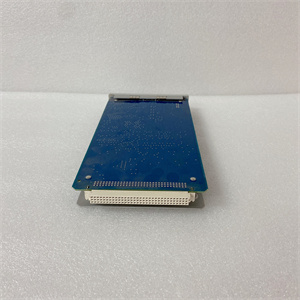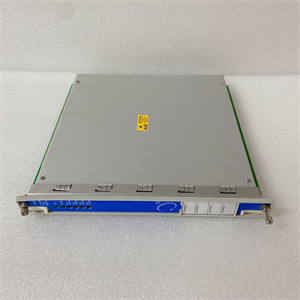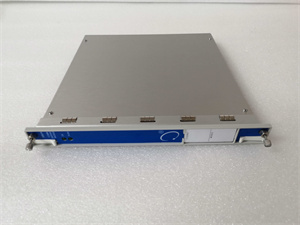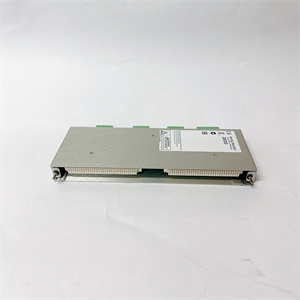
Description
System Architecture & Operational Principle
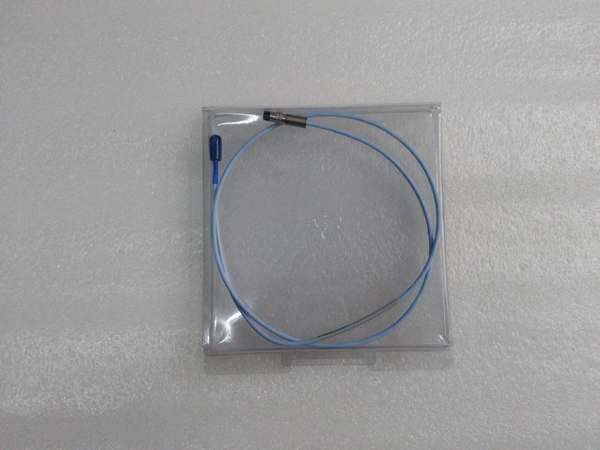
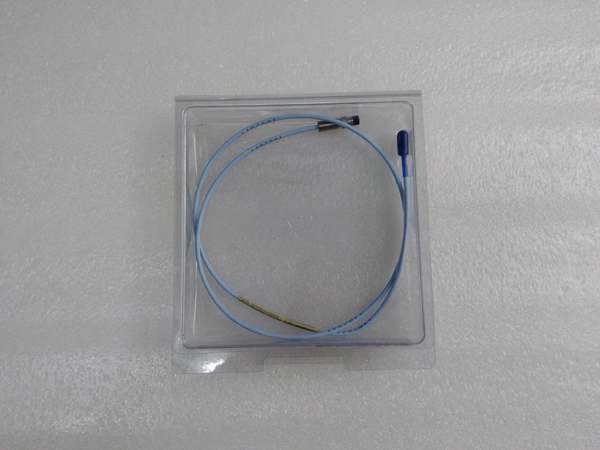
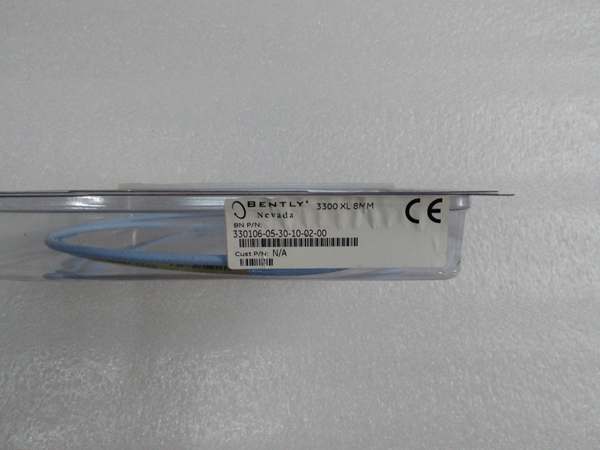
The Bently 330905-00-25-02-CN is a 3300 NSv Series proximity probe designed for Level 1 (Device) or Level 2 (Control) of the Purdue Model in industrial automation. It resides in the field (e.g., on a machine’s guard or control cabinet) and serves as the bridge between rotating machinery (e.g., turbines, compressors) and 3500 Series monitor modules (e.g., 3500/40M vibration monitors).
Upstream Communication
Receives high-frequency signals from the 3300 NSv Proximitor Sensor (via a 3-wire cable) to power the probe’s coil and condition the signal. The probe emits a high-frequency magnetic field that interacts with the rotating shaft, inducing eddy currents in the shaft’s surface.
Downstream Communication
Transmits raw eddy current signals to the 3300 NSv Proximitor Sensor, which converts them into a DC voltage proportional to the gap between the probe and the shaft. This voltage is then sent to 3500 Series monitor modules for processing (e.g., vibration analysis, displacement calculation).
Operational Advantages
-
Non-Contact Measurement: Eliminates mechanical wear on the probe and shaft, ensuring long-term reliability.
-
High Precision: Measures gap changes as small as 0.01 mm, critical for detecting incipient faults (e.g., bearing wear, rotor imbalance).
-
Rugged Design: Stainless steel housing resists corrosion and impact, making it suitable for harsh industrial environments.

Bently 330105-02-12-10-02-CN
Core Technical Specifications
|
Attribute
|
Specification
|
|---|---|
|
Probe Type
|
3300 NSv Series (Non-Standard Velocity)
|
|
Thread Size
|
M10x1 (metric)
|
|
Case Length
|
250 mm (9.84 in)
|
|
Cable Length
|
0.5 m (20 in)
|
|
Connector Type
|
Miniature coaxial ClickLoc (standard cable)
|
|
Sensitivity
|
7.87 V/mm (200 mV/mil) ± 5%
|
|
Linear Range
|
1.5 mm (60 mil)
|
|
Operating Temperature
|
-40°C to +120°C (-40°F to 248°F)
|
|
Storage Temperature
|
-50°C to +85°C (-58°F to 185°F)
|
|
Material
|
Stainless steel (housing)
|
|
Certifications
|
CE, UL, CSA, ATEX (hazardous locations)
|
Customer Value & Operational Benefits
Early Fault Detection
The probe’s high precision allows it to detect small changes in shaft vibration or displacement, enabling early diagnosis of faults like bearing wear or rotor imbalance. This reduces unplanned downtime and extends machinery life.
Reduced Maintenance Costs
The non-contact design eliminates the need for frequent probe replacements due to wear. Additionally, the probe’s rugged construction resists corrosion and impact, further reducing maintenance requirements.
Seamless Integration
The probe is fully compatible with Bently Nevada’s 3500 Series monitor modules, allowing for easy integration into existing condition monitoring systems. This eliminates the need for custom wiring or protocol converters.
Enhanced Safety
The probe’s ability to detect abnormal shaft movement (e.g., excessive vibration) enables timely shutdown of machinery, preventing catastrophic failures and ensuring operator safety.
Field Engineer’s Notes (From the Trenches)
When installing the 330905-00-25-02-CN, always verify the probe gap—the gap between the probe and the shaft must be set to 1.27 mm (0.05 in) for optimal performance. I once saw a site where a contractor set the gap too wide, resulting in missed faults and a damaged turbine. Use a feeler gauge to measure the gap and adjust the probe accordingly.Another gotcha: ground the probe properly—the probe’s shield must be grounded to the machine’s earth ground to prevent electromagnetic interference (EMI). I’ve fixed countless “ghost” faults (e.g., random voltage spikes) by ensuring the probe’s shield is connected to the ground.If the probe’s output voltage is unstable, check the cable connections—loose or corroded connections can cause signal loss. Use a multimeter to test the continuity of the cable and ensure all connections are tight.
Bently 330105-02-12-10-02-CN
Real-World Applications
-
Power Generation: Steam Turbine MonitoringA coal-fired power plant uses the 330905-00-25-02-CN to monitor the vibration of a steam turbine’s shaft. The probe is installed on the turbine’s bearing housing, and the signal is sent to a 3500/40M monitor module. If the vibration exceeds the trip threshold (e.g., 12 mils), the module triggers an emergency shutdown, preventing damage to the turbine.
-
Oil & Gas: Centrifugal Compressor ProtectionAn offshore oil platform uses the 330905-00-25-02-CN to monitor the displacement of a centrifugal compressor’s shaft. The probe is installed on the compressor’s casing, and the signal is sent to a 3500/45 monitor module. If the displacement exceeds the limit (e.g., 0.5 inches), the module sends a signal to the platform’s DCS to shut down the compressor, preventing impeller damage.
High-Frequency Troubleshooting FAQ
Q: What is the correct gap setting for the 330905-00-25-02-CN probe?
A: The correct gap setting is 1.27 mm (0.05 in). This is the optimal distance for the probe to detect eddy currents from the shaft, ensuring accurate measurement.
Q: Can the 330905-00-25-02-CN be used with non-Bently monitor modules?
A: No, the probe is designed to work exclusively with Bently Nevada’s 3500 Series monitor modules. Non-Bently modules may not be able to process the probe’s signal correctly, leading to inaccurate measurements.
Q: How do I troubleshoot a “no signal” fault?
A: First, check the probe’s power supply (ensure the 3300 NSv Proximitor Sensor is providing -24 VDC). Second, check the cable connections (ensure they are tight and not corroded). Third, use a multimeter to test the probe’s output voltage (it should be between -1 and -17 VDC). If the voltage is outside this range, the probe may be faulty.
Q: What is the maximum operating temperature for the 330905-00-25-02-CN?
A: The maximum operating temperature is +120°C (+248°F). Exceeding this temperature can damage the probe’s coil and reduce its lifespan.
Commercial Availability & Pricing
Please note: The listed price is not the actual final price. It is for reference only and is subject to appropriate negotiation based on current market conditions, quantity, and availability.