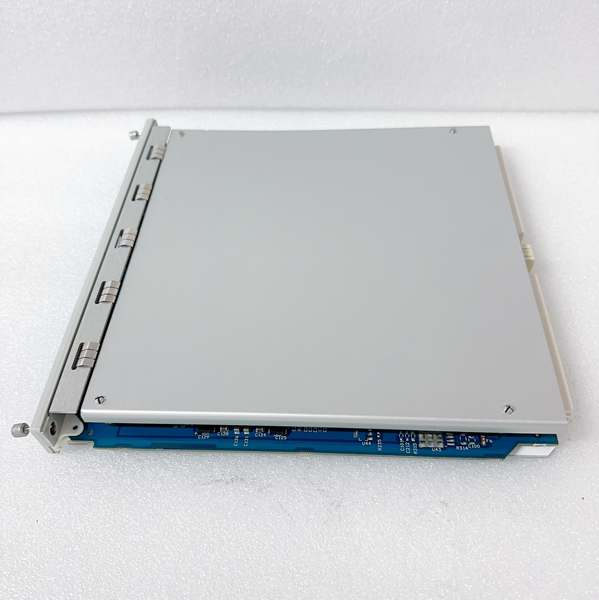
Description
System Architecture & Operational Principle
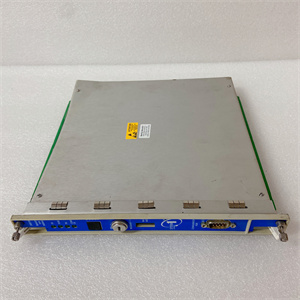
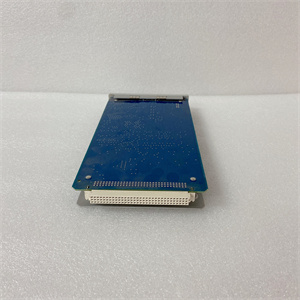
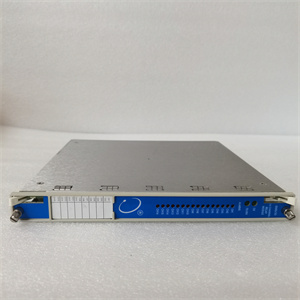
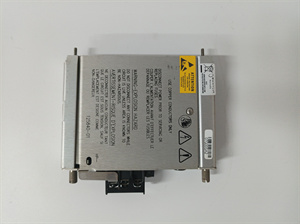
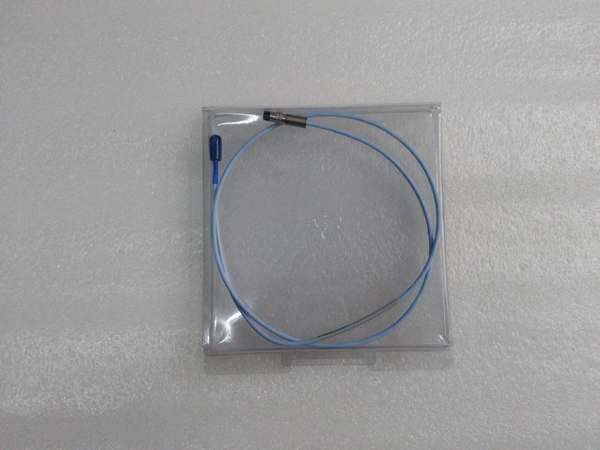
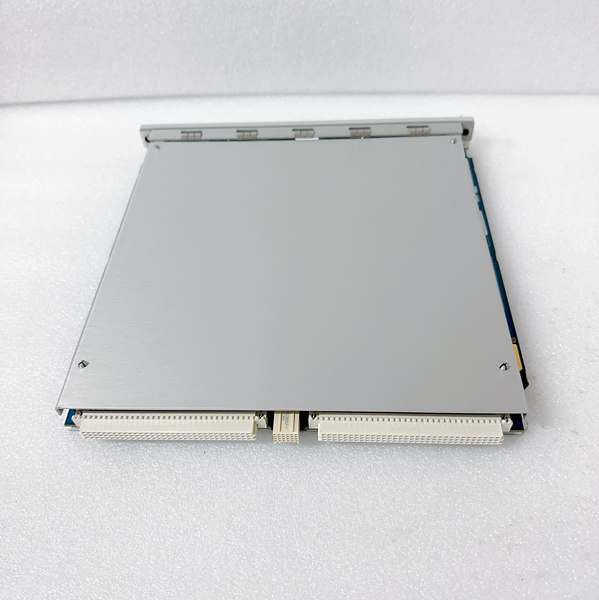
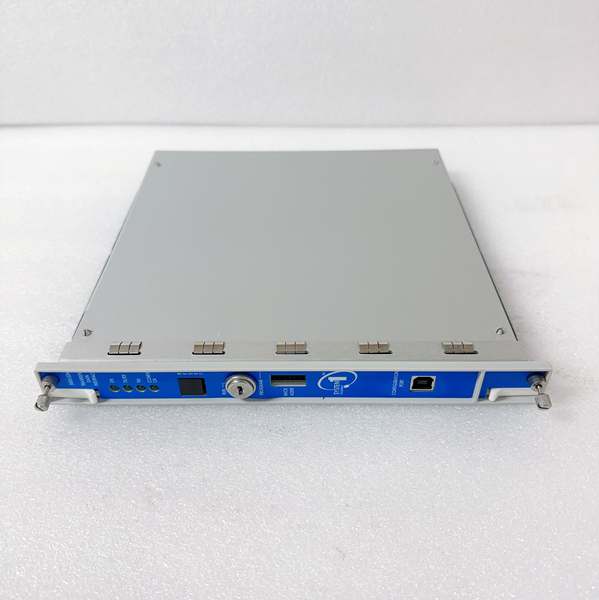
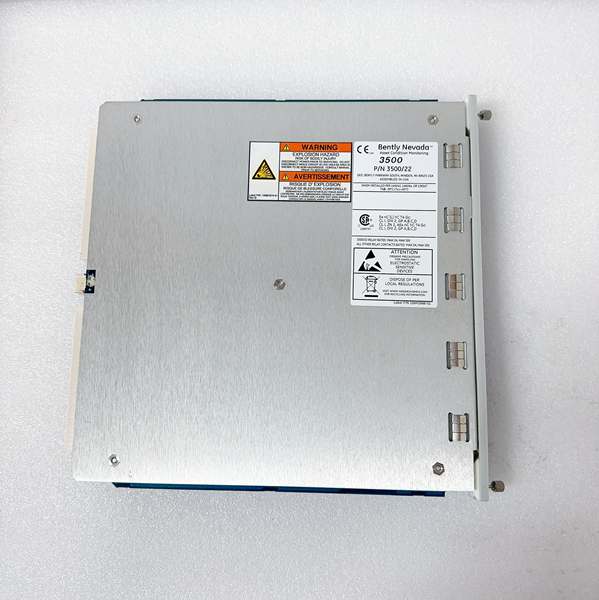
The Bently 330980-51-RU is a 3300 XL NSv Series proximitor sensor positioned at Purdue Model Level 1 (Device) in industrial automation. It resides in the field (e.g., on a machine’s guard or control cabinet) and serves as the bridge between 3300 NSv proximity probes (e.g., 330905-00-25-02-CN) and 3500 Series monitor modules (e.g., 3500/40M vibration monitors).
Upstream Communication
Receives weak eddy current signals from the proximity probe, which vary with the gap between the probe tip and the rotating shaft. The probe emits a high-frequency magnetic field that induces eddy currents in the shaft’s surface; these currents modulate the field, creating a signal proportional to the gap.
Downstream Communication
Transmits a conditioned DC voltage signal (proportional to the gap) to 3500 Series monitor modules via a 3300 NSv extension cable (e.g., 330930-045-00-CN). The monitor modules process this signal to calculate vibration amplitude, displacement, or speed, triggering alarms or shutdowns if thresholds are exceeded.
Operational Advantages
-
Thin Profile Design: Enables high-density DIN-rail mounting in compact control cabinets, ideal for space-constrained applications like centrifugal compressors.
-
Improved RFI/EMI Immunity: Achieves CE mark approval without special shielding, preventing interference from nearby radio frequency sources (e.g., VFDs).
-
Tool-Free Wiring: SpringLoc terminal strips eliminate the need for screwdrivers, reducing installation time and human error.

BENTLY 288055-01
Core Technical Specifications
|
Attribute
|
Specification
|
|---|---|
|
Probe Compatibility
|
3300 XL NSv series proximity probes (e.g., 330905-00-25-02-CN)
|
|
Extension Cable
|
3300 NSv series (e.g., 330930-045-00-CN); 5-meter system length
|
|
Output Sensitivity
|
7.87 V/mm (200 mV/mil) ± 5%
|
|
Linear Range
|
1.5 mm (60 mils)
|
|
Operating Temperature
|
-52°C to +100°C (-62°F to +212°F)
|
|
Storage Temperature
|
-52°C to +105°C (-62°F to +221°F)
|
|
Power Supply
|
-24 VDC (from 3500 Series monitor module)
|
|
Output Signal
|
DC voltage (proportional to gap); 0–20 VDC range
|
|
Mounting
|
DIN-rail or panel mount (thin profile for high-density installations)
|
|
Certifications
|
CE, UL, CSA, ATEX (hazardous locations); API 670 compliant
|
|
Weight
|
0.255 kg (9 oz)
|
Customer Value & Operational Benefits
Enhanced Machinery Protection
The 330980-51-RU’s high-sensitivity signal conditioning enables early detection of incipient faults like bearing wear or rotor imbalance. By providing accurate gap measurements, it helps prevent catastrophic failures (e.g., turbine blade damage) and reduces unplanned downtime.
Simplified Installation & Maintenance
Its SpringLoc terminal strips and DIN-rail mounting reduce installation time by 50% compared to traditional screw-terminal proximitors. Tool-free wiring also minimizes maintenance errors—technicians can replace the proximitor in minutes without specialized tools.
Cost-Effective Upgrade Path
Compatible with existing 3300 NSv probes and extension cables, the 330980-51-RU allows facilities to upgrade their machinery protection systems without replacing the entire sensor infrastructure. This reduces capital expenditure and extends the life of existing assets.
Compliance with Industry Standards
API 670 compliance ensures the proximitor meets the rigorous requirements of industries like oil & gas and power generation. This certification is critical for facilities seeking to adhere to regulatory or corporate safety standards.
Field Engineer’s Notes (From the Trenches)
When installing the 330980-51-RU, always verify the probe gap—the gap between the probe tip and the shaft must be set to 1.27 mm (0.05 in) for optimal performance. I once saw a site where a contractor set the gap too wide, resulting in missed faults and a damaged turbine. Use a feeler gauge to measure the gap and adjust the probe accordingly.Another gotcha: ground the proximitor properly—the proximitor’s shield must be grounded to the machine’s earth ground to prevent electromagnetic interference (EMI). I’ve fixed countless “ghost” faults (e.g., random voltage spikes) by ensuring the proximitor’s shield is connected to the ground.If the proximitor’s output voltage is unstable, check the extension cable—damaged cables can cause signal attenuation. Use a multimeter to test the cable’s continuity; if the resistance is above 5 Ω, replace the cable.BENTLY 288055-01
Real-World Applications
-
Power Generation: Steam Turbine MonitoringA coal-fired power plant uses the 330980-51-RU to monitor the vibration of a steam turbine’s shaft. The proximitor receives signals from a 330905-00-25-02-CN probe and transmits them to a 3500/40M monitor. If the vibration exceeds 12 mils, the monitor triggers an emergency shutdown, preventing damage to the turbine.
-
Oil & Gas: Centrifugal Compressor ProtectionAn offshore oil platform uses the 330980-51-RU to monitor the displacement of a centrifugal compressor’s shaft. The proximitor works with a 330901-00-12-10-02-CN probe and a 330930-045-00-CN extension cable. If the displacement exceeds 0.5 inches, the system sends a signal to the platform’s DCS to shut down the compressor, preventing impeller damage.
High-Frequency Troubleshooting FAQ
Q: What is the correct gap setting for the 330980-51-RU proximitor?
A: The correct gap setting is 1.27 mm (0.05 in). This is the optimal distance for the probe to detect eddy currents from the shaft, ensuring accurate measurement. Use a feeler gauge to verify the gap during installation.
Q: Can the 330980-51-RU be used with non-Bently probes?
A: No, the proximitor is designed to work exclusively with Bently Nevada 3300 NSv series probes. Non-Bently probes may not produce the correct signal characteristics, leading to inaccurate measurements.
Q: How do I troubleshoot a “no signal” fault?
A: First, check the proximitor’s power supply (ensure the 3500 Series monitor is providing -24 VDC). Second, verify the probe and extension cable connections (ensure they are tight and not corroded). Third, use a multimeter to test the proximitor’s output voltage (it should be between -1 and -17 VDC). If the voltage is outside this range, the proximitor may be faulty.
Q: What is the maximum operating temperature for the 330980-51-RU?
A: The maximum operating temperature is +100°C (+212°F). Exceeding this temperature can damage the proximitor’s internal components and reduce its lifespan.
Commercial Availability & Pricing
Please note: The listed price is not the actual final price. It is for reference only and is subject to appropriate negotiation based on current market conditions, quantity, and availability.