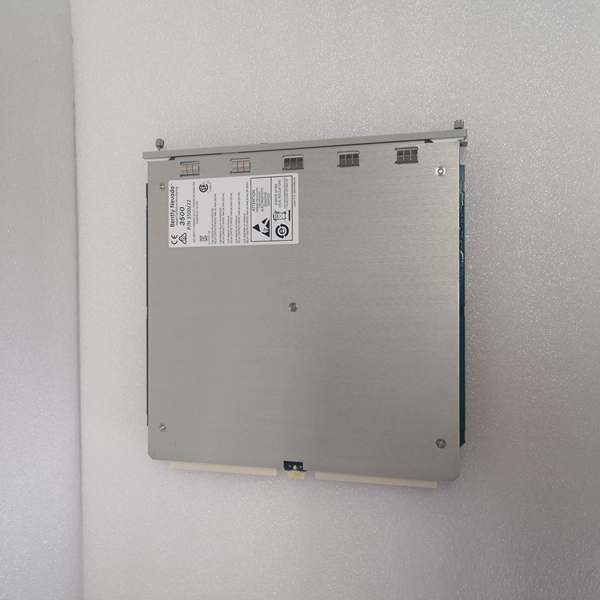
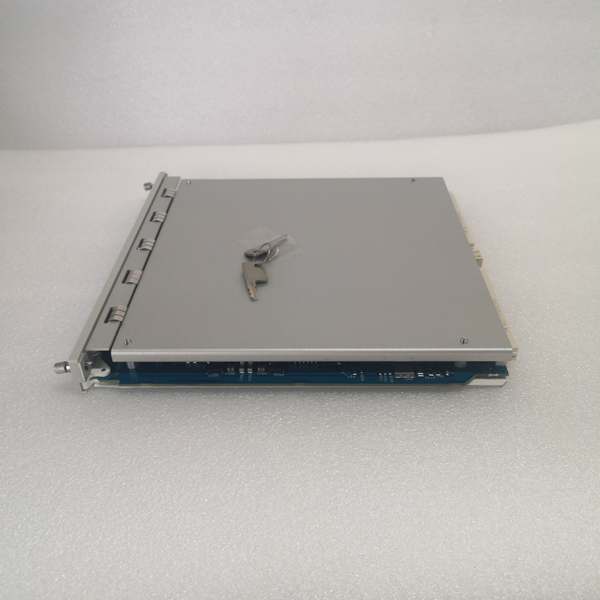
Description
3500/22-01-03-01: Product Overview
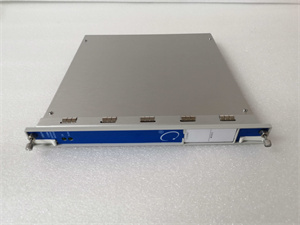
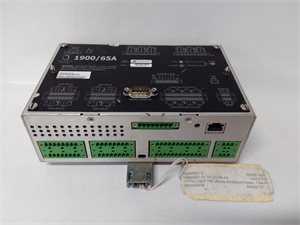
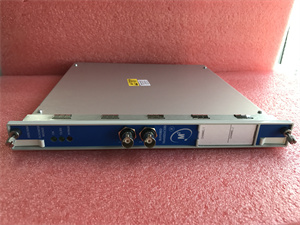
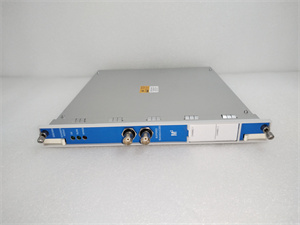
The Bently Nevada 3500/22-01-03-01 is a Transient Data Interface (TDI) module within the 3500 Machinery Protection System, designed to capture high-speed transient events in rotating machinery. In an automation architecture, it serves as a “flight recorder” for critical assets, triggered by trip signals (e.g., overspeed, vibration超限) to sample analog (±10V, 4-20mA) and digital (contact closure) signals at 1MHz burst rates. The 3500 framework’s modularity allows this module to integrate with monitors (e.g., 3500/42M vibration, 3500/61 temperature) and communication gateways (e.g., 3500/92), feeding transient data to condition monitoring systems (CMS) or plant historians. The “01-03-01” configuration denotes 4 channels, 512MB storage, and base communication options, making it suitable for power generation, oil & gas, and manufacturing applications where post-failure forensics are critical.

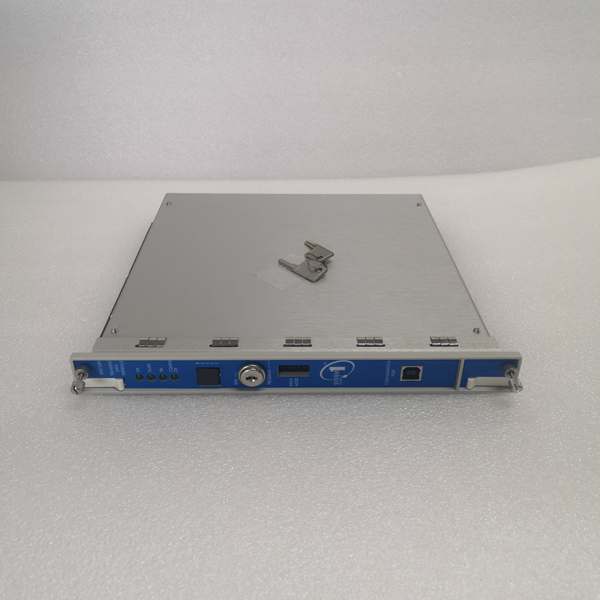
Bently 3500/22
3500/22-01-03-01: Technical Specifications
-
Model Number: 3500/22-01-03-01
-
Manufacturer: Bently Nevada (a Baker Hughes Business)
-
Product Type: Transient Data Interface (TDI) Module
-
Number of Channels: 4 independent (configurable for analog or digital inputs)
-
Input Type: Analog (±10V, 4-20mA), digital (contact closure, TTL/CMOS)
-
Sampling Rate: Up to 1MHz per channel (burst mode during events)
-
Event Storage: 512MB non-volatile flash (stores ~200 transient events with nanosecond timestamps)
-
Trigger Sources: 3500 monitor trip signals, external contact inputs, software commands
-
Communication Interfaces: 1x 10/100Mbps Ethernet (TCP/IP, Modbus TCP), 1x RS485 (Modbus RTU)
-
Operating Temperature: 0°C to +65°C (rack-mounted, IEC 60068-2-1/2 compliant)
-
Storage Temperature: -40°C to +85°C
-
Isolation: 500Vrms (channel-to-rack, per IEC 60664-1)
-
Dimensions: 119mm (H) x 25mm (W) x 102mm (D) (3500 half-height slot)
-
Weight: 0.15kg (rack-mountable)
-
Certifications: CE, UL/cUL Listed, ATEX Zone 2 (optional)
Core Features & Customer Value
High-Speed Burst Sampling: The 1MHz sampling rate captures transient events (e.g., bearing spall impacts, valve slamming) with microsecond resolution—critical for distinguishing fault signatures from noise. For engineers, this reveals root causes (e.g., a 2ms lube oil pressure drop preceding a turbine trip) that lower-rate loggers miss.
Large Non-Volatile Storage: 512MB flash retains ~200 events, eliminating reliance on volatile memory that loses data during power loss. For maintenance teams, this ensures post-failure analysis is possible even after unexpected shutdowns, such as a compressor surge event in a refinery.
Flexible Trigger Configuration: Triggers can be set to activate 500ms beforeand 1s aftera trip signal, capturing pre-fault conditions. For example, in a pump surge scenario, this reveals rising discharge pressure 300ms prior to shutdown, aiding in control logic tuning.
Dual Communication Paths: Ethernet (for high-speed data upload to CMS) and RS485 (for legacy DCS integration) provide redundancy. In a power plant, this allows simultaneous streaming to a PI Historian and local HMI, ensuring no data loss.
Seamless 3500 Integration: Plug-and-play compatibility with 3500 racks and configuration via 3500 Configuration Software reduces setup time. Hot-swappable design minimizes downtime during maintenance—modules can be replaced without powering down the system.
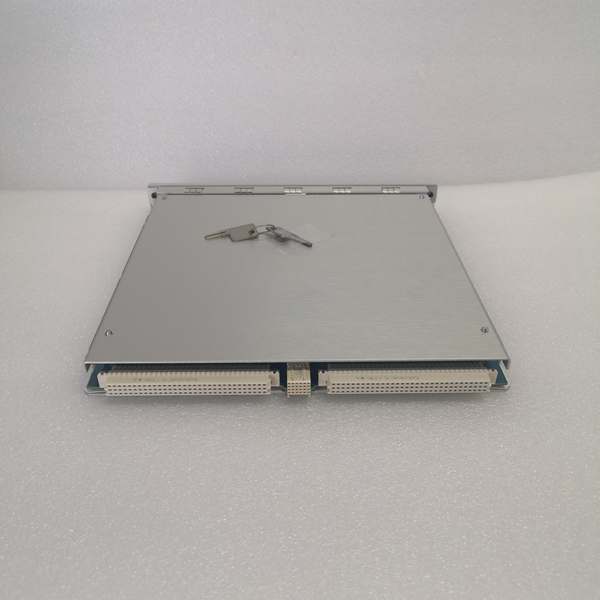
Bently 3500/22
Typical Applications
The 3500/22-01-03-01 is deployed in assets where transient event forensics prevent recurring failures:
-
Power Generation: Steam turbines (capturing overspeed trip data, including governor response), gas turbines (startup/shutdown transients), and generators (rotor winding fault signatures).
-
Oil & Gas: Centrifugal compressors (surge-induced pressure/vibration spikes), pumps (cavitation events), and reciprocating compressors (valve impact forces).
-
Chemical/Petrochemical: Reactors (agitator imbalance transients), extruders (gear mesh vibrations), and boiler feedwater pumps (lube oil system faults).
In a Gulf Coast refinery, this module captured a 3ms drop in lube oil pressure beforea catalytic cracker compressor trip—correlating with a clogged filter, not rotor failure. This avoided a $500k unplanned shutdown.