Description
Key Technical Specifications
-
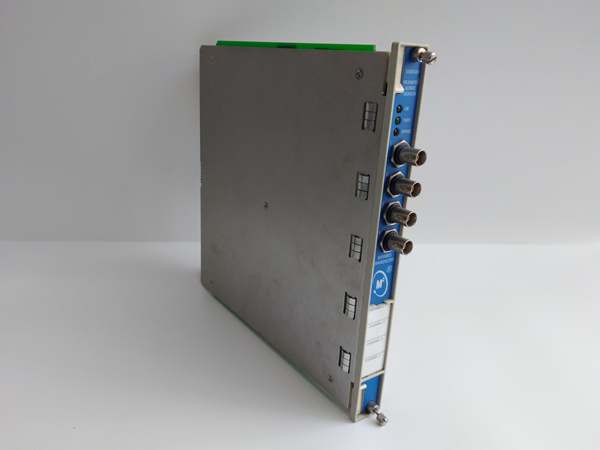
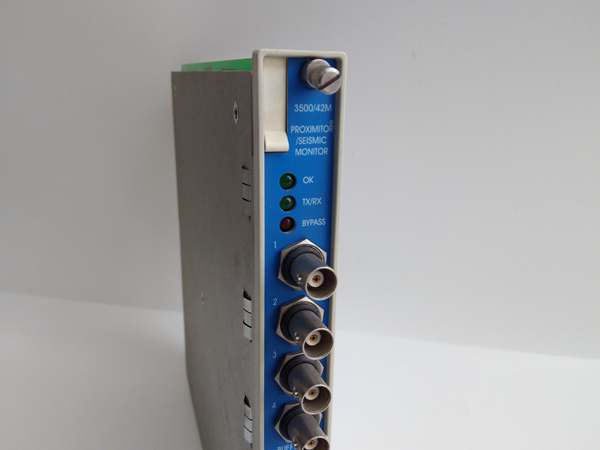
Model Number: 3500/42M 138700-01
-
Manufacturer: Bently Nevada (Baker Hughes)
-
Channels: 4 independent (configurable for vibration or position measurement)
-
Input Type: Vibration (accelerometer: 10mV/g; velocity: 100mV/in/s), position (eddy current: -18V to -2V gap voltage)
-
Measurement Parameters: Peak-to-peak, RMS, crest factor (vibration); gap voltage, vibration phase (position)
-
Frequency Response: 0-10 kHz (vibration), 0-1 kHz (position)
-
Analysis: FFT (1024-point, 0-5000 Hz), time-domain waveform display
-
Alarm Outputs: 2 per channel (warning/alarm, relay contact closure)
-
Supply Voltage: 24V DC (±10%, from 3500 rack power supply)
-
Operating Temperature: 0°C to +65°C (rack-mounted)
-
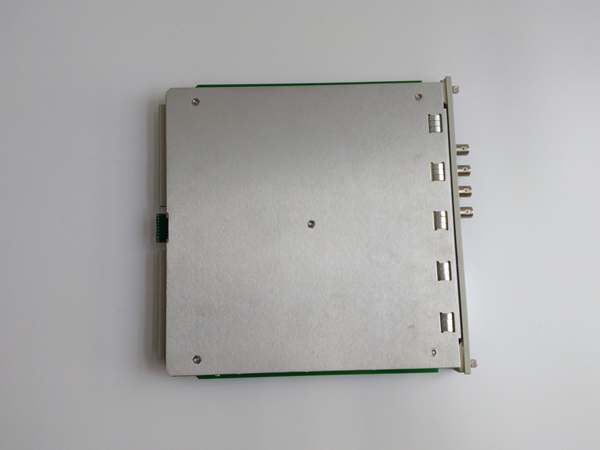
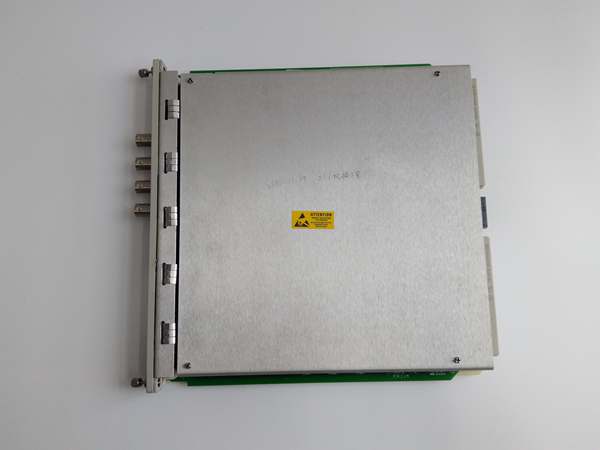
Dimensions: 119mm x 25mm x 102mm (WxHxD, 3500 half-height slot)
-
Weight: 0.16kg

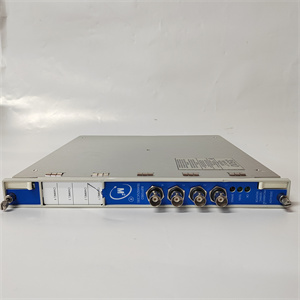
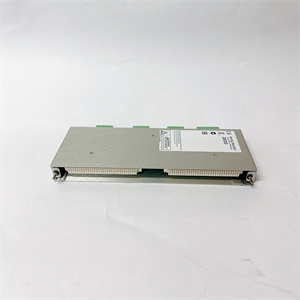
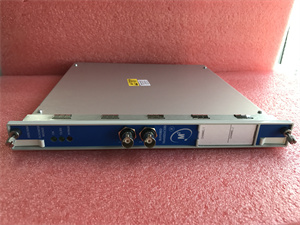
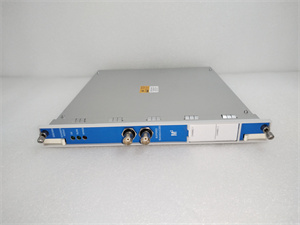
Bently Nevada 3500/42M
Field Application & Problem Solved
In the field, rotating machinery protection hinges on accurate vibration and position data—but older monitors lack multi-channel sync, struggle with noise, or miss subtle fault signatures. This 4-channel monitor solves that by integrating vibration (acceleration/velocity/displacement) and position (shaft gap) measurement into one module. You’ll find it on steam turbines (tracking bearing wear via velocity), gas compressors (detecting impeller imbalance with acceleration), or pumps (monitoring shaft runout via eddy current probes). Its core value is precision: 1024-point FFT resolves 0.1Hz frequency bins (critical for gear mesh analysis), while dual alarms (warning/alarm) prevent nuisance trips. For example, in a refinery’s catalytic reformer compressor, it detected a 0.2g increase in 1x RPM vibration—flagging a bent shaft 3 weeks before catastrophic failure. The 138700-01 firmware adds enhanced phase tracking for rotor dynamics studies.
Installation & Maintenance Pitfalls (Expert Tips)
-
Sensor Type Mismatch: Rookies connect accelerometers to velocity inputs (or vice versa), getting skewed readings. Match sensor output to module input: 10mV/g accelerometer → vibration input, 100mV/in/s velocity → velocity input. Use Bently’s sensor config matrix to verify.
-
Ignoring Ground Loops: Eddy current probes (position) and accelerometers share the same ground reference. Run separate shielded cables for each sensor type, and ground shields only at the 3500 rack. Ground loops cause 60Hz hum in position data (common in paper mills).
-
Skipping FFT Windowing Setup: Default Hanning window blurs transient events (e.g., bearing spalls). For fault diagnosis, switch to Rectangular window (via 3500 Configuration Software) to sharpen peaks. Save factory defaults for routine monitoring.
-
Neglecting Phase Calibration: Shaft position phase must align with keyphasor (3500/25) for orbit plots. Use a strobe light to verify TDC alignment—offset >5° causes incorrect elliptical orbit displays. Adjust probe gap if needed.
-
Outdated Firmware Risks: The 138700-01 firmware fixes a rare “alarm latch” bug (v5.12 and earlier). Always update via Bently Update Manager—unpatched modules may miss alarms during power dips.
Bently Nevada 3500/42M
Technical Deep Dive & Overview
The 3500/42M 138700-01 is a 4-channel vibration/position monitor for Bently’s 3500 Machinery Protection System. It acts as the “analysis engine”: raw signals from sensors (accelerometers, velocity transducers, eddy current probes) enter via the 3500 rack backplane, where the module amplifies, filters (anti-alias), and digitizes them (16-bit ADC). For vibration, it computes RMS/peak-to-peak and performs 1024-point FFT to identify fault frequencies (e.g., 1x RPM for imbalance, 2x for misalignment). For position, it converts eddy current gap voltage to shaft displacement and tracks phase relative to the keyphasor. Dual alarm relays trigger on user-defined thresholds (e.g., 4.5 mm/s RMS for warning). The 138700-01 variant adds faster FFT processing (20% speed boost) and improved noise rejection for VFD-driven machinery. It pairs with 3500/25 (keyphasor) and 3500/92 (communication) modules to provide a complete protection package. In short, it’s the “brain” of the 3500 system—turning raw sensor data into actionable machine health insights.