Description
System Architecture & Operational Principle
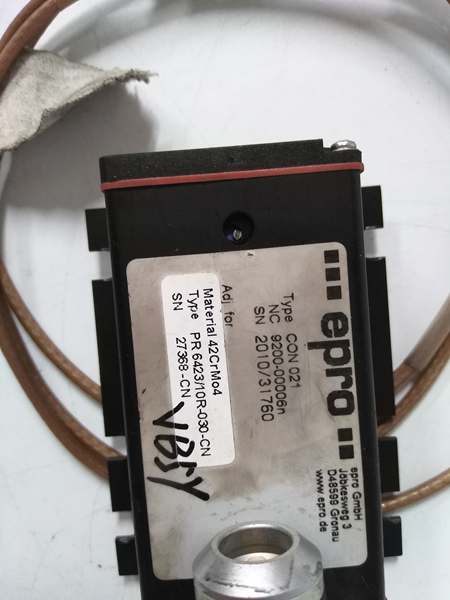
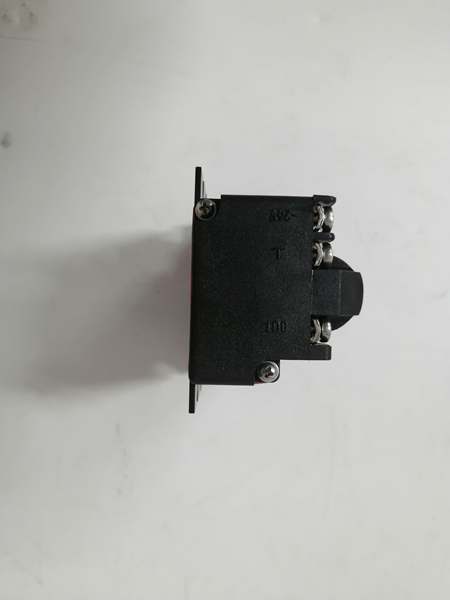
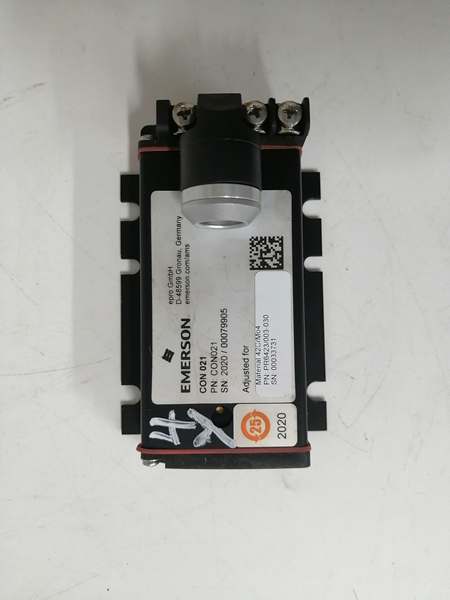
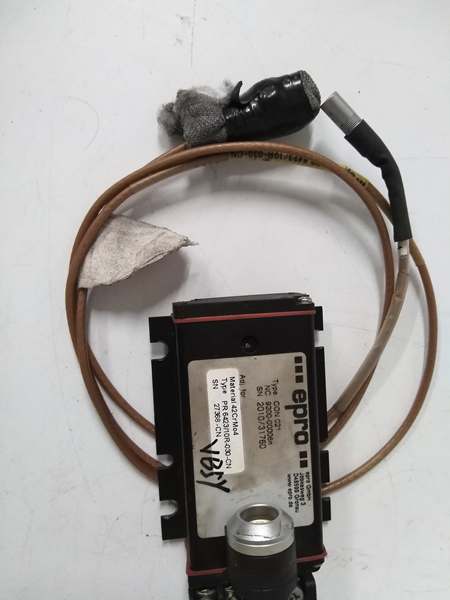
The EPRO PR6423/006-131 is an 8mm eddy current sensor within the EPRO MMS 3000/6000 Machinery Protection System, designed for Level 1 (Device) of the Purdue Model in industrial automation. It resides in the field (e.g., on a machine’s bearing housing or shaft guard) and serves as the bridge between rotating machinery (e.g., turbines, compressors) and MMS series monitor modules (e.g., MMS 6110 vibration monitor, MMS 6210 displacement monitor).
Upstream Communication
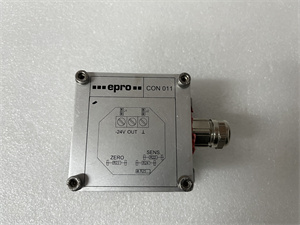
Receives high-frequency electrical signals from the CON series signal conditioner (e.g., CON021), which powers the sensor’s coil. The sensor’s probe generates a magnetic field that induces eddy currents in the target metal (e.g., steel shaft), and the field’s attenuation (due to eddy currents) is proportional to the distance between the probe and the target.
Downstream Communication
Transmits the attenuated signal back to the CON conditioner, which converts it into a DC voltage (proportional to displacement) or AC voltage (proportional to vibration). This signal is then sent to MMS monitors for analysis—e.g., calculating vibration amplitude, displacement, or eccentricity.
Operational Advantages
-
Non-Contact Measurement: Eliminates mechanical wear on the probe and target, ideal for high-speed rotating machinery (e.g., turbines, compressors).
-
High Precision: 8 V/mm sensitivity and ±1% linearity enable detection of micrometer-level changes in shaft position or vibration.
-
Environmental Robustness: Stainless steel housing and PTFE cable insulation resist corrosion, oil, and high temperatures (-35°C to +180°C).
Core Technical Specifications
|
Attribute
|
Specification
|
|---|---|
|
Probe Diameter
|
8mm
|
|
Thread Size
|
M10×1 (metric) or 3/8″-24 UNF-2A (imperial)
|
|
Measurement Range
|
±1mm (static); 0–500 μm (dynamic)
|
|
Sensitivity
|
8 V/mm (±5%)
|
|
Linearity
|
±1% of full scale
|
|
Operating Temperature
|
-35°C to +180°C (-31°F to 356°F)
|
|
Storage Temperature
|
-40°C to +70°C (-40°F to 158°F)
|
|
Cable Length
|
4m (standard); customizable up to 10m
|
|
Connector Type
|
LEMO (for CON021/031) or screw terminal (for CON041)
|
|
Target Material
|
Ferromagnetic steel (42CrMo4 standard)
|
|
Surface Speed
|
Up to 2500 m/s (98425 in/s)
|
|
Weight
|
~100g (3.5 oz)
|
smart
Customer Value & Operational Benefits
Early Fault Detection
The PR6423/006-131’s high sensitivity allows it to detect incipient faults like bearing wear, rotor imbalance, or shaft misalignment before they escalate into catastrophic failures. For example, a power plant using the sensor to monitor a steam turbine can detect a 0.1mm change in shaft displacement, triggering an alarm before the turbine is damaged.
Reduced Maintenance Costs
Non-contact measurement eliminates the need for frequent probe replacements due to wear. Additionally, the sensor’s robust design (stainless steel housing, PTFE cable) reduces maintenance time—technicians can clean the probe with a cloth instead of disassembling the machine.
Compliance with Industry Standards
The sensor meets API 670 (machinery protection), DIN 45670 (vibration measurement), and ISO 10817-1 (eddy current sensors) standards, ensuring it is suitable for use in regulated industries like oil & gas, power generation, and chemical processing.
Seamless Integration
As part of the EPRO MMS ecosystem, the PR6423/006-131 integrates seamlessly with MMS monitors and CON conditioners. This eliminates the need for custom wiring or protocol converters, reducing engineering time and costs.
Field Engineer’s Notes (From the Trenches)
When installing the PR6423/006-131, always verify the target material—the sensor is calibrated for ferromagnetic steel (42CrMo4). If the target is stainless steel or aluminum, you’ll need to recalibrate the CON conditioner or use a different sensor. I once saw a site where a contractor used the sensor on an aluminum shaft, resulting in a 50% error in displacement measurements.Another gotcha: keep the probe clean—oil, dirt, or metal shavings on the probe tip can attenuate the magnetic field, leading to inaccurate readings. Use a soft cloth or alcohol wipe to clean the probe regularly—especially in dirty environments like cement plants or steel mills.If the sensor’s output is unstable, check the cable connections—loose LEMO connectors or damaged cables can cause signal loss. I’ve fixed countless “no signal” faults by tightening the connector or replacing the cable.
Real-World Applications
-
Power Generation: Steam Turbine MonitoringA coal-fired power plant uses the PR6423/006-131 to monitor the shaft vibration of a steam turbine. The sensor is installed on the turbine’s bearing housing, and the CON021 conditioner converts the signal to a 4–20 mA output for the MMS 6110 monitor. If the vibration exceeds 12 mils (0.3 mm), the monitor triggers an emergency shutdown, preventing turbine damage.
-
Oil & Gas: Centrifugal Compressor ProtectionAn offshore oil platform uses the PR6423/006-131 to monitor the shaft displacement of a centrifugal compressor. The sensor is installed on the compressor’s shaft guard, and the CON031 conditioner sends the signal to the platform’s DCS. If the displacement exceeds 0.5 inches (12.7 mm), the DCS shuts down the compressor, avoiding impeller damage.

High-Frequency Troubleshooting FAQ
Q: What does a “no signal” fault indicate on the PR6423/006-131?
A: A “no signal” fault usually means:
-
Power Issue: The CON conditioner is not supplying power to the sensor (check the conditioner’s output voltage—should be -24 VDC).
-
Cable Damage: The sensor cable is broken or disconnected (use a multimeter to test continuity).
-
Probe Contamination: The probe tip is covered in oil or dirt (clean the probe with a cloth).
Q: Can the PR6423/006-131 be used with non-EPRO conditioners?
A: No, the sensor is designed to work exclusively with EPRO CON series conditioners (CON021, CON031, CON041). Non-EPRO conditioners may not provide the correct power or signal conditioning, leading to inaccurate measurements.
Q: How do I calibrate the PR6423/006-131?
A: The sensor is factory-calibrated for 42CrMo4 steel. If you need to use it on a different material (e.g., stainless steel), you’ll need to recalibrate the CON conditioner using a calibration block (e.g., EPRO’s 42CrMo4 calibration standard). Follow the CON conditioner’s manual for recalibration steps.
Q: What is the maximum cable length for the PR6423/006-131?
A: The maximum recommended cable length is 10 meters (33 feet). Longer cables can cause signal attenuation—use a signal repeater if you need to extend the cable beyond 10 meters.
Commercial Availability & Pricing
Please note: The listed price is not the actual final price. It is for reference only and is subject to appropriate negotiation based on current market conditions, quantity, and availability.