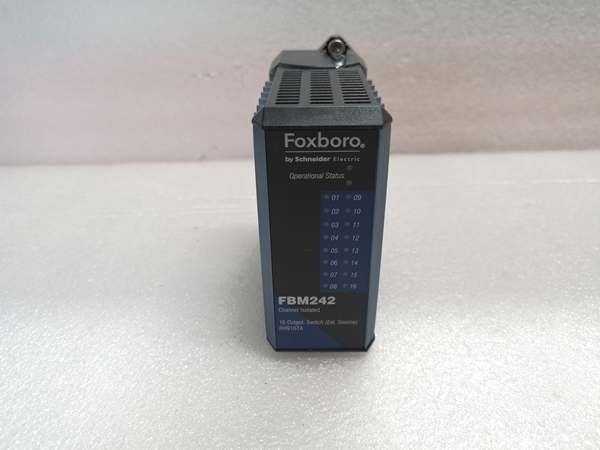
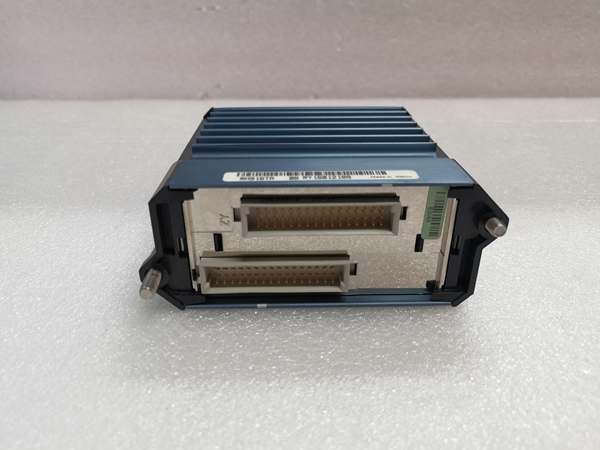
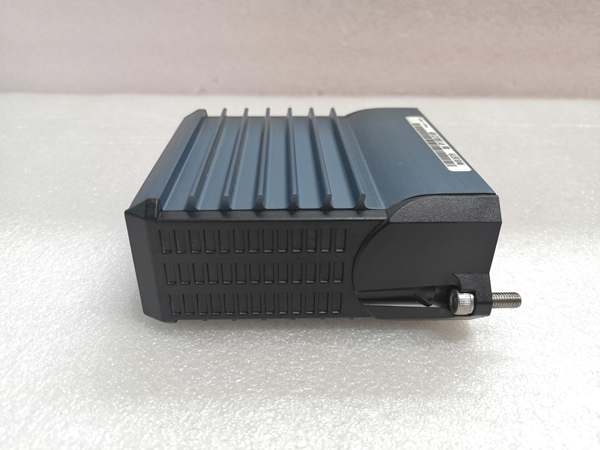
Description
System Architecture & Operational Principle
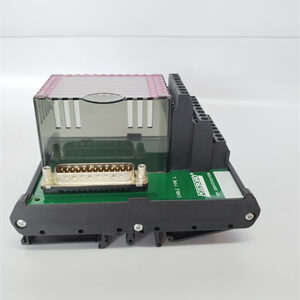
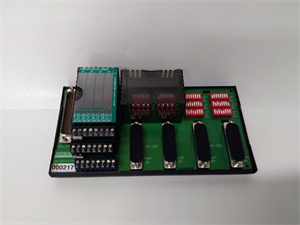
The Foxboro RH926GH is a critical field wiring accessory within the Foxboro I/A Series DCS, designed to terminate and organize the wiring for FBM224, FBM230, and FBM231 communication modules. These FBM modules are used to integrate serial-based field devices (e.g., Modbus slaves, RS-232 instruments, RS-422/485 networks) into the DCS. The RH926GH serves as the physical bridge between the field-side serial cables (from devices like PLCs, power meters, or smart sensors) and the FBM module’s baseplate, ensuring secure, low-noise connections.
Upstream Communication
Receives serial data signals from field devices via 4 independent channels (each configurable for RS-232, RS-422, or RS-485). The RH926GH organizes these signals into a structured format that aligns with the FBM module’s pinout, ensuring compatibility with the I/A Series backplane.
Downstream Communication
Transmits the organized serial signals to the corresponding FBM module (FBM224/FBM230/FBM231) via the baseplate’s backplane. The FBM module then converts these signals into DCS-readable data (e.g., Modbus registers, serial commands) for process monitoring and control.
Operational Advantages
-
Cable Management: Centralizes 4 serial loops onto a single rail-mounted block, reducing cabinet clutter and simplifying wiring.
-
Noise Reduction: Compression-style screw terminals provide a secure, low-impedance connection, minimizing electromagnetic interference (EMI) from nearby power lines or machinery.
-
Scalability: Supports up to 4 serial channels per assembly, allowing easy expansion of field device networks without additional cabinet space.
Core Technical Specifications
|
Attribute
|
Specification
|
|---|---|
|
Compatibility
|
FBM224 (Modbus), FBM230 (RS-232), FBM231 (RS-422/RS-485)
|
|
Port Count
|
4 independent serial communication channels
|
|
Physical Interface
|
Compression-style screw terminals (for 12–24 AWG wire)
|
|
Supported Protocols
|
RS-232 (point-to-point), RS-422 (4-wire differential), RS-485 (2-wire/4-wire multi-drop)
|
|
Mounting
|
Standard DIN rail (32 mm/35 mm) or panel mount
|
|
Construction
|
Rugged industrial polymer (G3-rated corrosion resistance)
|
|
Operating Temperature
|
-20°C to +70°C (-4°F to 158°F)
|
|
Storage Temperature
|
-40°C to +70°C (-40°F to 158°F)
|
|
Humidity Tolerance
|
5–95% non-condensing
|
|
Dimensions (W×H×D)
|
~115 mm × 110 mm × 45 mm (4.5 in × 4.3 in × 1.8 in) (estimated)
|
|
Weight
|
~272 g (0.6 lbs)
|
|
Certifications
|
CE, UL, CSA, ATEX (Ex nA IIC T4)
|
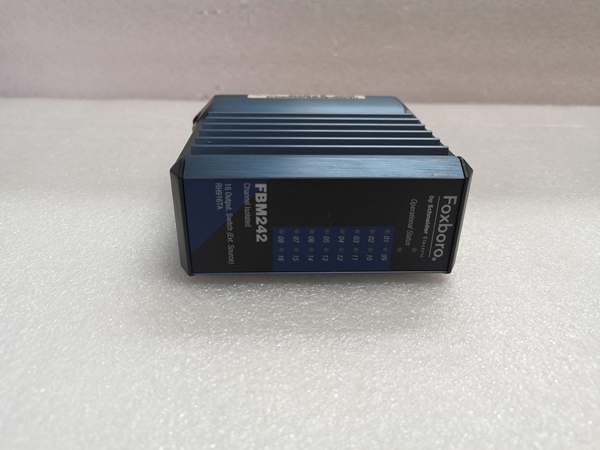
FOXBORO FBM242
Customer Value & Operational Benefits
Reduced Installation Time
The RH926GH’s compression-style terminals eliminate the need for soldering or crimping, allowing technicians to terminate wires in minutes. A chemical plant reported a 30% reduction in installation time for serial device integration using the RH926GH compared to traditional ring lug terminals.
Improved Reliability
The G3-rated corrosion-resistant construction ensures reliable operation in harsh environments (e.g., offshore platforms, chemical plants). A paper mill using the RH926GH in a high-humidity environment reported a 50% reduction in wiring-related faults compared to standard plastic terminals.
Cost-Effective Scalability
By centralizing 4 serial channels onto a single assembly, the RH926GH reduces the number of required FBM modules and cabinet slots. For a water treatment plant, this translated to a 25% reduction in cabinet space and a 15% decrease in overall system cost.
Field Engineer’s Notes (From the Trenches)
When installing the RH926GH, always use 12–24 AWG stranded wire—solid wire can break under vibration, leading to intermittent connections. I once saw a site where a contractor used 18 AWG solid wire, resulting in a “no signal” fault that took 2 hours to diagnose. Stranded wire is more flexible and resistant to vibration.Another gotcha: torque the compression screws to 0.8 N·m (7 lb-in)—under-tightening can cause the wire to pull out, while over-tightening can damage the terminal. Use a torque wrench to ensure consistency, especially in high-vibration areas.If you’re replacing an older P0926GH, the RH926GH is a direct drop-in replacement—the pinout and mounting footprint are identical. Just remove the old assembly and install the new one; no reconfiguration is needed.
Real-World Applications
-
Oil & Gas: Offshore Platform Serial Device IntegrationAn offshore oil platform uses the RH926GH to terminate 4 RS-485 networks (connecting 32 Modbus slaves) for monitoring pipeline pressure and temperature. The assembly’s G3-rated construction withstands the platform’s corrosive sea air, ensuring reliable operation.
-
Chemical Processing: Reactor Serial InstrumentationA chemical plant uses the RH926GH to connect 4 RS-232 instruments (e.g., pH meters, temperature transmitters) to an FBM230 module. The centralized wiring reduces cabinet clutter, making it easier for technicians to troubleshoot issues.

FOXBORO FBM242
High-Frequency Troubleshooting FAQ
Q: What does a “no signal” fault indicate on the RH926GH?
A: A “no signal” fault usually means:
-
Wire Connection Issue: The compression screw is loose or the wire is not fully inserted. Use a multimeter to test for continuity between the field device and the RH926GH.
-
Terminal Damage: The compression terminal is bent or corroded. Inspect the terminal for damage and replace the RH926GH if necessary.
-
FBM Module Fault: The corresponding FBM module (FBM224/FBM230/FBM231) is not receiving power or has a faulty backplane connection. Check the FBM module’s status LEDs and backplane cables.
Q: Can the RH926GH be used with non-Foxboro FBM modules?
A: No, the RH926GH is designed exclusively for Foxboro FBM224, FBM230, and FBM231 modules. The pinout and backplane interface are proprietary to Foxboro, so using it with non-Foxboro modules will result in compatibility issues.
Q: How do I clean the RH926GH terminals?
A: Turn off the power to the FBM module and disconnect the field wires. Use a dry, lint-free cloth to wipe away dust or debris from the terminals. For corrosion, use a small amount of isopropyl alcohol on the cloth—avoid using abrasive materials, as they can scratch the terminal surface.
Q: What is the maximum cable length for the RH926GH?
A: The maximum cable length depends on the serial protocol:
-
RS-232: Up to 15 m (50 ft) for custom cables; 13 m (40 ft) for Foxboro standard cables.
-
RS-422/RS-485: Up to 1200 m (3960 ft) for multi-drop networks.
Commercial Availability & Pricing
Please note: The listed price is not the actual final price. It is for reference only and is subject to appropriate negotiation based on current market conditions, quantity, and availability.