Description
System Architecture & Operational Principle
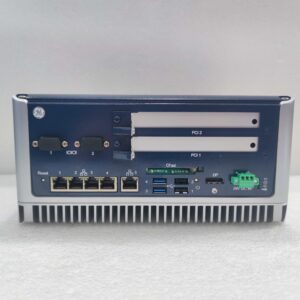
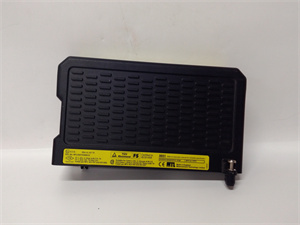
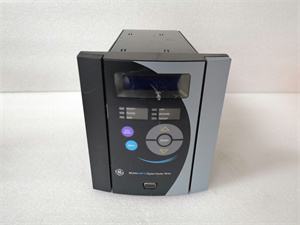
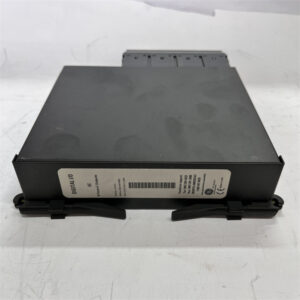
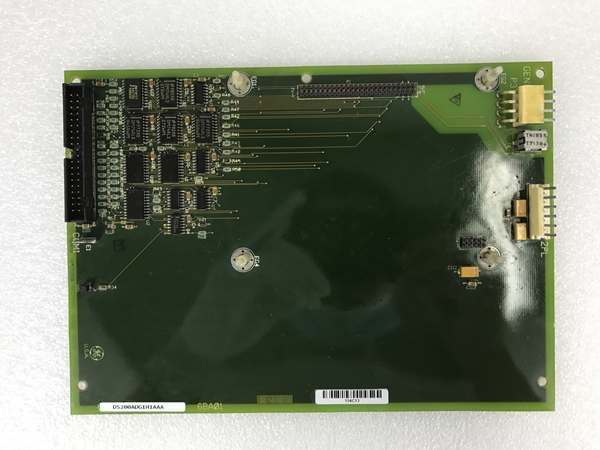
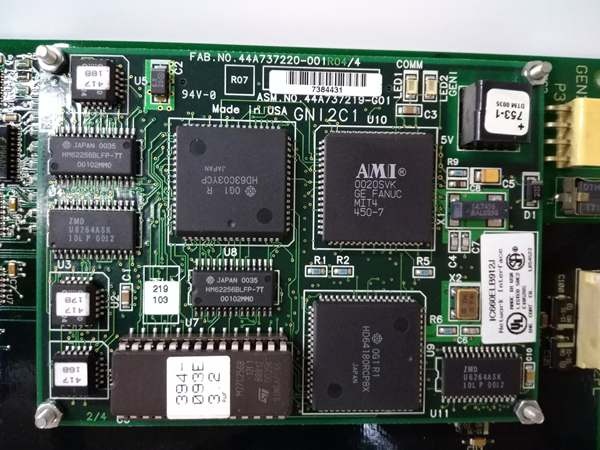
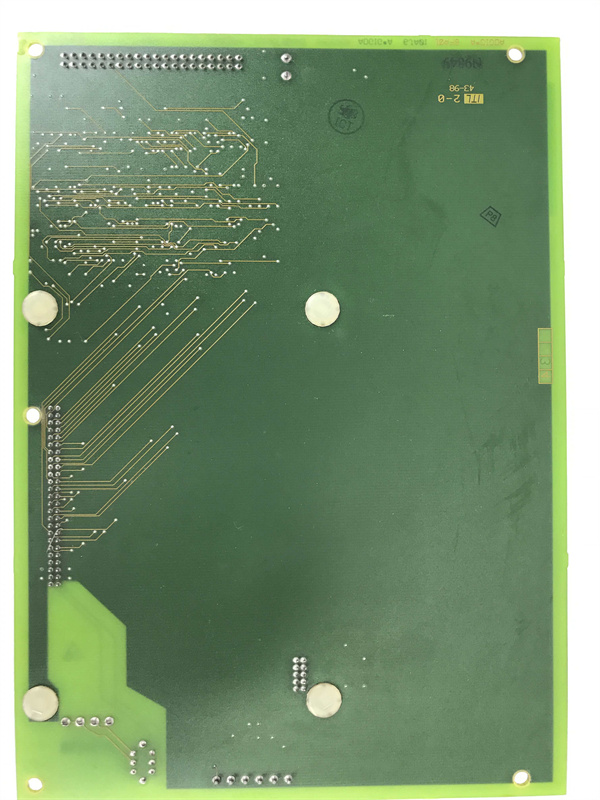
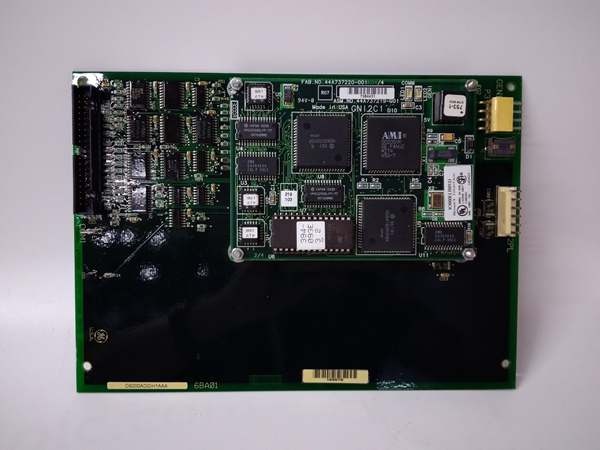
The GE DS200ADGIH1AAA is an auxiliary interface board within the GE Mark V Series of turbine control systems, designed for Level 2 (Control) of the Purdue Model in industrial automation. It resides in turbine control cabinets (mounted on VME racks) and serves as the bridge between Mark V main processor boards (LDCC) and field devices (e.g., temperature sensors, pressure transmitters, control valves), connecting:
-
Upstream: Receives unconditioned signals from field devices (e.g., 4–20mA from pressure transmitters, thermocouple signals from temperature sensors) via screw terminals or pre-wired cables.
-
Downstream: Transmits digitized, conditioned signals to Mark V processors via the VME backplane. The processors use this data for real-time turbine control (e.g., adjusting fuel flow, turbine speed) and protection (e.g., overspeed shutdown, overpressure alarm).
Operational Advantages
-
Signal Integrity: 16-bit resolution and ±0.05% accuracy ensure reliable measurement of critical turbine parameters (e.g., exhaust gas temperature, bearing oil pressure).
-
Electrical Isolation: 1500V AC channel-to-bus isolation prevents ground loops and voltage spikes from damaging sensitive Mark V processors.
-
Flexibility: Supports multiple signal types (current, voltage, thermocouples, RTDs) and configurable output ranges, making it adaptable to diverse field device requirements.
Core Technical Specifications
|
Attribute
|
Specification
|
|---|---|
|
Product Type
|
Auxiliary Interface Board (Analog I/O Module)
|
|
Part Number
|
DS200ADGIH1AAA
|
|
System Platform
|
GE Mark V Series Turbine Control Systems
|
|
Analog Inputs
|
16 channels (4–20mA, 0–10V, TC (J/K/T/E), RTD (Pt100/1000))
|
|
Analog Outputs
|
4 channels (4–20mA, 0–10V)
|
|
Resolution
|
16-bit (current/voltage); 18-bit (thermocouple/RTD)
|
|
Accuracy
|
±0.05% of full scale (current/voltage); ±0.1°C (thermocouple); ±0.05°C (RTD)
|
|
Isolation
|
1500V AC channel-to-bus; 2500V AC channel-to-ground
|
|
Input Impedance
|
250Ω (4–20mA); >10MΩ (voltage); 100Ω (RTD)
|
|
Output Load Capacity
|
500Ω (4–20mA); 10kΩ (0–10V)
|
|
Power Supply
|
+5V DC, ±15V DC (from Mark V backplane)
|
|
Operating Temperature
|
-40°C to +70°C (-40°F to 158°F)
|
|
Storage Temperature
|
-40°C to +85°C (-40°F to 185°F)
|
|
Humidity
|
5–95% non-condensing
|
|
Dimensions (W×H×D)
|
~20 cm × 20 cm × 10 cm (8 in × 6 in × 4 in) (approximate)
|
|
Weight
|
~1.5 kg (3.3 lbs)
|
|
Certifications
|
CE, UL, CSA, IEC 61131-2 (compliant with EU/US/Canadian standards)
|
DS200ADGIH1AAA
Customer Value & Operational Benefits
Enhanced Turbine Reliability
The DS200ADGIH1AAA’s high-precision signal conditioning and fault detection capabilities reduce the risk of turbine damage from overheating, overpressure, or incorrect fuel flow. A power plant using the board reported a 30% reduction in unplanned downtime due to early detection of temperature anomalies.
Reduced Maintenance Costs
The board’s hot-swappable design allows technicians to replace it in minutes without shutting down the turbine. A chemical plant using the DS200ADGIH1AAA cut maintenance downtime by 40% compared to traditional non-hot-swappable I/O modules.
Cost-Effective Integration
Compatible with GE Mark V Series and third-party field devices (e.g., Siemens sensors, ABB actuators), the DS200ADGIH1AAA eliminates the need for custom signal conditioners. A water treatment plant using the board saved $10,000 in integration costs by retaining its existing Mark V infrastructure.
Improved Process Visibility
The board’s real-time data transmission to Mark V processors enables operators to monitor process variables (e.g., turbine speed, pressure) and adjust parameters proactively. A gas turbine plant using the DS200ADGIH1AAA improved energy efficiency by 10% by optimizing fuel flow based on temperature data.
Field Engineer’s Notes (From the Trenches)
When installing the DS200ADGIH1AAA, always use shielded twisted-pair (STP) cables for analog signals—unshielded cables can pick up electromagnetic interference (EMI) from nearby motors or power lines, leading to signal distortion. I once saw a site where a technician used unshielded cables, resulting in a 15% error rate in temperature measurements. Switching to STP cables eliminated the problem immediately.Another gotcha: verify the signal type configuration—the board defaults to 4–20mA, but if you’re using thermocouples or RTDs, you must adjust the settings via the Mark V controller’s software (e.g., ToolboxST). I’ve fixed countless “signal out of range” errors by forgetting to modify the signal type.If the board’s fault LED illuminates, check the field device wiring—the most common cause is an open or short circuit in the sensor wiring. Use a multimeter to test the resistance of the sensor (e.g., 100 ohms for Pt100 RTD at 0°C) and verify it matches the expected value.
Real-World Applications
-
Power Generation:A coal-fired power plant uses the DS200ADGIH1AAA to monitor 16 boiler temperature points and control 4 fuel flow valves. The board’s 16-bit resolution ensures accurate temperature measurement (±0.1°C), allowing the Mark V controller to adjust the fuel flow and maintain optimal turbine efficiency.
-
Gas Turbines:A natural gas power plant uses the DS200ADGIH1AAA to monitor 8 gas inlet pressure points and control 4 turbine speed actuators. The board’s fast response time (<10 ms) enables the controller to adjust the turbine speed in real time, improving grid stability.
-
Combined-Cycle Plants:A combined-cycle power plant uses the DS200ADGIH1AAA to synchronize data between the gas turbine, steam turbine, and heat recovery steam generator (HRSG). The board’s high channel density (16 inputs, 4 outputs) reduces the number of modules needed in the control cabinet, saving space and cost.

High-Frequency Troubleshooting FAQ
Q: What does the fault LED indicate on the GE DS200ADGIH1AAA?
A: The red “FAULT” LED indicates a critical error, such as:
-
Open/Short Circuit: A field device (e.g., sensor) is disconnected or shorted (check the sensor’s resistance with a multimeter);
-
Signal Out of Range: The input signal exceeds the board’s specified range (e.g., 25mA for a 4–20mA input);
-
Module Fault: The internal A/D converter or power supply is faulty (replace the board).
Q: Can the DS200ADGIH1AAA be used with non-GE controllers?
A: No, the DS200ADGIH1AAA is designed exclusively for GE Mark V Series systems. Non-GE controllers may not provide the correct backplane signals or power supply, leading to board failure.
Q: How do I configure the signal type on the DS200ADGIH1AAA?
A: Use GE’s ToolboxST software to configure the signal type:
-
Open ToolboxST: Launch the software and connect to the Mark V controller.
-
Select the DS200ADGIH1AAA: Navigate to the “I/O Configuration” tab and select the board.
-
Set Signal Type: Choose the correct signal type (e.g., 4–20mA, thermocouple) for each channel.
-
Save Configuration: Click “Save” to apply the changes to the board’s memory.
Q: Why is the DS200ADGIH1AAA’s signal unstable?
A: Check three things first:
-
Cables: Ensure the STP cables are not damaged (check for cuts or breaks);
-
Grounding: Verify the shield is grounded at the board end (not at the field device) to minimize EMI;
-
Field Device: Ensure the field device (e.g., sensor) is not faulty (test with a multimeter).
Commercial Availability & Pricing
Please note: The listed price is not the actual final price. It is for reference only and is subject to appropriate negotiation based on current market conditions, quantity, and availability.