Description
System Architecture & Operational Principle
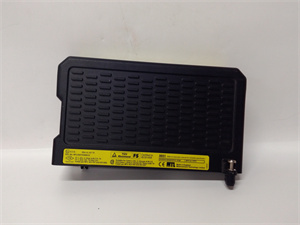
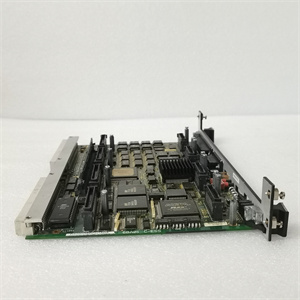
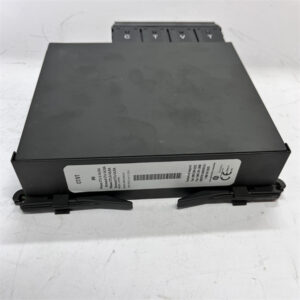
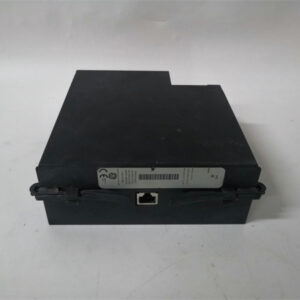
The GE DS200DCFBG1ALC is a DC power supply feedback board within the GE Mark V Series of turbine control systems, designed for Level 2 (Control) of the Purdue Model in industrial automation. It resides in turbine control cabinets (mounted via plug-in slots) and serves as the bridge between input power sources (e.g., 125V DC battery banks, 250V DC power supplies) and output loads (e.g., control circuits, drive systems, cabinet fans), connecting:
-
Input Power: Receives DC power from the plant’s power distribution system. The board uses rectifier circuits (diodes) to convert AC to DC (if necessary) and filter circuits (capacitors) to smooth the DC voltage.
-
Control Logic: A microcontroller (e.g., single-chip microcomputer) executes pre-programmed algorithms to monitor voltage/current and adjust the output. It receives feedback signals from sensors (e.g., voltage dividers, current transformers) and triggers protection circuits (overcurrent, overvoltage) if thresholds are exceeded.
-
Output Loads: Transmits regulated DC power to:
-
Control Circuits: Powers Mark V main processor boards (e.g., LDCC) and I/O modules.
-
Drive Systems: Supplies power to variable frequency drives (VFDs) and motor controllers.
-
Cabinet Fans: Provides 24V DC power to cooling fans for thermal management.
-
Upstream Communication
Receives power input from the plant’s distribution system. The board’s overvoltage/overcurrent protection circuits ensure that only safe, stable power is passed to the control logic.
Downstream Communication
Transmits regulated power to output loads. The board’s feedback regulation mechanism (voltage-divider resistors, error amplifier) continuously monitors the output and adjusts the control signals to maintain the set voltage/current.
Operational Advantages
-
Stable Power Delivery: The board’s filtering and regulation circuits ensure consistent DC power, critical for sensitive control circuits and drive systems.
-
Fault Protection: Built-in overcurrent, overvoltage, and thermal protection prevent damage to the board and downstream components, reducing downtime.
-
Modular Design: Plug-in design allows for easy replacement, minimizing system downtime during maintenance.
Core Technical Specifications
|
Attribute
|
Specification
|
|---|---|
|
Product Type
|
DC Power Supply Feedback Board
|
|
Part Number
|
DS200DCFBG1ALC
|
|
System Platform
|
GE Mark V Series Turbine Control Systems
|
|
Input Voltage
|
125/250 VDC (nominal)
|
|
Output Voltage
|
Regulated DC (e.g., 24V DC for fans, 5V DC for control circuits)
|
|
Operating Temperature
|
-30°C to +65°C (-22°F to 149°F)
|
|
Storage Temperature
|
-40°C to +85°C (-40°F to 185°F)
|
|
Humidity
|
5–95% non-condensing
|
|
Dimensions (W×H×D)
|
~200 mm × 150 mm × 50 mm (7.9 in × 5.9 in × 2.0 in) (approximate)
|
|
Weight
|
~0.45 kg (1 lb)
|
|
Certifications
|
CE, UL, ATEX (Ex d IIB T5 Gb) (hazardous location compliant)
|
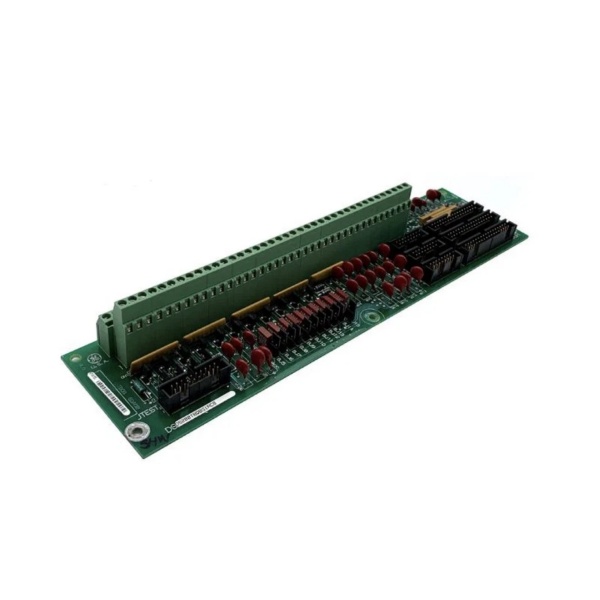
GE DS200DCFBG1ALC
Customer Value & Operational Benefits
Enhanced System Reliability
The DS200DCFBG1ALC’s stable power delivery and fault protection reduce the risk of system failures. A power plant using the board reported a 99.9% uptime rate for its Mark V control system, compared to 95% with traditional power supplies.
Reduced Maintenance Costs
The board’s modular design allows technicians to replace it in minutes without shutting down the turbine. A chemical plant using the DS200DCFBG1ALC cut maintenance downtime by 40% compared to traditional non-modular power supplies.
Cost-Effective Integration
Compatible with GE Mark V Series and existing drive systems, the DS200DCFBG1ALC eliminates the need for custom power solutions. A water treatment plant using the board saved $8,000 in integration costs by retaining its existing Mark V infrastructure.
Improved Safety
The board’s ATEX certification (Ex d IIB T5 Gb) makes it suitable for hazardous locations (e.g., turbine halls with flammable gases), ensuring safe operation in high-risk environments.
Field Engineer’s Notes (From the Trenches)
When installing the DS200DCFBG1ALC, always verify the input voltage—the board requires 125/250 VDC (±10%). I once saw a site where a technician connected a 480V AC supply to a 250V DC board, resulting in a burnt-out rectifier circuit. Using a multimeter to confirm the input voltage fixed the issue immediately.Another gotcha: check the cooling fan—the board’s operating temperature range is -30°C to +65°C, but if the fan fails, the board can overheat. I’ve fixed countless “overheating” errors by replacing a faulty fan (use a 24V DC fan with the same airflow rating).If the board’s “FAULT” LED illuminates, check the feedback signals—the most common cause is a faulty voltage sensor (use a multimeter to test the sensor’s output). I’ve seen cases where a dirty sensor caused the board to enter a fault state; cleaning the sensor fixed the problem.
Real-World Applications
-
Power Generation:A coal-fired power plant uses the DS200DCFBG1ALC to power its Mark V turbine control system. The board’s stable power delivery ensures that the turbine’s speed and temperature are controlled accurately, maintaining optimal efficiency.
-
Industrial Manufacturing:A steel mill uses the DS200DCFBG1ALC to power its variable frequency drives (VFDs) for rolling mill motors. The board’s fault protection prevents damage to the VFDs, reducing maintenance costs.
-
Oil & Gas:An offshore oil platform uses the DS200DCFBG1ALC to power its Mark V control system. The board’s ATEX certification ensures safe operation in the presence of flammable gases, while its wide operating temperature range (-30°C to +65°C) withstands the harsh offshore environment.
High-Frequency Troubleshooting FAQ
Q: What does the “FAULT” LED indicate on the GE DS200DCFBG1ALC?
A: The red “FAULT” LED indicates a critical error, such as:
-
Overcurrent: The output current exceeds the set limit (check the load for shorts);
-
Overvoltage: The input voltage is outside the 125/250 VDC range (use a multimeter to test the input);
-
Thermal Overload: The board’s temperature exceeds 65°C (check the cooling fan).
Q: Can the DS200DCFBG1ALC be used with non-GE drive systems?
A: No, the DS200DCFBG1ALC is designed exclusively for GE Mark V Series systems. Non-GE drive systems may not provide the correct input voltage or communication signals, leading to board failure.
Q: How do I configure the output voltage on the DS200DCFBG1ALC?
A: Use the microcontroller’s programming interface (e.g., via a laptop and software) to set the output voltage. Refer to the board’s datasheet for the exact programming steps (you may need to adjust the voltage-divider resistors or error amplifier settings).
Q: Why is the DS200DCFBG1ALC’s output voltage unstable?
A: Check three things first:
-
Input Voltage: Ensure the input voltage is stable (use a multimeter to test);
-
Feedback Signals: Verify that the voltage sensor is clean and functioning correctly;
-
Load: Ensure the load is not drawing more current than the board’s rated capacity.
Commercial Availability & Pricing
Please note: The listed price is not the actual final price. It is for reference only and is subject to appropriate negotiation based on current market conditions, quantity, and availability.