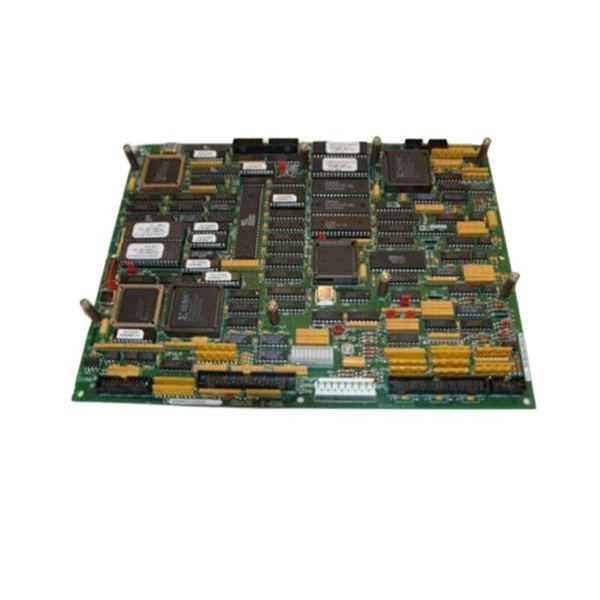
Description
DS200IPCSG1A: Product Overview
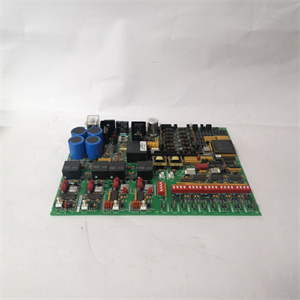
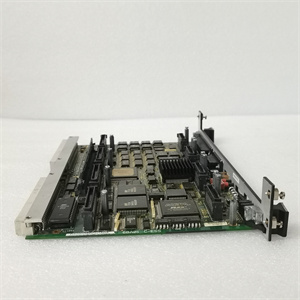
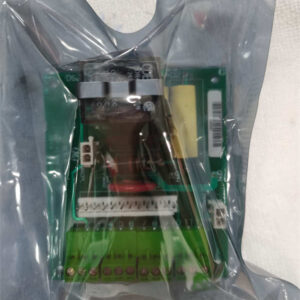
The GE DS200IPCSG1A is an analog I/O terminal board designed for integration into GE’s Mark V series of turbine control systems. As a critical component of the Mark V ecosystem, it enables reliable signal transmission between analog field devices (e.g., LVDT position sensors, thermocouples, pressure transmitters) and the turbine control unit, ensuring precise monitoring and control of turbine operations.
Role in Automation Systems:
Positioned as an “analog signal interface” in the Mark V architecture, the DS200IPCSG1A performs two primary functions:
-
Signal Termination: Provides dedicated terminals for analog field devices, ensuring secure and stable connections for LVDT, thermocouple, 4–20 mA, and voltage signals.
-
Signal Conditioning: Filters, amplifies, and scales raw analog signals from field devices to ensure accuracy and consistency before transmitting them to the Mark V controller.
Core Functionality:
-
Extended Signal Support: Builds on the capabilities of standard Mark V analog I/O boards (e.g., TCQA) by adding more channels for LVDT, thermocouple, 4–20 mA, and voltage signals, accommodating growing system demands.
-
Hardware Configuration: Uses jumpers (e.g., J1–J8) to select signal types, configure output ranges (e.g., 4–20 mA vs. 0–20 mA), and enable test modes (e.g., RS232 port for card testing).
-
Communication: Transmits processed signals to the Mark V controller via the 3PL data bus and exchanges generator/line signals with other I/O boards (e.g., TCQC) via the JE connector.
Platform Benefits (Mark V Series):
The DS200IPCSG1A leverages GE’s Mark V platform, which is renowned for:
-
Reliability: Industrial-grade components and a rugged design ensure 24/7 operation in harsh turbine hall environments (e.g., high temperature, vibration).
-
Scalability: Supports expansion with additional terminal boards to accommodate growing system demands (e.g., adding more sensors or actuators).
-
Integration: Seamlessly integrates with Mark V controllers and other I/O cores (R1, R2, R3), reducing setup time and effort.
Technical Specifications
-
Model Number: DS200IPCSG1A
-
Manufacturer: GE (General Electric)
-
Product Type: Analog I/O Terminal Board
-
Series: Mark V
-
Signal Inputs:
-
LVDT (Linear Variable Differential Transformer)
-
Thermocouple (Type J, K, T, etc.)
-
4–20 mA current loop
-
±10 V DC voltage
-
-
Signal Outputs:
-
4–20 mA current loop (configurable via jumpers)
-
±10 V DC voltage
-
-
Connectors:
-
3PL (data bus to STCA, TCQA, TCQE boards)
-
JE (generator/line signals to TCQC board)
-
JB (4–20 mA I/O to TBQC terminal board)
-
-
Hardware Jumpers:
-
J1/J2: Select milliamp output circuit
-
J5/J6: Configure milliamp output range (20 mA or 200 mA)
-
J7: Enable RS232 port for card testing
-
J8: Start oscillator for signal generation
-
-
Operating Temperature: -20°C to +60°C (-4°F to 140°F)
-
Storage Temperature: -40°C to +85°C (-40°F to 185°F)
-
Humidity: 5–95% non-condensing
-
Dimensions: 173 mm × 112 mm × 13 mm (6.81 in × 4.41 in × 0.51 in)
-
Weight: 0.12 kg (0.26 lbs)
-
Certifications: CE, UL (inferred from GE industrial product standards)

Core Features & Customer Value
1. Extended Signal Capacity:
The DS200IPCSG1A provides additional analog I/O channels beyond standard Mark V boards, allowing engineers to expand system capabilities without replacing existing hardware. For example, in a gas turbine control system, this means adding more LVDT sensors to monitor blade positions or thermocouples to measure exhaust gas temperature, improving control precision.
2. Flexible Configuration:
Hardware jumpers enable customization of signal types and output ranges, reducing the need for software changes. For instance, configuring the milliamp output range (20 mA vs. 200 mA) via J5/J6 allows the board to interface with different actuators (e.g., small valves vs. large pumps), saving time and money during installation.
3. Reliable Communication:
The 3PL data bus and JE connector ensure seamless communication with other Mark V components, minimizing latency and ensuring real-time signal transmission. This reliability is critical for turbine control, where delayed signals could lead to equipment damage or downtime.
4. Rugged Design:
The board’s operating temperature range (-20°C to +60°C) and compact form factor make it suitable for harsh turbine hall environments. Its DIN rail mounting option simplifies installation in crowded control cabinets, reducing setup time and effort.
Typical Applications
The GE DS200IPCSG1A is widely used in gas turbine control systems for:
-
Turbine Blade Position Monitoring:
-
Uses LVDT inputs to measure the position of turbine blades, enabling the Mark V controller to adjust blade angles for optimal efficiency.
-
-
Exhaust Gas Temperature Measurement:
-
Uses thermocouple inputs to monitor exhaust gas temperature, helping to prevent overheating and optimize combustion.
-
-
Pressure/Flow Control:
-
Uses 4–20 mA inputs to measure pressure and flow rates in fuel lines, enabling the controller to adjust fuel flow for consistent turbine output.
-
-
Generator/Line Signal Exchange:
-
Uses the JE connector to exchange generator and line signals with other I/O boards (e.g., TCQC), supporting grid synchronization and power output control.
-