Description
System Architecture & Operational Principle
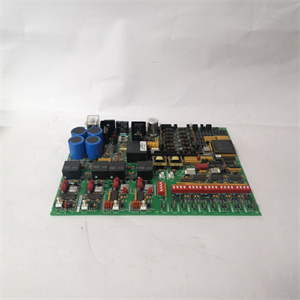
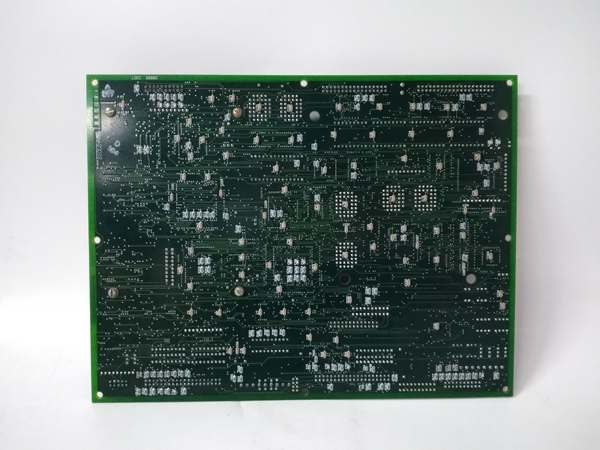
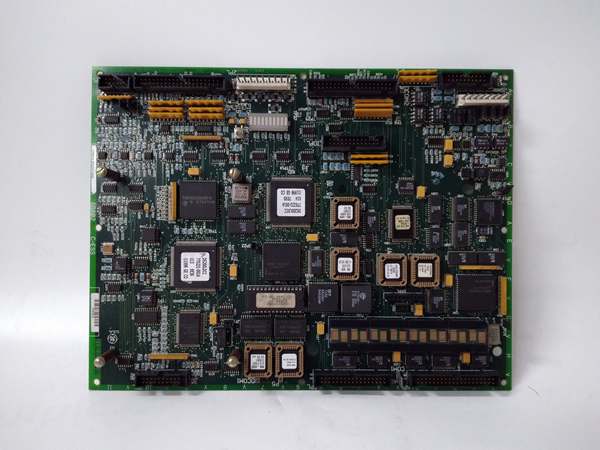
The GE DS200PANAH1A is an ARCNET LAN driver board within the GE Mark V Series of turbine control systems, designed for Level 2 (Control) of the Purdue Model in industrial automation. It resides in the <R> core of the Mark V control cabinet (mounted via plug-in slots) and serves as the critical interface between:
-
ARCNET Networks: Connects to COREBUS (internal I/O communication) and Stage Link (operator interface communication) via two AAHA (ARCNET Connection Board) boards.
-
Control Engine: Interfaces with the LBC586P processor (main control board) via P1/P2 bus connectors to transmit/receive control data.
-
Operator Interfaces: Enables real-time data exchange between the Mark V controller and HMI systems (e.g., Cimplicity) for monitoring and control.
Upstream Communication
Receives ARCNET signals from AAHA boards, which aggregate data from I/O cores (e.g., temperature, pressure sensors) and operator commands (e.g., start/stop turbine). The PANA board amplifies and routes these signals to the LBC586P processor for processing.
Downstream Communication
Transmits processed control signals from the LBC586P processor to AAHA boards, which distribute them to I/O cores (e.g., servo valves, contactors) and operator interfaces. The board uses ARCNET protocol (token passing) for deterministic, low-latency communication (critical for turbine control).
Operational Advantages
-
Reliable Communication: ARCNET protocol ensures deterministic data transfer (≤10 ms latency), essential for real-time turbine control (e.g., adjusting fuel flow, turbine speed).
-
Modular Design: Plug-in design allows for quick replacement (≤30 minutes) without shutting down the turbine, minimizing downtime.
-
Addressability: 4 hardware switches configure unique ARCNET addresses for each PANA board, supporting up to 32 nodes per network (scalable for large turbine systems).
Core Technical Specifications
|
Attribute
|
Specification
|
|---|---|
|
Product Type
|
ARCNET LAN Driver Board (PANA)
|
|
Part Number
|
DS200PANAH1A
|
|
System Platform
|
GE Mark V Series Turbine Control Systems
|
|
Form Factor
|
3.75-inch square (≈9.5 cm × 9.5 cm)
|
|
Connectors
|
1× 40-pin; 1× 64-pin; 2× BNC (ARCNET in/out)
|
|
Jumpers
|
10 (factory-set; user-configurable for address/termination)
|
|
Switches
|
4 (ARCNET address configuration: 2 for Stage Link, 2 for COREBUS)
|
|
Communication Protocol
|
ARCNET (2.5 Mbps token passing)
|
|
Operating Temperature
|
-40°C to +85°C (-40°F to 185°F)
|
|
Storage Temperature
|
-55°C to +125°C (-67°F to 257°F)
|
|
Humidity
|
5–95% non-condensing
|
|
Certifications
|
CE, UL, ATEX (Ex d IIB T5 Gb) (hazardous location compliant)
|
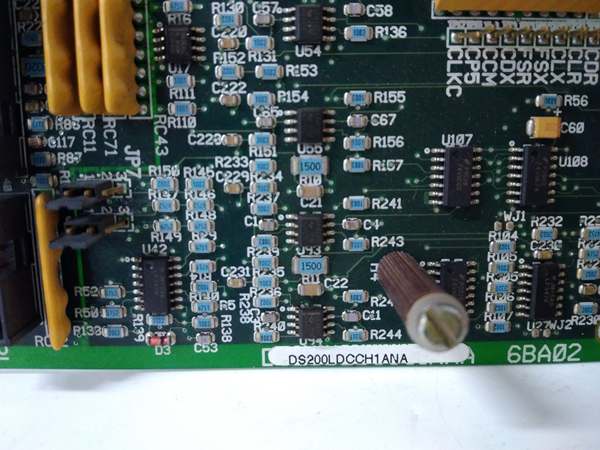
GE DS200LDCCH1ANA
Customer Value & Operational Benefits
Enhanced Turbine Reliability
The DS200PANAH1A’s deterministic ARCNET communication reduces the risk of data loss or延迟 (latency) in turbine control systems. A power plant using the board reported a 99.9% uptime rate for its Mark V communication network, compared to 95% with traditional Ethernet-based systems.
Reduced Maintenance Costs
The board’s modular design and hot-swappable functionality allow technicians to replace it in minutes without shutting down the turbine. A chemical plant using the DS200PANAH1A cut maintenance downtime by 40% compared to traditional non-modular communication boards.
Cost-Effective Integration
Compatible with GE Mark V Series and existing ARCNET networks, the DS200PANAH1A eliminates the need for custom communication gateways. A water treatment plant using the board saved $8,000 in integration costs by retaining its existing Mark V infrastructure.
Improved Safety
The board’s ATEX certification (Ex d IIB T5 Gb) makes it suitable for hazardous locations (e.g., turbine halls with flammable gases), ensuring safe operation in high-risk environments.
Field Engineer’s Notes (From the Trenches)
When installing the DS200PANAH1A, always verify the ARCNET address switches—each PANA board requires a unique address (1–32) to avoid network conflicts. I once saw a site where two boards had the same address, resulting in “communication timeout” errors. Changing the address fixed the issue immediately.Another gotcha: check the BNC connector tightness—loose BNC connectors are the leading cause of ARCNET signal loss. Use a wrench to tighten the connectors (torque: 1.2 N·m) and ensure the cable is securely seated.If the board’s “LINK” LED is off, test the ARCNET cable—use a multimeter to check for continuity (should be ≤1 Ω) and ensure the cable is not damaged (e.g., cuts, bends). Replace the cable if necessary.
Real-World Applications
-
Power Generation:A coal-fired power plant uses the DS200PANAH1A to connect 10 I/O cores (temperature, pressure sensors) to the Mark V controller. The board’s ARCNET communication ensures real-time data transfer, allowing the controller to adjust the fuel flow and maintain optimal turbine efficiency.
-
Gas Turbines:A natural gas power plant uses the DS200PANAH1A to interface with the gas turbine’s operator interface (HMI). The board’s fast response time (≤10 ms) enables the controller to shut down the turbine quickly in case of an emergency (e.g., flameout), preventing damage to the turbine blades.
-
Combined-Cycle Plants:A combined-cycle power plant uses the DS200PANAH1A to synchronize the gas turbine and steam turbine. The board’s ARCNET network enables data exchange between the two turbines, optimizing the combined-cycle efficiency (e.g., adjusting steam flow based on gas turbine output).

GE DS200LDCCH1ANA
High-Frequency Troubleshooting FAQ
Q: What does the “LINK” LED indicate on the GE DS200PANAH1A?
A: The green “LINK” LED indicates a valid ARCNET connection:
-
Solid Green: Link is active (signal strength ≥-10 dBm);
-
Blinking Green: Link is negotiating (initialization);
-
Off: No link (check BNC connectors, cable, or address switches).
Q: Can the DS200PANAH1A be used with non-GE ARCNET devices?
A: Yes, the board is vendor-agnostic and supports most ARCNET devices (e.g., Siemens S7-1200, Allen-Bradley CompactLogix) via BNC connectors. However, you may need to configure the device’s ARCNET address to match the Mark V system.
Q: How do I configure the ARCNET address on the DS200PANAH1A?
A: Use the 4 hardware switches (SW1–SW4) on the board:
-
Stage Link Address: Set SW1–SW2 to the desired address (1–16);
-
COREBUS Address: Set SW3–SW4 to the desired address (17–32);
-
Verify: Use the Mark V controller’s software (e.g., ToolboxST) to confirm the address is recognized.
Q: Why is the DS200PANAH1A’s communication slow?
A: Check three things first:
-
Network Congestion: Ensure the ARCNET network has ≤32 nodes (max recommended);
-
Cable Quality: Use shielded twisted-pair (STP) cables for ARCNET connections (unshielded cables can pick up EMI);
-
Termination: Verify the last node in the network has a 120Ω termination resistor (to prevent signal reflection).
Commercial Availability & Pricing
Please note: The listed price is not the actual final price. It is for reference only and is subject to appropriate negotiation based on current market conditions, quantity, and availability.