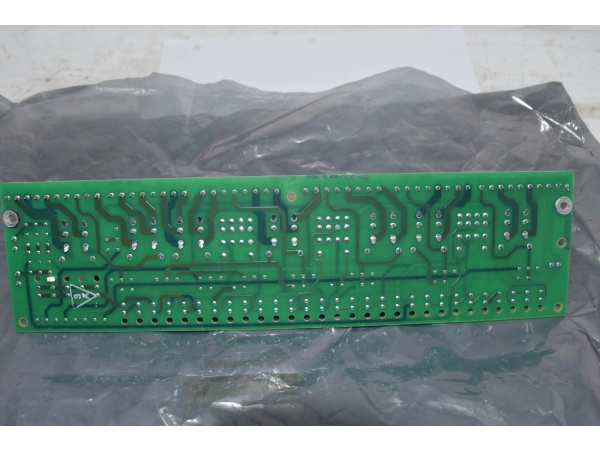
Description
DS200RTBAG4AHC: Product Overview
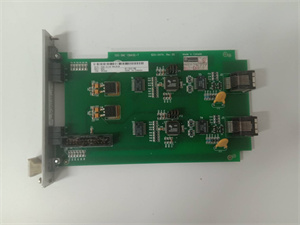
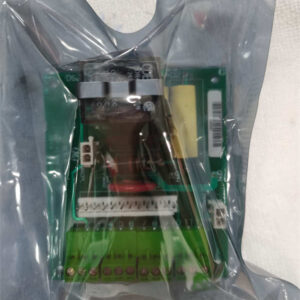
The GE DS200RTBAG4AHC is a relay terminal board designed specifically for GE Speedtronic™ Mark V distributed control systems (DCS), the industry standard for gas, steam, and hydro turbine control in power generation. As part of the Mark V ecosystem, it acts as a “signal aggregator” for field relays, consolidating dozens of field contacts (e.g., oil-pressure switches, breaker status, 115 VAC auxiliary contacts) into a single plug-in card. This eliminates the need for multiple DIN-rail relay blocks, reducing wiring complexity (“spaghetti bowl” effect) and improving system reliability—critical for turbine control where downtime is costly.
Engineered for the demanding conditions of turbine halls, the DS200RTBAG4AHC features a compact VME-style form factor and rugged screw-terminal connections, withstanding vibration, dust, and moisture. Its legacy compatibility makes it ideal for retrofitting aging Mark V systems, where replacing entire control architectures is cost-prohibitive. Whether used in 7EA or 9F peakers, the DS200RTBAG4AHC ensures reliable relay switching, directly extending the operational life of critical turbine control systems.
Role in Automation Systems
Positioned as a “field-to-rack relay interface” in Mark V architectures, the DS200RTBAG4AHC performs two primary functions:
-
Field Contact Aggregation: Connects field contacts (e.g., oil-pressure switches, breaker status) to the Mark V rack via 190 screw terminals, eliminating the need for multiple DIN-rail relays.
-
Excitation Relay Support: Interfaces with excitation relays (e.g., 115 VAC auxiliary relays) to provide power to turbine drive systems, ensuring reliable actuation of critical components.
Its core value lies in reducing wiring complexity—a major pain point in turbine control panels—while maintaining signal integrity through 2 kV coil-to-logic isolation and 500 V contact-to-contact isolation.
Core Functionality
-
Flexible Coil Voltage Configuration: Jumper-selectable coil voltage (115 VAC, 24 VDC, or 125 VDC) allows adaptation to different field devices, reducing the need for additional voltage converters.
-
High Isolation Rating: 2 kV coil-to-logic and 500 V contact-to-contact isolation protect sensitive Mark V electronics from high-voltage transients, ensuring reliable operation in harsh industrial environments.
-
Compact Form Factor: VME-style design (159 × 178 mm, 0.7 kg) fits into standard Mark V racks, minimizing panel space usage and simplifying installation.
-
Easy Maintenance: Plug-in design allows for quick replacement during maintenance, reducing downtime. The 190-position screw-terminal block simplifies field wiring, with clear labeling for easy troubleshooting.

DS200RTBAG4AHC
Technical Specifications
-
Model Number: DS200RTBAG4AHC (Variant of Mark V Series)
-
Manufacturer: GE (General Electric)
-
Product Type: Relay Terminal Board
-
Series: Mark V (Turbine Control Systems)
-
Relay Type: RST (Regulator, Sensor, Transducer)
-
Terminal Count: 190-position screw-block (95 per side)
-
Coil Voltage: Jumper-selectable (115 VAC 50/60 Hz, 24 VDC, 125 VDC)
-
Isolation: 2 kV basic coil-to-logic; 500 V contact-to-contact
-
Connector: 96-pin DIN 41612 to VME back-plane; screw terminals for field wires
-
Operating Temperature: –40 °C to +70 °C (industrial-grade)
-
Dimensions: 159 × 178 mm (VME-style)
-
Weight: 0.7 kg (typical)
-
Protection Degree: IP20 (rack-mount)
Core Features & Customer Value
1. Reduced Wiring Complexity:
By consolidating 190 field contacts into a single card, the DS200RTBAG4AHC eliminates the need for multiple DIN-rail relay blocks, reducing wiring time and potential failure points. This is particularly valuable in retrofit projects, where minimizing downtime is critical.
2. High Reliability:
The board’s 2 kV coil-to-logic isolation and 500 V contact-to-contact isolation protect sensitive Mark V electronics from high-voltage transients, ensuring reliable relay switching even in harsh turbine hall environments.
3. Flexible Configuration:
Jumper-selectable coil voltage (115 VAC, 24 VDC, 125 VDC) allows adaptation to different field devices, reducing the need for additional voltage converters. This flexibility saves time and money during installation.
4. Easy Maintenance:
The plug-in design allows for quick replacement during maintenance, reducing downtime. The 190-position screw-terminal block simplifies field wiring, with clear labeling for easy troubleshooting.
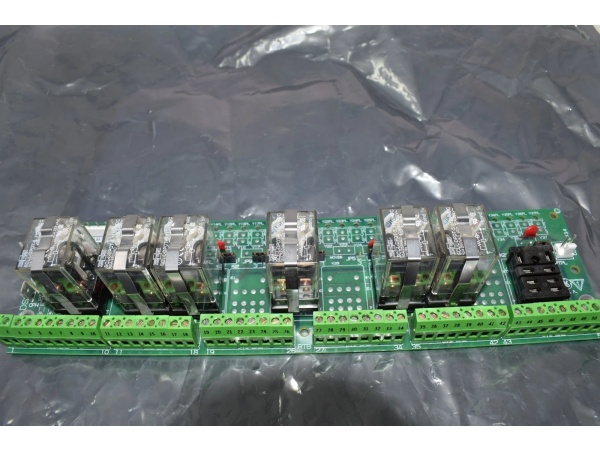
DS200RTBAG4AHC
Typical Applications
The GE DS200RTBAG4AHC is widely used in industrial automation systems for:
-
Power Generation:
-
Connects field contacts (e.g., oil-pressure switches, breaker status) and excitation relays in gas/steam turbine control systems, reducing wiring complexity and improving reliability.
-
-
Heavy Industry:
-
Used in manufacturing facilities to aggregate field relays for critical processes (e.g., conveyor belts, pumps), ensuring reliable actuation of components.
-
-
Oil & Gas:
-
Deployed in refineries and drilling platforms to connect field contacts for safety interlocks, ensuring safe and efficient operation in hazardous environments.
-