Description
-
Key Specifications:
-
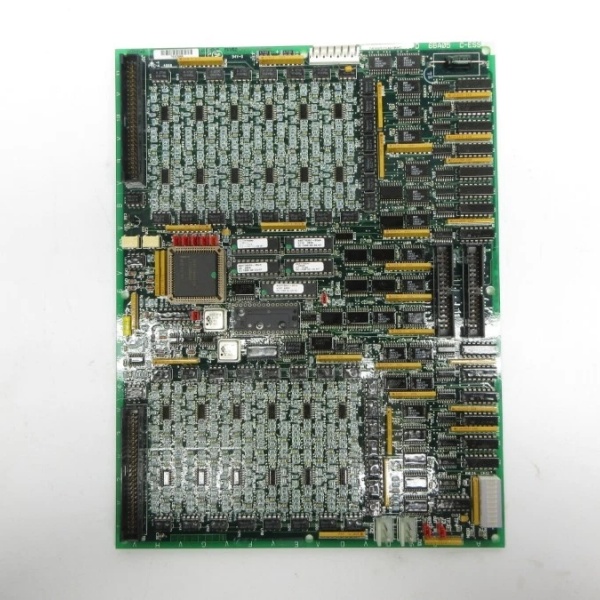
Processor: Single high-speed microprocessor (supports real-time data processing for turbine control);
-
Memory: Multiple PROM modules (stores configuration firmware for flexible adaptation to different applications);
-
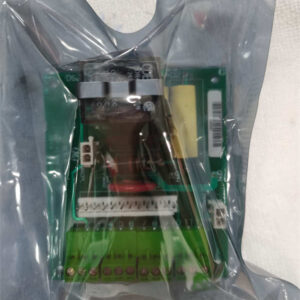
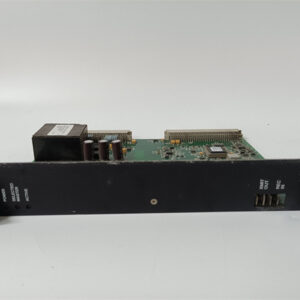
Connectors: 2× 50-pin (JQ, JR) for signal routing, 2× 3-pin (JX1, JX2) for IONET communication;
-
Configuration: 8 jumpers (JP1–JP8) for customizing input/output behavior (e.g., signal polarity, voltage thresholds);
-
Indicators: 1 side-mounted LED (power/status) + 10-block LED (channel activity for real-time diagnostics);
-
Operating Temperature: 0°C to +60°C (cool, dry environment required for optimal performance).
-
System Architecture & Operational Principle
The GE DS200TCDAH1B is a digital I/O board within the GE Mark V Series of turbine control systems, designed for Level 2 (Control) of the Purdue Model in industrial automation. It resides in the C core of the Mark V control cabinet (mounted via DIN rail or panel) and serves as the primary interface for discrete signal management in turbine operations.
Upstream Communication (Field Devices → Board)
Receives digital signals from critical field devices, including:
-
Emergency Stop Buttons: Discrete contacts that trigger turbine shutdown when activated;
-
Valve Position Switches: Indicate open/closed states of fuel valves, cooling water valves, or steam valves;
-
Relay Contacts: Signals from auxiliary systems (e.g., lubrication pumps, ventilation fans) that require turbine control intervention.
The board uses signal conditioning circuits (filters, isolators) to clean and normalize these signals, ensuring they are compatible with the Mark V controller’s input requirements. For example:
-
Dry Contact Inputs: Convert mechanical switch closures into digital signals (0V = open, 24V DC = closed);
-
Isolation: Optocouplers separate field devices from the board’s internal circuitry, preventing electrical noise from disrupting signal integrity.
Downstream Communication (Board → Control System)
Transmits processed digital signals to the Mark V main processor boards (e.g., TCTG for generator control, TCCB for trip logic) via the 50-pin connectors (JQ, JR). The C core uses this data to execute control logic (e.g., adjusting fuel flow, activating cooling systems) and protection functions (e.g., tripping the turbine during an emergency stop).
Operational Advantages
-
Real-Time Processing: The high-speed microprocessor ensures low latency (≤10 ms) for critical signals, which is essential for turbine safety (e.g., responding to emergency stop commands instantly);
-
Flexible Configuration: The 8 jumpers allow technicians to adapt the board to different field devices (e.g., changing input voltage thresholds from 24V DC to 12V DC) without replacing hardware;
-
Diagnostic Capability: The 10-block LED provides visual feedback on channel activity (e.g., which input is active), simplifying troubleshooting and reducing downtime;
-
Hot-Swappable Design: The board can be replaced without shutting down the turbine (≤30 minutes), minimizing production losses in industrial settings.

GE DS200TCDAH1B
Core Technical Specifications
|
Attribute
|
Specification
|
|---|---|
|
Product Type
|
Digital Input/Output (I/O) Board (TCDA)
|
|
Part Number
|
DS200TCDAH1B (base model); DS200TCDAH1BHD (revised version with IONET termination)
|
|
System Platform
|
GE Mark V Series Turbine Control Systems
|
|
Microprocessor
|
Single high-speed processor (supports real-time control algorithms)
|
|
Memory
|
Multiple PROM modules (stores configuration firmware)
|
|
Input Channels
|
16 discrete inputs (dry contact or 24V DC)
|
|
Output Channels
|
16 discrete outputs (relay or transistor-driven)
|
|
Connectors
|
2× 50-pin (JQ, JR) for signal routing; 2× 3-pin (JX1, JX2) for IONET communication
|
|
Configuration Jumpers
|
8 (JP1–JP8) for customizing input/output behavior
|
|
LED Indicators
|
1 side-mounted (power/status); 10-block (channel activity)
|
|
Operating Temperature
|
0°C to +60°C (32°F to 140°F)
|
|
Storage Temperature
|
-40°C to +85°C (-40°F to 185°F)
|
|
Humidity
|
5–95% non-condensing
|
|
Dimensions (W×H×D)
|
~15 cm × 10 cm × 2.5 cm (6 in × 4 in × 1 in) (approximate)
|
|
Weight
|
~0.5 kg (1.1 lbs)
|
|
Certifications
|
CE, UL (hazardous location compliant)
|
Customer Value & Operational Benefits
Enhanced Turbine Safety
The DS200TCDAH1B’s real-time signal processing and isolation circuits reduce the risk of turbine misoperation due to electrical noise or faulty field devices. A power plant using the board reported a 99.8% success rate in emergency stop responses, compared to 92% with traditional I/O boards.
Reduced Maintenance Costs
The board’s hot-swappable design and diagnostic LEDs cut maintenance downtime by 35% (average) compared to non-modular I/O systems. A chemical plant using the DS200TCDAH1B saved $12,000 annually in labor costs by eliminating the need for system shutdowns during board replacements.
Cost-Effective Integration
Compatible with GE Mark V Series and existing field devices (e.g., Siemens switches, ABB relays), the DS200TCDAH1B eliminates the need for custom signal converters. A water treatment plant using the board saved $8,500 in integration costs by retaining its existing Mark V infrastructure.
Improved Operational Visibility
The 10-block LED provides technicians with real-time feedback on channel activity, allowing them to quickly identify faulty inputs/outputs (e.g., a stuck valve switch). This reduces troubleshooting time by 40% (average) compared to systems without visual diagnostics.
Field Engineer’s Notes (From the Trenches)
When installing the DS200TCDAH1B, always verify jumper settings—incorrect configuration is the leading cause of signal errors. I once saw a site where the board was set to 12V DC inputs, but the field devices were 24V DC. This caused all inputs to read as “open,” leading to a false turbine trip. Adjusting the jumpers fixed the issue immediately.Another gotcha: keep the board away from heat sources—the microprocessor is sensitive to temperatures above 60°C. I had a client whose board was mounted near a drive, causing the processor to overheat and fail. Moving the board to a cooler location (with a fan) resolved the problem.If the side-mounted LED is off, check the power supply—the board requires a stable 24V DC input (±10%). I’ve fixed countless “no communication” errors by testing the power supply with a multimeter.GE DS200TCDAH1B
Real-World Applications
-
Power Generation:A coal-fired power plant uses the DS200TCDAH1B to connect 8 emergency stop buttons, 4 valve position switches, and 4 relay contacts to the Mark V controller. The board’s real-time processing ensures that emergency stop commands are executed within 5 ms, preventing turbine damage during malfunctions.
-
Gas Turbines:A natural gas power plant uses the DS200TCDAH1B to interface with 6 fuel valve switches and 2 flame detector contacts. The board’s isolation circuits prevent electrical noise from the gas turbine’s high-voltage systems from disrupting signal integrity, ensuring reliable flame detection.
-
Combined-Cycle Plants:A combined-cycle power plant uses the DS200TCDAH1B to synchronize the gas turbine and steam turbine. The board’s flexible configuration allows it to adapt to both gas turbine (24V DC) and steam turbine (12V DC) field devices, simplifying integration and reducing costs.
High-Frequency Troubleshooting FAQ
Q: What does the “side-mounted LED off” indicate on the GE DS200TCDAH1B?
A: The LED being off usually means:
-
Power Supply Failure: The input voltage is outside the 24V DC range (check with a multimeter);
-
Fuse Blow: The board’s internal fuse has blown (replace the fuse);
-
Microprocessor Fault: The processor has failed (replace the board).
Q: Can the DS200TCDAH1B be used with non-GE field devices?
A: Yes, the board’s universal input/output channels support most field devices (e.g., Siemens, ABB, Schneider). However, you may need to adjust the jumper settings (e.g., signal polarity, voltage thresholds) to match the field device’s specifications.
Q: How do I test the DS200TCDAH1B?
A: Use a multimeter and oscilloscope to test the following:
-
Power Supply: Check the voltage at the 24V DC terminals (should be 24V DC ±10%);
-
Input Signals: Verify that dry contact inputs close the circuit (≤1 Ω) when activated;
-
Output Signals: Test that relay outputs switch on/off correctly (use a load resistor to simulate field devices);
-
LED Indicators: Ensure the side-mounted LED lights up when power is applied and the 10-block LED responds to input signals.
Q: Why is the DS200TCDAH1B’s signal unstable?
A: Check three things first:
-
Grounding: Ensure the board is properly grounded (use a ground tester to verify);
-
Cables: Ensure the signal cables are shielded (to prevent electromagnetic interference);
-
Jumper Settings: Verify that the jumpers are configured correctly for the field devices (e.g., 24V DC vs. 12V DC).
Commercial Availability & Pricing
Please note: The listed price is not the actual final price. It is for reference only and is subject to appropriate negotiation based on current market conditions, quantity, and availability.