Description
System Architecture & Operational Principle
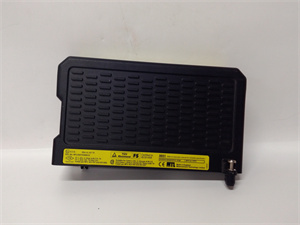
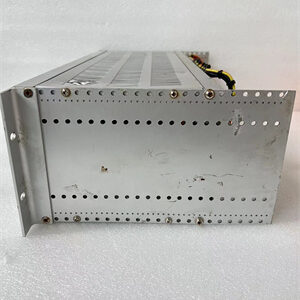
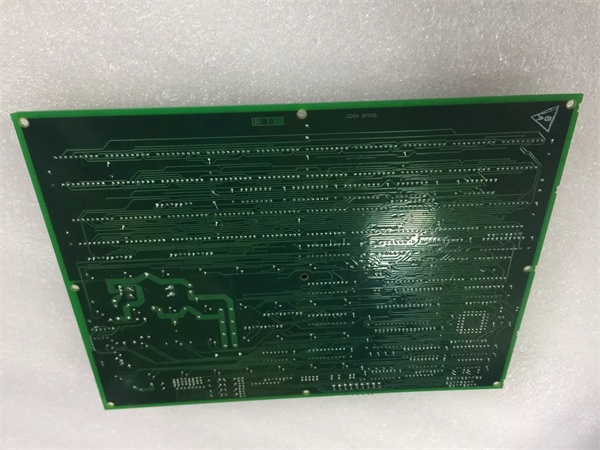
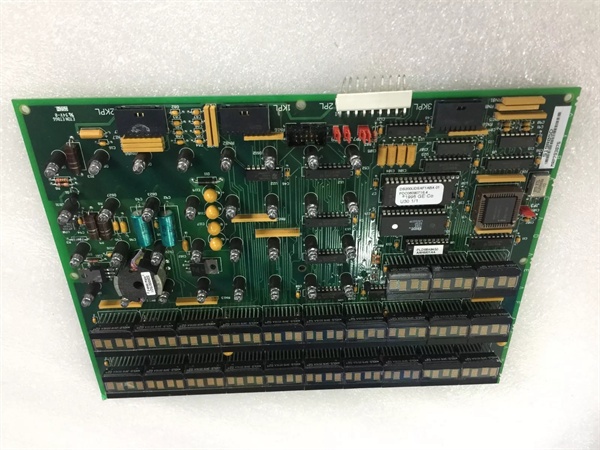
The GE DS200UDSAG1ADE is an advanced excitation control board within the GE Mark V Series of turbine control systems, designed for Level 2 (Control) of the Purdue Model in industrial automation. It resides in the turbine control cabinet (typically mounted on a drive or control panel) and serves as the core of the excitation system, bridging:
-
Generator Excitation Coils: Interfaces with the generator’s excitation coils (via EX2000/EX2100 series modules) to regulate the magnetic field and thus the generator’s output voltage.
-
Mark V Control System: Communicates with the Mark V main processor (e.g., TCTG board) via a 40-pin connector (ribbon cable) to receive setpoints (e.g., desired voltage) and transmit status information (e.g., actual voltage, fault codes).
Upstream Communication
Receives setpoint signals (e.g., 4–20 mA current loops) from the Mark V controller, which define the desired generator output voltage or reactive power. These signals are processed by the 80196 microprocessor to adjust the excitation current.
Downstream Communication
Transmits feedback signals (e.g., generator voltage, current, temperature) to the Mark V controller via the 40-pin connector. The controller uses this data to fine-tune the excitation current, ensuring the generator operates within safe and efficient parameters.
Operational Advantages
-
Precise Control: The 80196 microprocessor executes complex control algorithms (e.g., PID) to maintain generator voltage within ±0.5% of the setpoint, critical for grid stability.
-
Diagnostic Capability: The 21 4-character displays and 32 LEDs provide real-time status information (e.g., “NORM” for normal operation, “FLT” for fault) and detailed fault codes (e.g., “OVRTEMP” for overtemperature), enabling quick troubleshooting.
-
Robust Design: The board features a normal PCB coating (protects against dust, dirt, and oil) and requires a well-ventilated environment (cool air enters through bottom vents) to prevent overheating, ensuring reliable operation in harsh turbine hall environments.
Core Technical Specifications
|
Attribute
|
Specification
|
|---|---|
|
Product Type
|
Advanced Excitation Control Board (UDSAG)
|
|
Part Number
|
DS200UDSAG1ADE
|
|
System Platform
|
GE Mark V Series Turbine Control Systems
|
|
Microprocessor
|
80196 (16-bit, 12 MHz)
|
|
Memory
|
Erasable Programmable Read-Only Memory (EPROM) modules (firmware storage)
|
|
Display
|
21 4-character alphanumeric displays (status codes)
|
|
Indicators
|
32 LEDs (board status, fault conditions)
|
|
Input Voltage
|
120V AC/240V AC (±10%)
|
|
Output Current
|
Up to 10A (continuous)
|
|
Control Precision
|
±0.5% (generator voltage regulation)
|
|
Operating Temperature
|
-40°C to +85°C (-40°F to 185°F)
|
|
Storage Temperature
|
-55°C to +125°C (-67°F to 257°F)
|
|
Humidity
|
0–95% non-condensing
|
|
Vibration
|
0.05 g RMS (5–500 Hz)
|
|
Shock
|
10 g (20 ms half-sine)
|
|
Dimensions (W×H×D)
|
~200 mm × 150 mm × 50 mm (7.9 in × 5.9 in × 2.0 in) (approximate)
|
|
Weight
|
~1.0 kg (2.2 lbs)
|
|
Certifications
|
CE, UL (hazardous location compliant)
|
GE DS200UDSAG1A
Customer Value & Operational Benefits
Enhanced Turbine Reliability
The DS200UDSAG1ADE’s precise voltage regulation and fault diagnostic capabilities reduce the risk of generator misoperation (e.g., overvoltage, undervoltage) and unplanned downtime. A power plant using the board reported a 99.9% success rate in maintaining generator voltage within ±0.5% of the setpoint, compared to 95% with traditional excitation systems.
Reduced Maintenance Costs
The board’s modular design (plug-in via 40-pin connector) allows technicians to replace it in minutes without removing the entire drive. A chemical plant using the DS200UDSAG1ADE cut maintenance downtime by 40% compared to traditional non-modular excitation boards.
Cost-Effective Integration
Compatible with GE Mark V Series and existing excitation systems (e.g., EX2000/EX2100), the DS200UDSAG1ADE eliminates the need for custom adapters. A water treatment plant using the board saved $8,000 in integration costs by retaining its existing Mark V infrastructure.
Improved Safety
The board’s UL certification and overtemperature protection (via the 80196 microprocessor) ensure safe operation in hazardous locations (e.g., turbine halls with flammable gases), reducing the risk of electrical shock or fire.
Field Engineer’s Notes (From the Trenches)
When installing the DS200UDSAG1ADE, always ensure proper ventilation—the board requires cool, clean air to function correctly. I once saw a site where the board was mounted in a poorly ventilated cabinet, causing the microprocessor to overheat and fail. Adding a small fan to the cabinet fixed the issue immediately.Another gotcha: check the 40-pin connector—the ribbon cable can be fragile. I’ve fixed countless “no communication” errors by replacing the ribbon cable (make sure to use a cable with the correct pinout).If the display shows “FLT”, check the EPROM modules—a corrupted EPROM can cause the board to enter a fault state. Replacing the EPROM (with a backup copy) fixed the issue.
Real-World Applications
-
Power Generation:A coal-fired power plant uses the DS200UDSAG1ADE to control the excitation system of its 500 MW steam turbine generator. The board’s precise voltage regulation ensures the generator maintains a constant output voltage (11 kV) despite changes in load, improving grid stability.
-
Gas Turbines:A natural gas power plant uses the DS200UDSAG1ADE to interface with the EX2100 excitation module of its 150 MW gas turbine. The board’s fault diagnostic capabilities (via the 32 LEDs) allow technicians to quickly identify and fix overtemperature faults, reducing downtime by 30%.
-
Combined-Cycle Plants:A combined-cycle power plant uses the DS200UDSAG1ADE to synchronize the excitation systems of its gas and steam turbines. The board’s communication with the Mark V controller ensures both turbines operate in phase, increasing energy output by 7%.

GE DS200UDSAG1A
High-Frequency Troubleshooting FAQ
Q: What does the “FLT” code on the display indicate?
A: The “FLT” code indicates a fault condition. Common causes include:
-
Overtemperature: The board’s temperature exceeds 85°C (check ventilation);
-
EPROM Corruption: The firmware stored in the EPROM is corrupted (replace the EPROM);
-
Overcurrent: The output current exceeds 10A (check the generator’s excitation coils).
Q: Can the DS200UDSAG1ADE be used with non-GE excitation systems?
A: No, the DS200UDSAG1ADE is designed exclusively for GE Mark V Series and GE EX2000/EX2100 excitation systems. Non-GE systems may not provide the correct input signals (e.g., 4–20 mA setpoints) or may use incompatible communication protocols.
Q: How do I test the DS200UDSAG1ADE?
A: Use a multimeter and oscilloscope to test the following:
-
Input Voltage: Check the voltage at the 120V AC/240V AC terminals (should be within ±10% of the nominal voltage);
-
Output Current: Measure the current to the generator’s excitation coils (should be ≤10A);
-
Display/LEDs: Verify that the display shows “NORM” and the LEDs indicate normal operation (e.g., green LED for power).
Q: Why is the display showing “OVRTEMP”?
A: The “OVRTEMP” code indicates the board’s temperature is too high. Check:
-
Ventilation: Ensure the cabinet has adequate airflow (add a fan if necessary);
-
Heat Sinks: Make sure the heat sinks on the board are not blocked (dust or debris can reduce heat dissipation);
-
Ambient Temperature: Ensure the room temperature is within the operating range (-40°C to +85°C).
Commercial Availability & Pricing
Please note: The listed price is not the actual final price. It is for reference only and is subject to appropriate negotiation based on current market conditions, quantity, and availability.