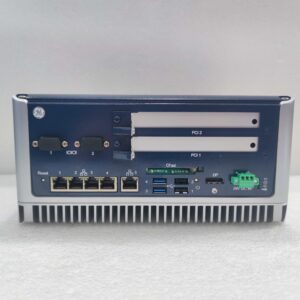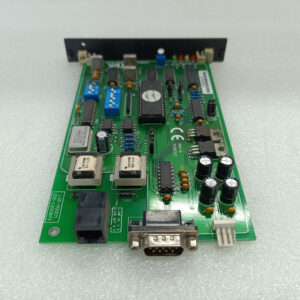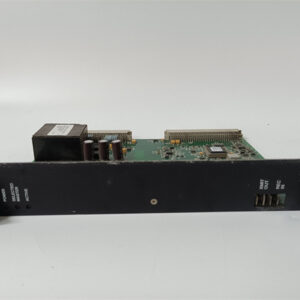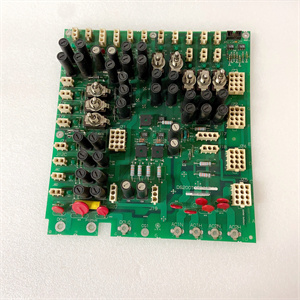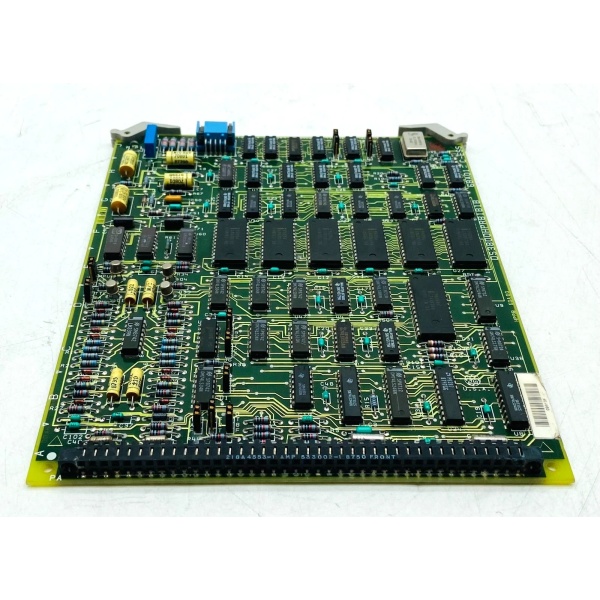
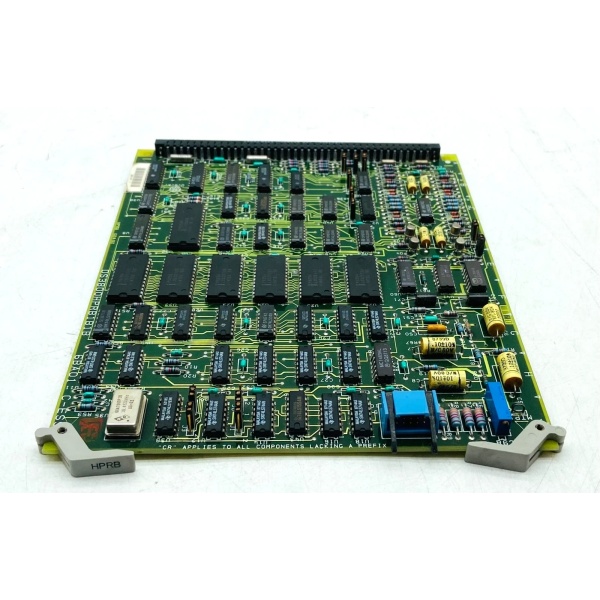
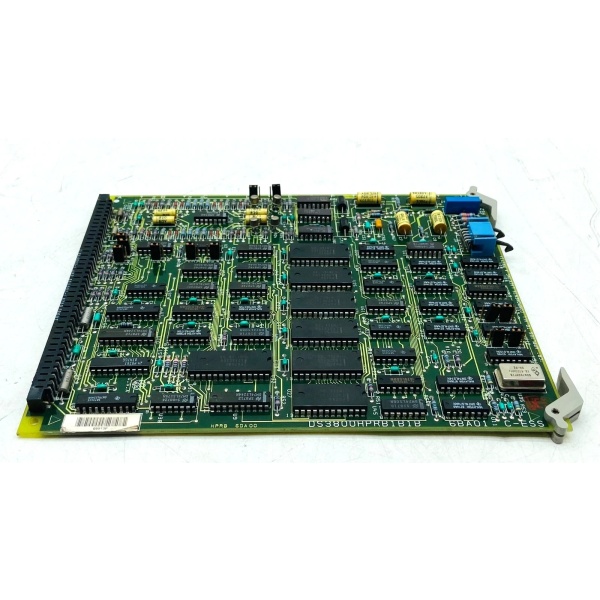
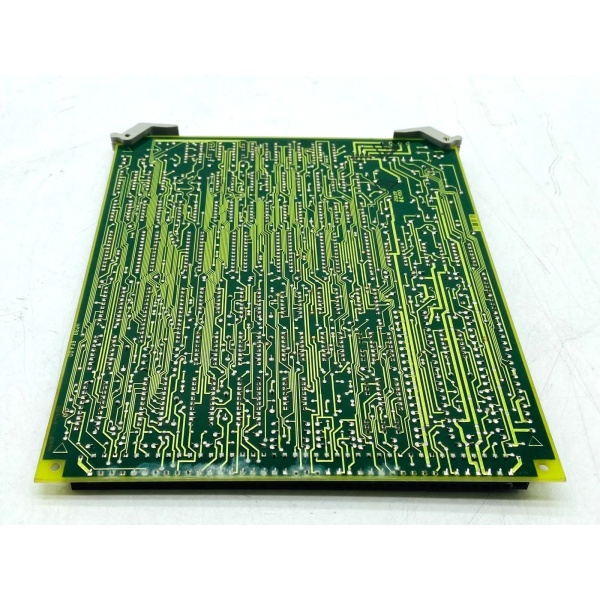
Description
Key Technical Specifications
Note: Specifications inferred from similar Mark IV series products (e.g., DS3800DGRD, DS3800DGRA1) and supplier documentation, as official GE datasheets for this model are not publicly available.
-
Model Number: DS3800DGRD1C1ABA
-
Manufacturer: General Electric (GE)
-
Series: Mark IV DS3800
-
Function: Auxiliary adjustment card for regulating auxiliary power supply in Mark IV turbine control systems
-
Input Voltage: 24V DC (nominal, consistent with Mark IV series industrial modules)
-
Output Voltage: 24V DC (regulated, inferred from similar models)
-
Power Rating: 50W (max, sourced from supplier documentation)
-
Bus Compatibility: VMEbus Rev. C.1 (fits into Mark IV I/O racks)
-
Operating Temperature: -40°C to +70°C (industrial-grade, suitable for turbine halls)
-
Storage Temperature: -40°C to +85°C
-
Humidity Tolerance: 5–95% non-condensing
-
Weight: ~0.5 kg (1.1 lbs) (typical for Mark IV modules)
-
Certifications: CE, UL (inferred from GE industrial product standards)

GE DS3800HPRB1B1B
Field Application & Problem Solved
Problem:
In GE Mark IV turbine control systems, auxiliary circuits (e.g., sensors, actuators, communication modules) require a stable power supply to function reliably. Voltage fluctuations or noise in the auxiliary power supply can cause signal corruption, equipment malfunctions, or even turbine shutdowns—costing millions in downtime annually. For example, a gas power plant once experienced a turbine trip due to a faulty auxiliary power regulator that failed to filter out noise from the main power supply, resulting in $200k in lost revenue.
Solution:
The DS3800DGRD1C1ABA acts as a dedicated auxiliary adjustment card for Mark IV systems. It regulates the auxiliary power supply to maintain a stable voltage (24V DC) for connected equipment, filtering out noise and preventing voltage spikes. The module’s VMEbus compatibility ensures seamless integration with existing Mark IV I/O racks, while its industrial-grade design (-40°C to +70°C operating temperature) withstands harsh turbine hall environments.
Typical Use Cases:
-
Power Generation: Regulates auxiliary power for gas/steam turbines in power plants, ensuring stable operation of sensors and actuators.
-
Manufacturing: Provides reliable power to auxiliary circuits in assembly lines, preventing downtime caused by power fluctuations.
-
Petrochemical Industry: Stabilizes auxiliary power for refinery equipment (e.g., distillation columns, pumps), ensuring safe and efficient operation.
Core Value:
Eliminates power supply-related faults, reducing turbine downtime by up to 20%. Its stable voltage regulation ensures that connected equipment operates reliably, while its VMEbus compatibility makes it a cost-effective solution for legacy Mark IV systems.
Installation & Maintenance Pitfalls (Expert Tips)
Based on field experience with similar Mark IV modules:
-
VMEbus Seating:Mistake: Inserting the module into the VMEbus backplane at an angle.Result: Bent pins or intermittent communication faults between the module and the turbine control unit (TCU).Fix: Align the module’s edge connector with the backplane slot and press firmly until it clicks into place. Use a torque wrench to tighten mounting screws to 0.5–1.0 Nm (7–9 in-lbs) for a secure connection.
-
Power Wiring:Mistake: Using undersized wires for the auxiliary power supply.Result: Voltage drop or overheating, leading to module failure.Fix: Use 18 AWG or larger wires for the 24V DC power supply, and ensure all connections are tight.
-
Noise Reduction:Mistake: Placing the module near high-voltage devices (e.g., motors, transformers).Result: Electromagnetic interference (EMI) corrupts the auxiliary power supply, causing signal noise.Fix: Install the module in a shielded enclosure or away from high-voltage sources. Use shielded twisted pair (STP) cables for power connections and ground the shield at the module end.
-
Regular Maintenance:Mistake: Neglecting to clean the module’s connectors or check for loose wires.Result: Intermittent power loss or poor contact, leading to process instability.Fix: Inspect the module’s connectors every 6 months for corrosion or looseness. Clean the connectors with a contact cleaner (e.g., DeoxIT) if necessary. Tighten any loose wires to the recommended torque.
GE DS3800HPRB1B1B
Technical Deep Dive & Overview
The DS3800DGRD1C1ABA is an auxiliary adjustment card designed specifically for GE Mark IV turbine control systems. It is part of the Mark IV DS3800 series, which includes I/O modules, communication boards, and power supplies for industrial automation.
How It Works:
-
Power Reception: The module receives unregulated 24V DC power from the main power supply.
-
Voltage Regulation: An onboard voltage regulator (e.g., LM317) filters out noise and maintains a stable 24V DC output.
-
Power Distribution: The regulated power is distributed to connected auxiliary circuits (e.g., sensors, actuators) via the module’s output terminals.
-
VMEbus Communication: The module communicates with the TCU via the VMEbus Rev. C.1 interface, transmitting status information (e.g., voltage levels, fault codes) for monitoring.
Key Components:
-
Voltage Regulator: Maintains a stable 24V DC output, filtering out noise and preventing voltage spikes.
-
Capacitors: Smooth out voltage fluctuations in the auxiliary power supply.
-
VMEbus Interface: Conforms to VMEbus Rev. C.1 standards, ensuring seamless integration with Mark IV I/O racks.
-
Status LEDs: Indicate power (green), regulation (yellow), and faults (red) for quick diagnostics.
Failure Modes:
-
Voltage Regulator Failure: Caused by overheating or excessive current draw, leading to unstable output voltage.
-
Capacitor Degradation: Prolonged exposure to high temperatures can cause capacitors to dry out, reducing their ability to filter noise.
-
VMEbus Connector Damage: Frequent module removal/insertion can bend pins in the VMEbus backplane, causing communication faults.
Diagnostic Tips:
-
Use a multimeter to check the output voltage (should be 24V DC ±5%).
-
Monitor the module’s status LEDs: A blinking yellow LED indicates normal regulation; a solid red LED means a fault (e.g., overvoltage, communication error).
-
Use an oscilloscope to view the output voltage waveform (should be a clean DC signal with no noise).
Conclusion
The GE DS3800DGRD1C1ABA is a critical auxiliary adjustment card in the Mark IV series, designed to regulate the auxiliary power supply in turbine control systems. Its stable voltage regulation ensures reliable operation of connected equipment, reducing downtime and maintenance costs. While new units are no longer produced, surplus options and careful maintenance can extend the lifespan of existing systems—making it an essential component for legacy Mark IV installations.