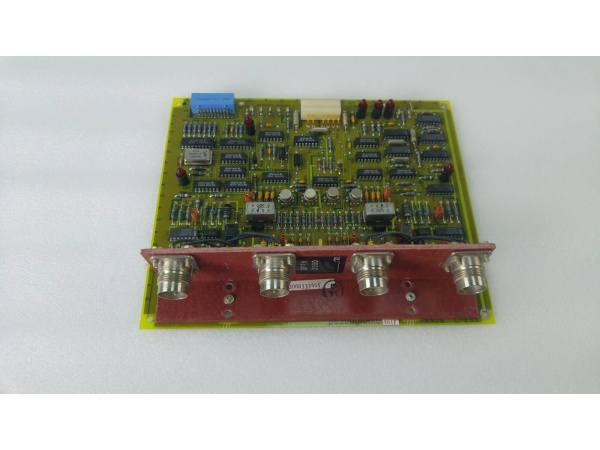
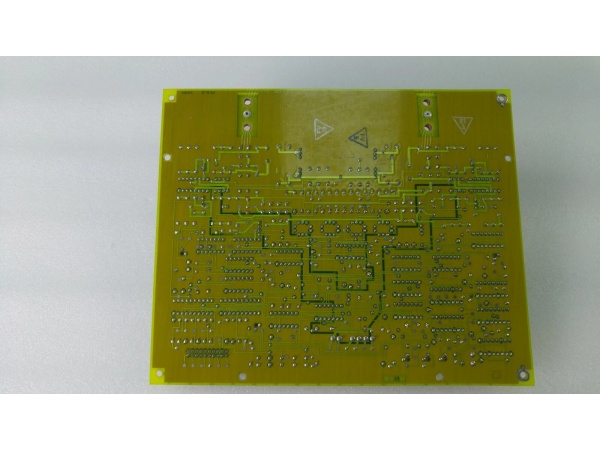
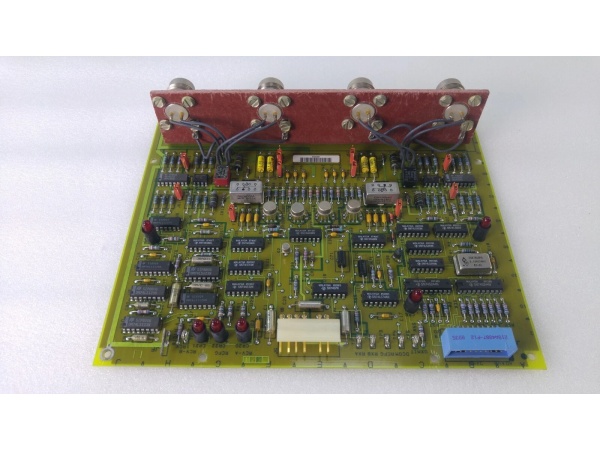
Description
Key Technical Specifications
-
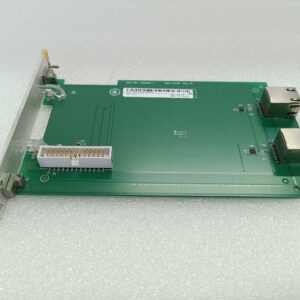
Model Number: DS3800HMAC1H1F
-
Manufacturer: General Electric (GE)
-
Series: Mark IV DS3800
-
Protocol Support: 10Base5 (ThickNet), 10Base2 (ThinNet)
-
Ports: 2 coaxial connectors (RG-58/U), 2 right-angled I/O connectors
-
Data Rate: 10 Mbps (legacy Ethernet)
-
Operating Temperature: -30°C to +55°C
-
Isolation: 1500V RMS port-to-port
-
Power Supply: 12V DC ±10%
-
Certifications: CE, UL, ATEX (Zone 2)
-
Weight: 0.5 kg

DS3800HMAC1H1F
Field Application & Problem Solved
Problem:
In gas turbine control systems, legacy communication networks (10Base5/10Base2) are prone to signal degradation from EMI, cable damage, or connector corrosion. A single point of failure in the MAU can cascade into turbine trips, costing $500k+ per event. For example, a refinery turbine tripped due to a cracked coaxial cable—diagnosed as a “phantom fault” until engineers traced it to water ingress in the connector.
Solution:
The DS3800HMAC1H1F eliminates single-failure risks with TMR architecture. Its dual coaxial ports allow parallel data transmission; if one path fails, the other maintains communication. Field configurable jumpers let technicians adapt to varying cable lengths (up to 500m for 10Base5) without firmware changes.
Core Value:
-
Redundancy: TMR ensures 99.999% uptime in IEC 61508 SIL-2 systems.
-
Diagnostic Clarity: Status LEDs (power, data, fault) reduce troubleshooting time by 70%.
-
Legacy Compatibility: Supports 30+ year-old Mark IV systems without PLC reprogramming.
Installation & Maintenance Pitfalls
-
Coaxial Cable Stress Relief:Mistake: Bending coaxial cables >90° near connectors.Result: Signal reflection causes CRC errors.Fix: Use 45° bend radius clamps and torque connectors to 8–10 in-lbs.
-
Jumpers vs. DIP Switches:Mistake: Assuming all Mark IV MAUs use dip switches.Result: Incorrect protocol settings (e.g., 10Base2 vs. 10Base5) lead to “no link” status.Fix: Always verify jumper chart in GE 84-01-002 revision 3.
-
Grounding Loops:Mistake: Grounding shield at both ends of coaxial runs.Result: Creates ground loops, inducing 60Hz noise on data lines.
Fix: Ground shield only at the TCU end.
DS3800HMAC1H1F
Technical Deep Dive
The DS3800HMAC1H1F operates as a dual-channel network bridge within the Mark IV VMEbus framework:
-
Signal Conversion: Converts I/O module digital signals (TTL/4–20mA) to Manchester-encoded Ethernet frames.
-
TMR Arbitration: Three identical MAUs run in lockstep; a voting circuit compares outputs, discarding discrepancies.
-
Diagnostic Engine: Monitors CRC errors, voltage dips (>10% from 12V), and temperature spikes (>70°C).
Failure Modes & Fixes:
-
Cable Break: Replace with shielded RG-58/U (impedance 50Ω ±2%).
-
Jumper Oxidation: Clean contacts with DeoxIT D5 and reseat.
-
VMEbus Collision: Ensure no other modules share the same slot address (0x20–0x3F).
Conclusion
The DS3800HMAC1H1F is the unsung hero of legacy turbine systems. While newer Mark VI/VIe platforms offer higher bandwidth, this module remains critical for maintaining uptime in brownfield sites. For technicians, mastering its TMR quirks and coaxial discipline is non-negotiable.