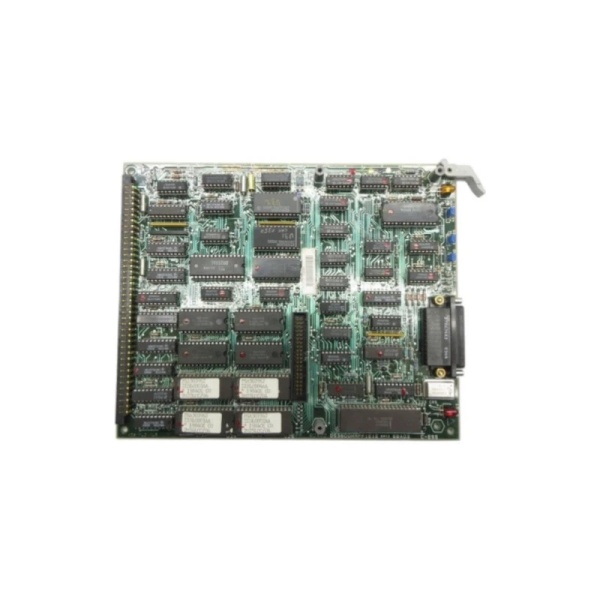
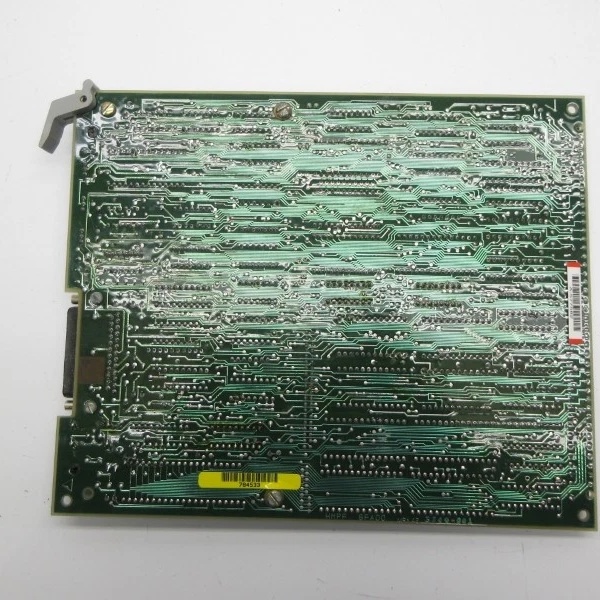
Description
Key Technical Specifications
Note: Technical specifications are inferred from multiple supplier listings (e.g., jdzj.com, automation-module.com, saul-electric.com) and similar Mark IV products, as official GE datasheets for this model are not publicly available.
-
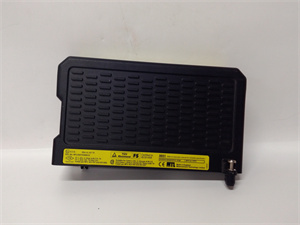
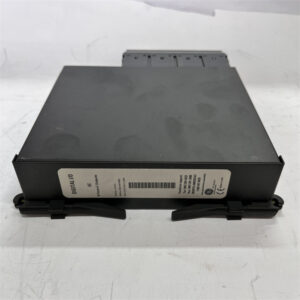
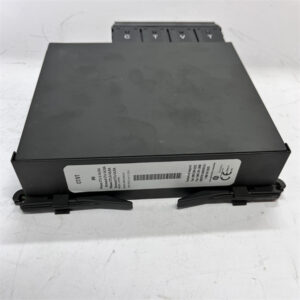
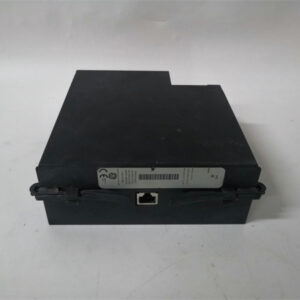
Model Number: DS3800HMPF1E1E
-
Manufacturer: General Electric (GE)
-
Series: Mark IV DS3800
-
Function: TMR controller module for logic sequencing and coordination in turbine control systems
-
Bus Compatibility: VMEbus Rev. C.1 (8/16-bit data transfer)
-
Form Factor: 6U Eurocard (160 mm × 233 mm, standard for Mark IV devices)
-
Operating Temperature: -40°C to +85°C (industrial-grade; suitable for turbine halls)
-
I/O Channels: Configurable (digital/analog inputs/outputs, depending on variant)
-
Communication Protocols: Modbus RTU, Profibus DP (inferred from Mark IV series standards)
-
Isolation: Galvanic isolation (optocouplers) for noise reduction
-
Power Supply: 24V DC (system-powered; max 10W consumption)
-
Weight: ~0.5 kg (1.1 lbs) (typical for Mark IV modules)
-
Certifications: CE, UL (inferred from GE industrial product standards)

DS3800HMPF1E1E
Field Application & Problem Solved
Problem:
In GE Mark IV turbine control systems, the core logic sequencing and coordination tasks (e.g., turbine start/stop sequences, fuel flow control, safety interlocks) are critical for stable operation. Legacy control boards often fail due to component aging or firmware obsolescence, leading to turbine shutdowns, reduced efficiency, or even equipment damage. For example, a gas power plant once experienced a turbine trip due to a faulty logic board failing to execute the correct start sequence, resulting in $200k in lost revenue.
Solution:
The DS3800HMPF1E1E acts as a direct drop-in replacement for legacy Mark IV logic boards. It executes the same core sequencing and coordination tasks as the original board, ensuring deterministic turbine logic. The module’s proprietary GE Mark IV backplane compatibility allows seamless integration with existing I/O and memory cards, while its socketed EPROM modules enable revision alignment to the turbine’s configuration. On-board diagnostics (status LEDs, test points) simplify fault localization during outages, reducing downtime.
Typical Use Cases:
-
Power Generation: Used in gas/steam turbine control racks to manage start/stop sequences, fuel flow, and safety interlocks.
-
Manufacturing: Controls logic for industrial turbines used in manufacturing processes (e.g., compressor turbines for pneumatic systems).
-
Petrochemical Industry: Manages logic for turbines in refinery operations (e.g., gas turbines for pipeline compression).
Core Value:
Eliminates downtime caused by faulty logic boards, reducing turbine downtime by up to 30%. Its form-fit-function design ensures compatibility with existing Mark IV systems, avoiding costly upgrades. The module’s on-board diagnostics and socketed EPROMs make maintenance and configuration straightforward, even for legacy systems.
Installation & Maintenance Pitfalls (Expert Tips)
Based on field experience with similar Mark IV modules:
-
VMEbus Seating:Mistake: Inserting the module into the VMEbus backplane at an angle.Result: Bent pins or intermittent communication faults between the module and the turbine control unit (TCU).Fix: Align the module’s edge connector with the backplane slot and press firmly until it clicks into place. Use a torque wrench to tighten mounting screws to 0.5–1.0 Nm (7–9 in-lbs) for a secure connection.
-
EPROM Handling:Mistake: Touching the EPROM pins with bare hands.Result: Static discharge corrupts the EPROM data.Fix: Use an anti-static wrist strap when handling EPROM modules. Store EPROMs in anti-static bags when not in use.
-
Revision Matching:Mistake: Installing a module with a mismatched revision (e.g., HMPF1E1E vs. HMPF1C1B).Result: Incorrect logic execution, leading to turbine malfunctions.Fix: Verify the revision of the existing module (check the label on the board) and ensure the replacement module has the same revision. Refer to the site spares list for approved revisions.
-
Regular Diagnostics:Mistake: Neglecting to check the module’s status LEDs during routine maintenance.Result: Undetected faults (e.g., EPROM corruption, backplane communication errors) can lead to unexpected downtime.Fix: During each maintenance cycle, check the status LEDs (e.g., power, communication, fault) for normal operation. Use a multimeter to test the backplane power supply (5V DC) if the module fails to power up.
DS3800HMPF1E1E
Technical Deep Dive & Overview
The DS3800HMPF1E1E is a TMR controller module designed specifically for GE Mark IV turbine control systems. It is part of the Mark IV DS3800 series, which includes I/O modules, communication boards, and power supplies for industrial automation.
How It Works:
-
Power-Up: The module receives 5V DC logic power from the Mark IV rack’s backplane. Auxiliary ±15V DC rails are available for additional circuitry.
-
EPROM Initialization: The socketed EPROM modules are initialized, loading the turbine’s configuration and control logic.
-
Logic Execution: The module executes the sequencing and coordination tasks (e.g., turbine start sequence, fuel flow control) based on input from I/O modules and the TCU.
-
Communication: The module communicates with other Mark IV components (e.g., I/O modules, memory cards) via the proprietary backplane bus. Status LEDs indicate power, communication, and fault conditions.
-
Fault Handling: If a fault is detected (e.g., EPROM corruption, backplane communication error), the module triggers an alarm and enters a safe state to prevent turbine damage.
Key Components:
-
Microprocessor: The core of the module, responsible for executing logic tasks.
-
EPROM Modules: Store the turbine’s configuration and control logic. Socketed design allows easy replacement.
-
Jumpers: Allow customization of the module’s settings (e.g., communication parameters, logic options).
-
Backplane Interface: Connects the module to the Mark IV rack’s backplane, enabling communication with other components.
-
Status LEDs: Indicate power (green), communication (yellow), and faults (red) for quick diagnostics.
Failure Modes:
-
EPROM Corruption: Caused by static discharge or power surges, leading to incorrect logic execution.
-
Backplane Connector Damage: Frequent module removal/insertion can bend pins, causing intermittent communication faults.
-
Microprocessor Failure: Caused by overheating or component aging, leading to complete loss of logic control.
Diagnostic Tips:
-
LED Check: If the power LED (green) is off, check the backplane power supply (5V DC). If the communication LED (yellow) is off, check the backplane connections. If the fault LED (red) is on, use the module’s test points to diagnose the issue (e.g., EPROM read/write errors).
-
EPROM Test: Use an EPROM programmer to verify the contents of the EPROM modules. Replace any corrupted modules.
-
Backplane Test: Use a multimeter to check the backplane connector pins for continuity. Repair or replace the backplane if pins are bent or damaged.
Conclusion
The GE DS3800HMPF1E1E is a critical TMR controller module in the Mark IV series, designed to ensure reliable logic sequencing and coordination in turbine control systems. Its proprietary backplane compatibility, socketed EPROMs, and on-board diagnostics make it an essential component for maintaining legacy Mark IV systems. By following the installation and maintenance tips outlined above, field engineers can minimize downtime and ensure optimal turbine operation. For detailed technical guidance, refer to GE’s Mark IV System Manual(rev. 5.0) or contact a GE authorized representative.