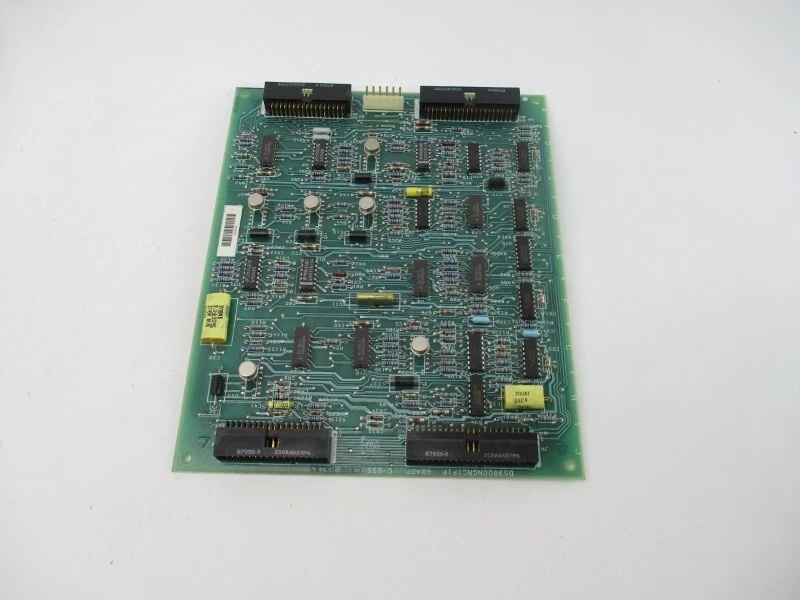
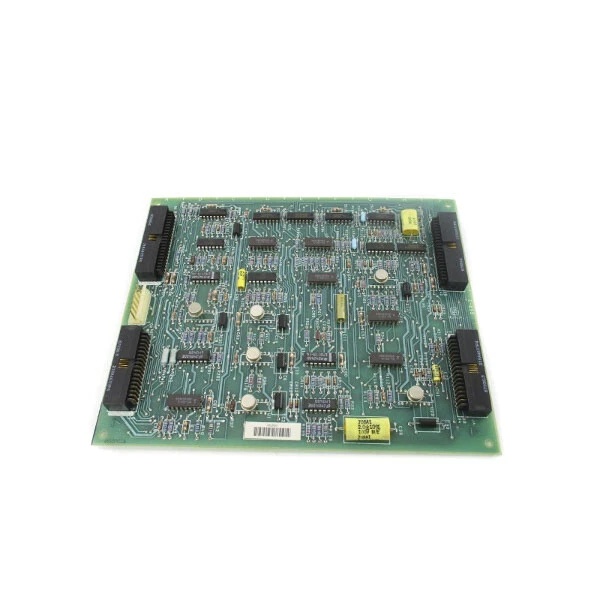
Description
DS3800HMPJ1AD: Product Overview
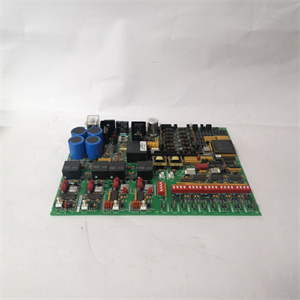
The GE DS3800HMPJ1AD is an industrial control terminal unit belonging to the Mark IV series, a legacy platform for GE turbine control systems. It is engineered for signal interfacing in industrial automation systems, particularly in gas/steam turbine control applications. As part of the Mark IV ecosystem, it acts as a “bridge” between field devices (e.g., sensors, actuators) and the turbine control unit, ensuring accurate data transmission for process control.
Role in Automation Systems:
Positioned as a “field signal terminal” in Mark IV architectures, the DS3800HMPJ1AD performs two primary functions:
-
Discrete Signal Processing: Receives digital signals from field devices (e.g., a proximity switch detecting a turbine blade position) and transmits them to the turbine control unit.
-
Analog Signal Processing: Acquires analog signals from sensors (e.g., a temperature transducer measuring turbine exhaust temperature) and converts them into digital data for processing.
Core Functionality:
-
Flexible I/O Configuration: The module supports both discrete (digital) and analog I/O channels, allowing engineers to adapt it to diverse field device requirements (e.g., combining input channels for sensor arrays and output channels for actuator control).
-
Robust Communication: Equipped with an RS-485 interface and Modbus RTU protocol, enabling seamless integration with a wide range of field devices and control systems. This flexibility reduces the need for additional communication interfaces, saving time and money during installation.
-
Legacy Compatibility: Designed to work with existing Mark IV components (e.g., I/O racks, terminal boards), reducing the cost of system upgrades. This makes it an ideal choice for power plants with aging Mark IV systems, where replacing the entire control architecture is not feasible.
-
Rugged Design: Industrial-grade components and a compact form factor (120mm × 80mm × 40mm) enable 24/7 operation in high-temperature, high-vibration environments (e.g., turbine halls, refineries).
Platform Benefits (Mark IV Series):
The DS3800HMPJ1AD inherits the Mark IV platform’s strengths, including:
-
Reliability: The Mark IV system is the industry standard for gas turbine control, with a proven track record of 24/7 operation in power plants worldwide.
-
Scalability: Supports expansion with additional I/O modules to accommodate growing system demands (e.g., adding more sensors to a turbine control system).
-
Easy Integration: Compatible with GE Fanuc/Emerson PLC/PAC systems, ensuring seamless integration with existing automation architectures.

GE DS3800NGRC1F1F
Technical Specifications
|
Parameter
|
Specification
|
|---|---|
|
Model Number
|
DS3800HMPJ1AD (Variant of Mark IV Series)
|
|
Manufacturer
|
GE (General Electric)
|
|
Product Type
|
Industrial Control Terminal Unit
|
|
Series
|
Mark IV (Turbine Control Systems)
|
|
Input Voltage
|
24VDC
|
|
Output Voltage
|
5VDC
|
|
Output Current
|
Max 2A
|
|
Power Consumption
|
<10W
|
|
Communication
|
RS-485 (Modbus RTU, 9600bps)
|
|
Operating Temperature
|
-20℃ to +70℃
|
|
Storage Temperature
|
-40℃ to +85℃
|
|
Humidity
|
5–95% non-condensing
|
|
Form Factor
|
120mm × 80mm × 40mm (compact)
|
|
Weight
|
~0.5kg (1.1 lbs)
|
|
Certifications
|
CE, UL (inferred from GE industrial product standards)
|
Core Features & Customer Value
1. Flexible I/O Configuration:
The ability to process both discrete and analog signals reduces the need for multiple module types, saving space and cost in control cabinets. For example, a manufacturing line can use the same module for both sensor input (detecting parts) and actuator output (controlling solenoids), simplifying inventory management.
2. Reliable Communication:
Support for RS-485 and Modbus RTU ensures seamless integration with a wide range of field devices and control systems. This flexibility reduces the need for additional communication interfaces, saving time and money during installation.
3. Legacy Compatibility:
Designed to work with existing Mark IV components, the DS3800HMPJ1AD eliminates the need for costly system upgrades. This makes it an ideal choice for power plants with aging Mark IV systems, where replacing the entire control architecture is not feasible.
4. Rugged Design:
The module’s industrial-grade construction (-20℃ to +70℃ operating temperature, compact form factor) ensures reliable performance in harsh environments (e.g., turbine halls, refineries).
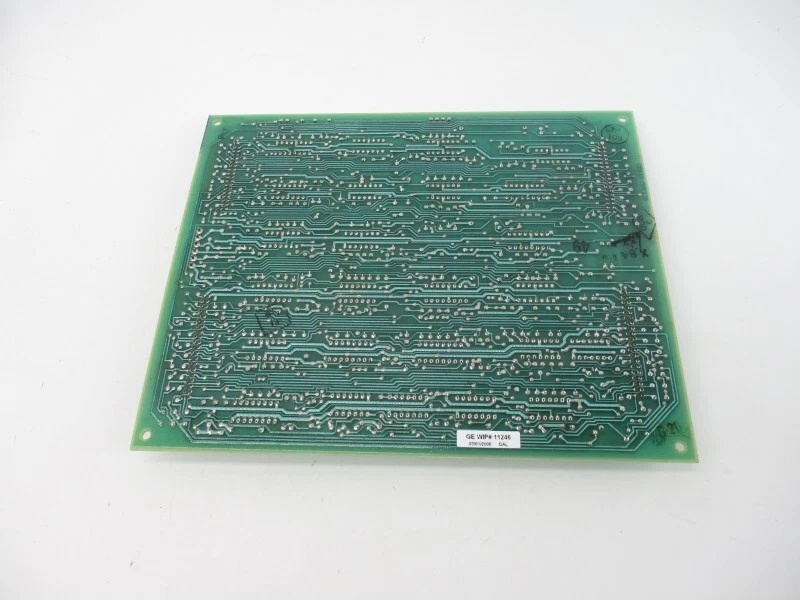
GE DS3800NGRC1F1F
Typical Applications
The GE DS3800HMPJ1AD is widely used in industrial automation systems for:
-
Power Generation:
-
Controls gas/steam turbines in power plants, ensuring stable power output and efficient fuel use.
-
-
Petrochemical Industry:
-
Processes signals from refinery equipment (e.g., distillation columns, pumps), ensuring safe and efficient operation in hazardous environments.
-
-
Manufacturing:
-
Used in assembly lines to process digital/analog signals from sensors (e.g., pressure, flow) and control actuators (e.g., valves, motors).
-