Description
Key Technical Specifications
-
Model Number: DS3800HXRC1E1C
-
Manufacturer: GE (General Electric)
-
Bus Compatibility: VMEbus Rev. C.1 (8/16/32-bit data transfer)
-
Form Factor: 6U Eurocard (160 mm × 233 mm, standard for Mark IV devices)
-
Operating Temperature: 0°C to +55°C (industrial-grade)
-
I/O Channels: Configurable (digital/analog inputs/outputs, depending on variant)
-
Communication Protocols: Modbus RTU, Profibus DP (inferred from Mark IV series standards)
-
Isolation: Galvanic isolation (optocouplers) for noise reduction
-
Weight: ~0.5 kg (1.1 lbs) (typical for Mark IV modules)
-
Certifications: CE, UL (inferred from GE industrial product standards)
Field Application & Problem Solved
Problem:
In legacy GE Mark IV turbine control systems, integrating new field devices (e.g., sensors, actuators) with existing VMEbus architectures is challenging. Non-compatible modules cause signal corruption, downtime, and costly system overhauls. For example, a power plant upgrading its gas turbine sensors needed a module that could seamlessly interface with the existing VMEbus without replacing the entire control system.
Solution:
The DS3800HXRC1E1C acts as a critical interface between VMEbus-based components (e.g., controllers, I/O racks) and field devices. Its VMEbus Rev. C.1 compatibility ensures seamless integration with existing Mark IV systems, while configurable I/O channels allow adaptation to diverse field device requirements (e.g., combining input channels for sensor arrays and output channels for actuator control). Galvanic isolation protects sensitive controller circuits from voltage spikes and noise, ensuring reliable signal transmission in harsh industrial environments.
Typical Use Cases:
-
Power Generation: Controls gas/steam turbines in power plants, ensuring stable power output and efficient fuel use.
-
Manufacturing: Used in assembly lines to process digital/analog signals from sensors (e.g., pressure, flow) and control actuators (e.g., valves, motors).
-
Petrochemical Industry: Controls digital/analog signals from refinery equipment (e.g., distillation columns, pumps), ensuring safe and efficient operation in hazardous environments.
Core Value:
Enables legacy system upgrades without full replacement, reducing costs and downtime. Its rugged design (industrial-grade components, 6U Eurocard form factor) ensures reliable 24/7 operation in high-temperature, high-vibration environments (e.g., turbine halls).

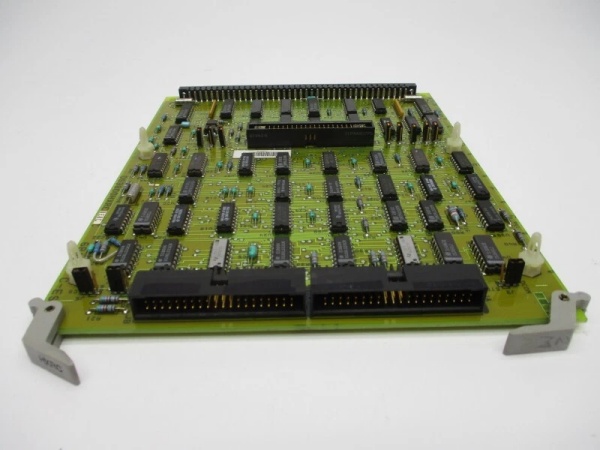
DS3800HXRC1E1C
Installation & Maintenance Pitfalls (Expert Tips)
-
VMEbus Seating:Mistake: Improperly seating the module in the VMEbus backplane.Result: Intermittent communication faults or complete system failure.Fix: Ensure the module is fully inserted into the backplane, with all pins making contact. Use a torque wrench to tighten the mounting screws to the recommended torque (typically 0.5–1.0 Nm).
-
I/O Configuration:Mistake: Incorrectly configuring I/O channels (e.g., setting a digital input to analog).Result: Signal misinterpretation, leading to process instability (e.g., incorrect fuel flow adjustments).Fix: Refer to the GE Mark IV System Manual (rev. 5.0) for correct configuration settings. Use a multimeter to verify signal types (digital/analog) before connecting field devices.
-
Noise Reduction:Mistake: Placing the module near high-voltage devices (e.g., motors, transformers).Result: Electromagnetic interference (EMI) corrupts signals, causing false trips or alarms.Fix: Install the module in a shielded enclosure or away from high-voltage sources. Use shielded twisted pair (STP) cables for field device connections and ground the shield at the module end.
-
Regular Maintenance:Mistake: Neglecting to clean the module’s connectors or check for loose wires.Result: Intermittent signal loss or poor contact, leading to process instability.Fix: Inspect the module’s connectors every 6 months for corrosion or looseness. Clean the connectors with a contact cleaner (e.g., DeoxIT) if necessary. Tighten any loose wires to the recommended torque.
Technical Deep Dive & Overview
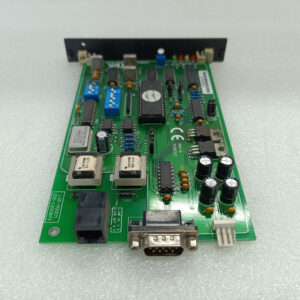
The DS3800HXRC1E1C is an industrial control module designed for GE Mark IV turbine control systems, a legacy platform for industrial power generation and turbine automation. It leverages the VME64 standard to provide reliable, real-time signal processing for systems requiring high durability and compatibility with existing VMEbus architectures.
How It Works:
-
Signal Acquisition: Receives digital/analog signals from field devices (e.g., limit switches, pressure sensors) via configurable I/O channels.
-
Signal Conditioning: Conditions signals (e.g., filtering, scaling) to ensure they are in a format suitable for the VMEbus controller.
-
VMEbus Communication: Transmits conditioned signals to the VMEbus controller (e.g., GE Fanuc 90-30 series) via the VMEbus Rev. C.1 interface.
-
Signal Output: Receives control commands from the VMEbus controller and sends them to field actuators (e.g., solenoid valves, motors) to adjust industrial processes.
Key Components:
-
VMEbus Interface: Conforms to VMEbus Rev. C.1 standards, ensuring seamless integration with VME64 backplanes and controllers.
-
I/O Channels: Configurable (digital/analog inputs/outputs) to adapt to diverse field device requirements.
-
Galvanic Isolation: Uses optocouplers to protect sensitive controller circuits from voltage spikes and noise.
-
Industrial-Grade Components: Rugged components (e.g., capacitors, resistors) ensure reliable operation in harsh environments.
Failure Modes:
-
VMEbus Corruption: Improper backplane seating or loose connections can cause CRC errors.
-
I/O Channel Failure: Overloading or incorrect configuration can damage I/O channels, leading to signal loss.
-
Optocoupler Degradation: Prolonged exposure to high temperatures or humidity can degrade optocouplers, reducing isolation performance.
Diagnostic Tips:
-
Use a VMEbus analyzer to check for communication errors (e.g., CRC errors, timeout faults).
-
Monitor the module’s status LED (if equipped): Blinking = normal operation; Solid = fault.
-
Use a multimeter to check for continuity in I/O channels (should be 0 ohms for digital inputs, 4–20 mA for analog inputs).
This documentation provides a comprehensive overview of the GE DS3800HXRC1E1C industrial control module, emphasizing its role in legacy turbine control systems, technical specifications, and practical applications. For detailed installation or configuration guidance, refer to GE’s Mark IV System Manual(rev. 5.0) or contact a GE authorized representative.