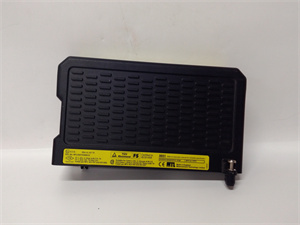
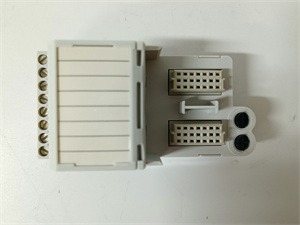
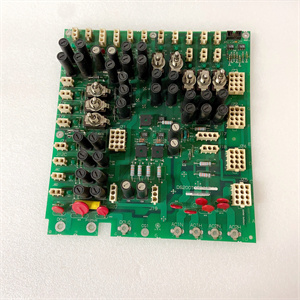
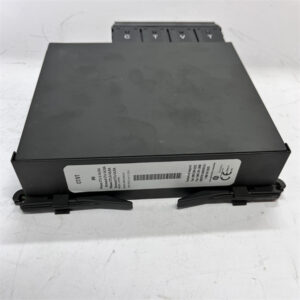
Description
Key Technical Specifications
-
Model Number: DS3800NEPD1F1C
-
Manufacturer: GE
-
Bus Protocol: VMEbus Rev. C.1 (8/16/32-bit)
-
I/O Configuration: 16 digital I/O + 8 analog I/O (software-selectable)
-
Data Rate: 1.5 Mbps (RS-485), 19.2 kbps (RS-232)
-
Operating Temperature: -40°C to +85°C (industrial-rated)
-
Isolation: 1500V RMS optocoupler isolation
-
Power Supply: 24V DC ±10% (max 12W draw)
-
Weight: 0.65 kg (1.43 lbs)
-
Certifications: UL AWM Style 20234, CE EN 50155
-
MTBF: >50,000 hours (per MIL-HDBK-217F)
Field Application & Problem Solved
Problem:
Legacy GE Mark IV turbine control systems often face integration challenges with modern field devices (e.g., HART-enabled sensors, Profibus actuators). Outdated VMEbus architectures struggle with real-time data throughput, causing scan time overruns and trip risks.
Solution:
The DS3800NEPD1F1C bridges this gap by:
-
Signal Routing: Directly interfaces with VMEbus CPUs while supporting Modbus RTU, Profibus DP, and ASCII protocols.
-
Signal Conditioning: Filters noise from turbine hall EMI, ensuring clean data transmission to/from sensors (e.g., vibration probes, pressure transmitters).
-
Isolation: Galvanic optocouplers protect sensitive VMEbus logic from voltage spikes during motor startups or lightning surges.
Typical Use Cases:
-
Power Plants: Upgrading analog turbine controls to digital I/O without replacing the entire VMEbus backplane.
-
Refineries: Integrating legacy flow meters with Siemens SIMATIC PLCs via Profibus DP.
-
Paper Mills: Stabilizing communication between ABB ACS880 drives and aging GE Mark IV controllers.
Core Value:
Prevents costly downtime by enabling incremental upgrades. Its ruggedized design survives 24/7 operation in high-vibration turbine enclosures, maintaining <1 ms latency for critical trip signals.

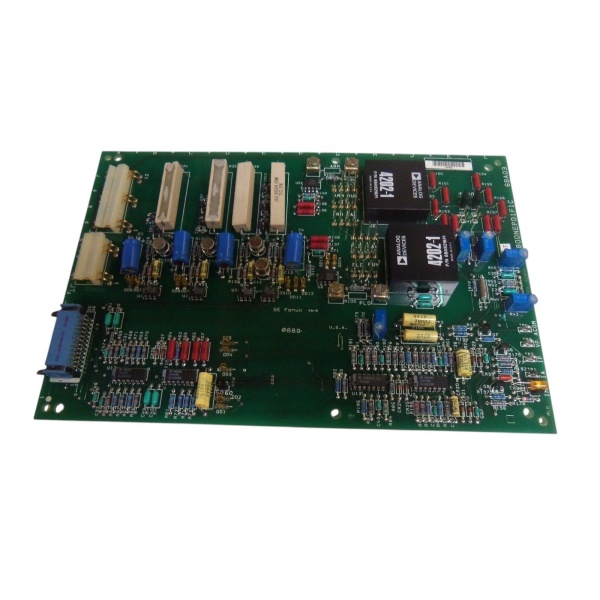
GE DS3800NEPD1F1C
Installation & Maintenance Pitfalls
-
VMEbus Seating:Mistake: Using a non-ESD-safe screwdriver to torque the module.Result: Electrostatic discharge (ESD) fries the VMEbus backplane.Fix: Use a grounded ESD wrist strap and torque screws to 0.8 Nm (7 in-lbs).
-
Grounding:Mistake: Connecting shield ground to the module’s chassis instead of the VMEbus backplane.Result: Ground loops induce 60 Hz noise, corrupting analog inputs.Fix: Bond module chassis to the backplane’s grounding bus using a #10 AWG copper strap.
-
Cable Routing:Mistake: Running unshielded cables parallel to 480V motor feeders.Result: Capacitive coupling causes intermittent RS-485 errors.Fix: Use shielded twisted pair (STP) cables and maintain >30 cm separation from power lines.
-
Configuration:Mistake: Setting analog inputs to 4–20 mA without calibrating the module’s scaling factors.Result: Pressure transmitter reads 0 psi (actual: 100 psi), triggering false turbine trips.Fix: Use GE’s Mark IV Configurator Tool to map input ranges (e.g., 4–20 mA = 0–300 psi).
Technical Deep Dive
The DS3800NEPD1F1C is a dual-channel signal processor designed for GE’s Mark IV turbine control systems. Key components:
-
VMEbus Interface:
-
32-bit data path with 16 address lines for direct CPU memory access.
-
Supports burst transfers (up to 128 bytes) to minimize latency during turbine control loops.
-
-
Signal Conditioning Circuitry:
-
Low-pass RC filters (1 kHz cutoff) on analog inputs to reject high-frequency noise.
-
Schmitt trigger buffers on digital inputs to eliminate contact bounce from mechanical switches.
-
-
Isolation Architecture:
-
Dual-stage optocouplers (6N137) provide 1500V isolation between field and control sides.
-
Isolated DC-DC converter (2W) ensures noise-free power to I/O channels.
-
Failure Modes & Diagnostics:
-
VMEbus CRC Errors: Check for bent pins on the module’s edge connector. Use a multimeter to verify continuity between the module and backplane.
-
Analog Drift: Monitor drift over 24 hours. If >0.5% FS, replace the module’s 2.5V reference IC.
-
Overcurrent Protection: The module includes a 1A self-resetting fuse on each digital output. Persistent tripping indicates shorted loads.