Description
System Architecture & Operational Principle
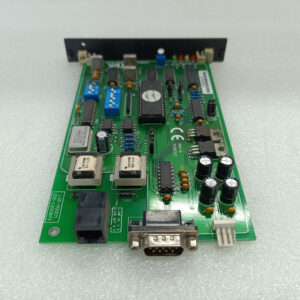
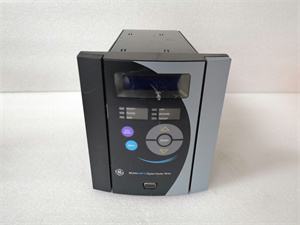
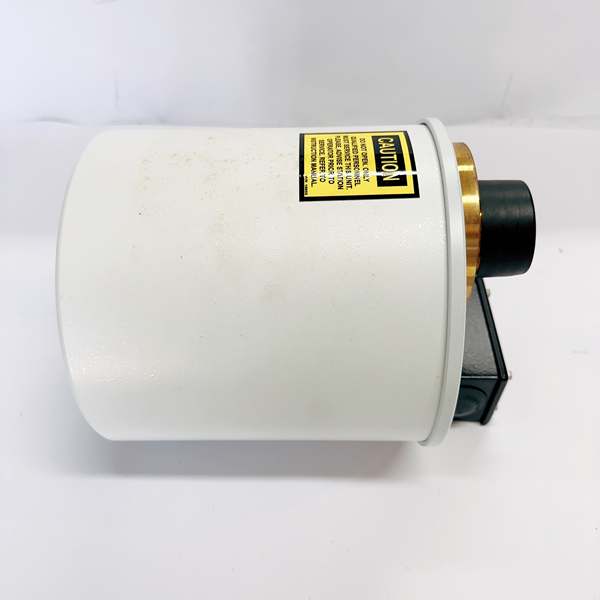
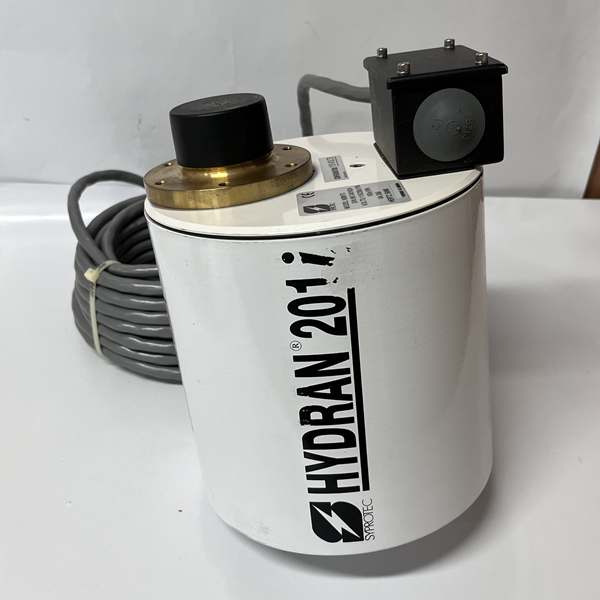
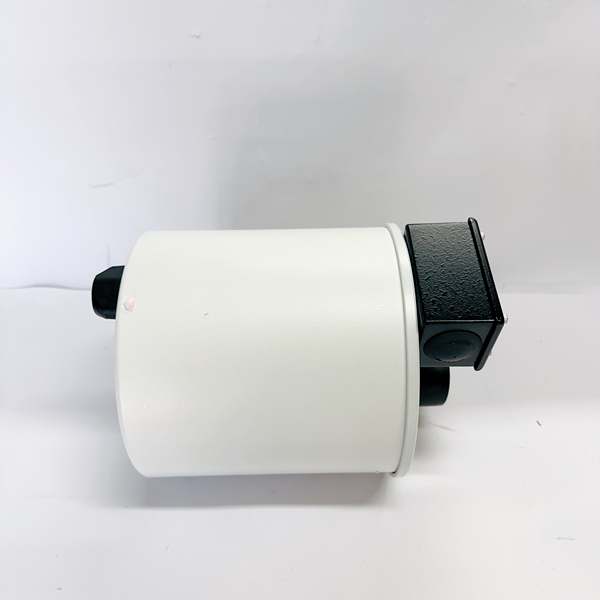
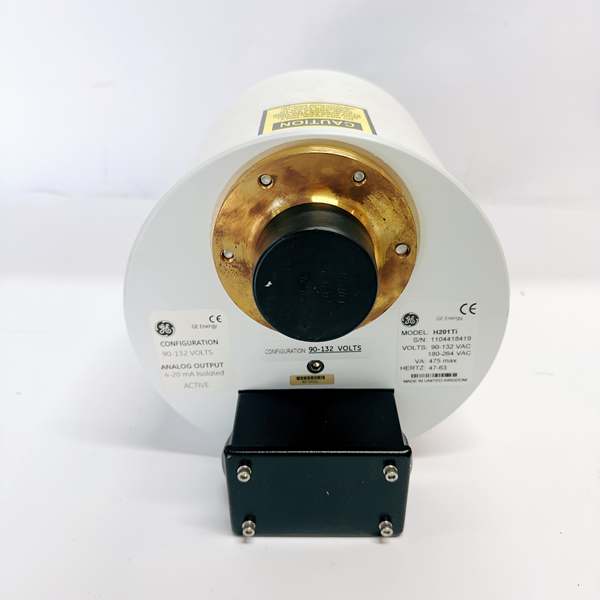
The GE H201TI is a compact, microprocessor-based transmitter designed to be the “eyes” of the HYDRAN 201i transformer monitoring system. It is permanently mounted on a transformer’s oil sampling valve (via a brass adapter) to continuously extract and analyze dissolved gases from the oil. Here’s how it fits into the system:
1. Physical & Functional Role
The H201TI integrates three key components:
-
HYDRAN® Sensor: A fuel cell-based composite sensor that detects hydrogen (100% response), carbon monoxide, acetylene, and ethylene—gases indicative of transformer faults (e.g., overheating, partial discharge).
-
Microprocessor Transmitter: Converts sensor signals to digital data, applies algorithms to calculate gas concentrations, and manages communication with the H201Ci-1 controller.
-
Thermal Regulation System: Ensures the sensor operates within a stable temperature range (-40°C to +80°C) to maintain accuracy in harsh environments.
2. Data Flow & Communication
-
Upstream: The H201TI draws a small sample of transformer oil through a vacuum-resistant membrane, which separates dissolved gases from the oil. The sensor measures these gases and sends raw data to the microprocessor.
-
Processing: The microprocessor calculates gas concentrations (in ppm) and checks for anomalies (e.g., rapid increases in hydrogen, which signal arcing).
-
Downstream:
-
Local Output: A 2-line LCD displays real-time gas readings and alarm status.
-
Remote Communication: Data is sent to the H201Ci-1 controller via RS-485 (up to 1300 meters) using Modbus RTU or the proprietary Hydran protocol. The controller then forwards this data to SCADA systems for remote monitoring.
-
3. Key Advantages
-
Early Fault Detection: The H201TI’s ability to detect trace amounts of hydrogen (as low as 25 ppm) enables early warning of incipient faults, reducing the risk of catastrophic transformer failures.
-
Low Maintenance: With no moving parts or consumables (e.g., pumps, filters), the H201TI requires minimal upkeep—only periodic sensor cleaning (every 2–3 years) to maintain accuracy.
-
Rugged Design: The IP66-rated enclosure and corrosion-resistant materials (e.g., stainless steel fittings) make it suitable for outdoor installation on transformers in substations or industrial sites.

GE H201Ti
Core Technical Specifications
|
Attribute
|
Value
|
|---|---|
|
Sensor Type
|
HYDRAN® fuel cell (composite gas sensor)
|
|
Gas Coverage
|
Hydrogen (H₂), carbon monoxide (CO), acetylene (C₂H₂), ethylene (C₂H₄)
|
|
Measurement Range
|
0–2000 ppm (hydrogen equivalent)
|
|
Accuracy
|
±10% of reading ±25 ppm (hydrogen)
|
|
Response Time
|
<10 minutes (for 90% step change in gas concentration)
|
|
Communication Interfaces
|
RS-485 (Modbus RTU/Hydran), USB (Type-B, local configuration)
|
|
Operating Temperature
|
-40°C to +80°C (enclosure rated IP66)
|
|
Power Supply
|
100–240V AC (50/60 Hz) or 24V DC (optional)
|
|
Data Logging
|
Stores up to 1 year of gas trends and event records
|
|
Weight
|
~5.6 kg (12.35 lbs)
|
Customer Value & Operational Benefits
1. Prevent Unplanned Outages
The H201TI’s real-time gas monitoring helps utilities and industrial users identify transformer faults (e.g., winding overheating, core insulation breakdown) before they escalate. For example, a sudden increase in hydrogen concentration (a byproduct of arcing) triggers an immediate alarm, allowing technicians to investigate and repair the transformer proactively—avoiding costly outages and equipment damage.
2. Reduce Maintenance Costs
By eliminating the need for manual oil sampling (which requires downtime and labor), the H201TI cuts maintenance costs by up to 50%. The system’s self-diagnostic feature (tests sensors, cables, and power supply on startup) further reduces troubleshooting time, as technicians can quickly identify and resolve issues without disassembling the transmitter.
3. Seamless Integration with SCADA Systems
The H201TI’s RS-485 communication and support for Modbus RTU make it easy to integrate with existing SCADA or DCS systems. This allows operators to monitor gas levels remotely, set customizable alarms (e.g., “hydrogen > 100 ppm”), and analyze historical data to predict transformer aging—improving overall grid reliability.
Field Engineer’s Notes (From the Trenches)
When installing the H201TI, always use a torque wrench to tighten the brass adapter—over-tightening can damage the sensor’s membrane, while under-tightening can cause oil leaks. I once worked on a substation where a loose adapter led to a false “low oil flow” alarm, which took hours to diagnose.Another gotcha: keep the sensor membrane clean. Dust or debris on the membrane can block gas diffusion, leading to inaccurate readings. Use a soft brush or compressed air to clean the membrane every 6 months—especially in dusty environments like deserts or industrial sites.For troubleshooting, start with the LCD display: if it shows “Err” (error), check the power supply (100–240V AC) and RS-485 connections. If the display is blank, the sensor may be faulty—replace it with a spare (GE part number: H201TI-SENSOR) to verify.
Real-World Applications
1. Power Utility Substations
A Midwest utility uses H201TI transmitters to monitor 138kV transformers in its distribution network. In 2023, the system detected a hydrogen spike in one transformer, indicating a loose connection in the winding. Technicians repaired the connection before it caused a failure, avoiding a $500k outage and ensuring reliable power to 10,000 customers.
2. Industrial Manufacturing Plants
A Texas refinery uses H201TI transmitters to monitor transformers powering its distillation columns. The system’s rate-of-change alarms (e.g., hydrogen increasing by 10 ppm/hour) helped identify a cooling system failure in a transformer, preventing overheating and extending the transformer’s lifespan by 3 years.
3. Renewable Energy Farms
A California wind farm uses H201TI transmitters to monitor transformers connecting wind turbines to the grid. The system’s ability to withstand extreme temperatures (-40°C to +80°C) makes it ideal for outdoor installation, and its remote monitoring capabilities allow technicians to check gas levels from the farm’s control room—reducing the need for frequent site visits.
GE H201Ti
High-Frequency Troubleshooting FAQ
Q: What does the “Err” message on the H201TI LCD mean?
A: The “Err” message indicates a system fault, such as a power supply issue, sensor failure, or communication error. Check the power cord (100–240V AC) and RS-485 connections first. If the error persists, use the USB port to download the event log (via GE’s HYDRAN software) to identify the root cause.
Q: Can the H201TI be used with non-GE controllers?
A: No, the H201TI is proprietary to GE’s H201Ci-1 controller. For non-GE controllers, consider the H201Ti-C (a communication-enabled version) or a third-party DGA system (e.g., Siemens SITRANS CV).
Q: How do I calibrate the H201TI?
A: The H201TI is factory-calibrated and does not require field calibration. However, you should verify the sensor’s accuracy every 2–3 years using a certified gas mixture (e.g., 100 ppm hydrogen in nitrogen). Contact GE for calibration services or a replacement sensor.
Q: What is the maximum distance for RS-485 communication?
A: The H201TI supports RS-485 communication up to 1300 meters (4000 feet) with shielded twisted-pair cable. For longer distances, use a fiber optic converter (e.g., GE’s H201-FIBER) to extend the range.
Commercial Availability & Pricing
Please note: The listed price is not the actual final price. It is for reference only and is subject to appropriate negotiation based on current market conditions, quantity, and availability.