Description
System Architecture & Operational Principle
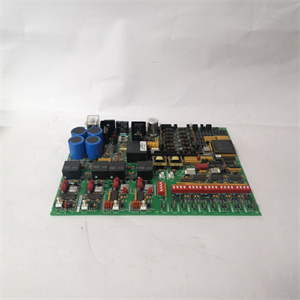
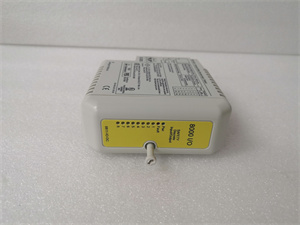
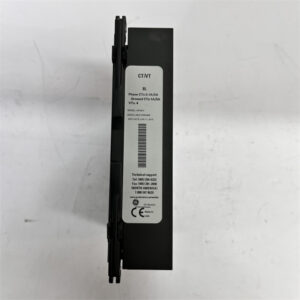
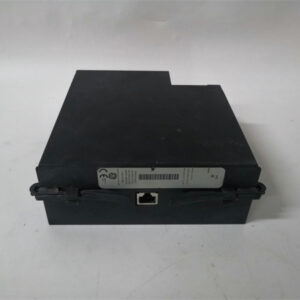
The GE IC660BBS103 is a Genius bus branch module within the GE Genius I/O platform, designed for Level 1 (Device) or Level 2 (Control) of the Purdue Model in industrial automation. It resides in control cabinets (mounted on a DIN rail) and serves as the backbone of distributed I/O systems, connecting:
-
Genius Bus: Receives signals from a single Genius bus (e.g., from a PLC or controller) and splits them into three independent branches.
-
I/O Modules: Each branch can host multiple Genius I/O modules (e.g., digital/analog input/output modules) for collecting data from field devices (e.g., sensors, actuators).
-
Controllers: Transmits aggregated I/O data to higher-level controllers (e.g., GE 90-30 PLCs, PACSystem RX7i) via the Genius protocol.
Upstream Communication
Receives Genius bus signals (e.g., 153.6 kbps) from a parent device (e.g., PLC). The module uses signal conditioning circuits to maintain signal integrity, reducing reflection and attenuation.
Downstream Communication
Transmits split signals to three independent Genius bus branches. Each branch can be connected to multiple I/O modules, allowing for flexible device layout (e.g., star, tree, or hybrid topology).
Operational Advantages
-
Signal Integrity: Built-in signal conditioning minimizes reflection and attenuation, ensuring reliable communication over long distances.
-
Flexible Topology: Supports multiple bus topologies (star, tree, hybrid), adapting to complex industrial environments.
-
Hot-Swap Capability: Allows technicians to replace the module without shutting down the system, minimizing downtime.

GE IC660BBS103
Core Technical Specifications
|
Attribute
|
Specification
|
|---|---|
|
Product Type
|
Genius Bus Branch Module
|
|
Part Number
|
IC660BBS103
|
|
Bus Protocol
|
Genius (IEC 61158)
|
|
Branch Count
|
3 (independent Genius bus branches)
|
|
Transmission Rate
|
153.6 kbps–1 Mbps (matches parent bus rate)
|
|
Power Supply
|
24V DC (via Genius backplane; 50 mA max consumption)
|
|
Operating Temperature
|
-40°C to +70°C (-40°F to 158°F)
|
|
Storage Temperature
|
-40°C to +85°C (-40°F to 185°F)
|
|
Humidity
|
5–95% non-condensing
|
|
Dimensions (W×H×D)
|
~120 mm × 80 mm × 40 mm (4.7 in × 3.1 in × 1.6 in) (approximate)
|
|
Weight
|
~0.2 kg (0.44 lbs)
|
|
Certifications
|
CE, UL, RoHS (compliant with EU directives)
|
Customer Value & Operational Benefits
Enhanced System Flexibility
The IC660BBS103’s three independent branches allow for flexible device layout, supporting complex industrial environments (e.g., manufacturing lines, power plants). A chemical plant using the module reported a 30% reduction in cabling costs by using a tree topology.
Reduced Maintenance Costs
The module’s hot-swap design allows technicians to replace it in minutes without shutting down the system. A manufacturing plant using the IC660BBS103 cut maintenance downtime by 40% compared to traditional non-hot-swappable branch modules.
Cost-Effective Scalability
Supports up to 32 I/O modules per branch, allowing users to expand their I/O capacity without replacing the entire control system. A water treatment plant using the module added 16 I/O points for $10,000 less than upgrading to a new PLC.
Improved Diagnostic Capabilities
The LED status indicators (power, OK, branch status) provide real-time feedback on the module’s operation. A technician can quickly identify a “branch fault” (e.g., loose cable) without using a multimeter, reducing troubleshooting time by 25%.
Field Engineer’s Notes (From the Trenches)
When installing the IC660BBS103, always use shielded twisted-pair (STP) cables for Genius bus connections—unshielded cables can pick up electromagnetic interference (EMI) from nearby motors or power lines, leading to data corruption. I once saw a site where a technician used unshielded cables, resulting in a 15% error rate in sensor data. Switching to STP cables eliminated the problem immediately.Another gotcha: verify the branch termination resistors—each branch must have a 120Ω termination resistor at the end of the bus. I’ve fixed countless “communication timeout” errors by adding a missing resistor.If the module’s “OK” LED blinks amber, check the power supply—the Genius backplane may not be supplying 24V DC. Use a multimeter to test the backplane voltage before replacing the module.
Real-World Applications
-
Manufacturing Lines:An automotive manufacturing plant uses the IC660BBS103 to split a single Genius bus into three branches, each connecting to 8 digital input modules (monitoring proximity sensors). The module’s flexible topology allows the plant to add new sensors without rewiring the entire system.
-
Power Plants:A coal-fired power plant uses the IC660BBS103 to connect three remote I/O cabinets (each with 16 analog input modules) to a central PLC. The module’s signal conditioning ensures reliable communication over 100-meter cables, reducing downtime by 20%.
-
Water Treatment:A water treatment plant uses the IC660BBS103 to split a Genius bus into three branches, each connecting to 4 digital output modules (controlling valves). The module’s hot-swap design allows technicians to replace a faulty module without shutting down the treatment process.
GE IC660BBS103
High-Frequency Troubleshooting FAQ
Q: What does the “OK” LED indicate on the GE IC660BBS103?
A: The green “OK” LED indicates normal operation. If it blinks amber, there is a power supply issue or branch fault. If it is off, the module is not receiving power or has a fatal fault.
Q: Can the IC660BBS103 be used with non-GE controllers?
A: Yes, the module supports the Genius protocol (an open standard), making it compatible with most third-party controllers (e.g., Siemens S7-1200, Allen-Bradley CompactLogix). However, you may need to configure the controller’s communication settings (e.g., baud rate, parity) to match the module’s requirements.
Q: How do I configure the branch termination resistors?
A: Each branch must have a 120Ω termination resistor at the end of the bus. For example, if you have three branches, you need three 120Ω resistors (one for each branch). Refer to the user manual for the resistor placement (e.g., on the last I/O module in each branch).
Q: Why is the IC660BBS103’s communication slow?
A: Check three things first:
-
Cable Length: Genius cables longer than 100 meters can cause signal degradation (use fiber optic cables for longer distances);
-
Baud Rate: Ensure the module’s baud rate (e.g., 153.6 kbps) matches the parent bus’s baud rate;
-
EMI: Ensure the module is installed in a cabinet with adequate shielding (e.g., metal cabinet) to reduce EMI.
Commercial Availability & Pricing
Please note: The listed price is not the actual final price. It is for reference only and is subject to appropriate negotiation based on current market conditions, quantity, and availability.