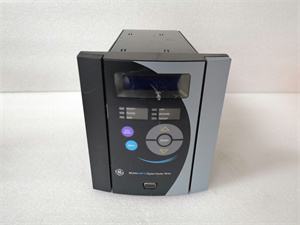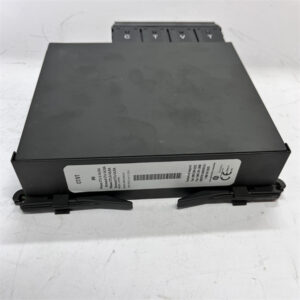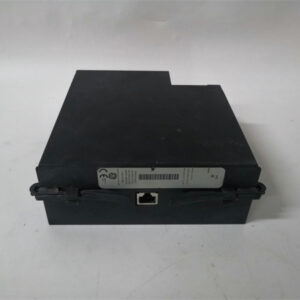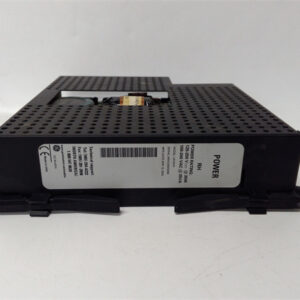
Description
System Architecture & Operational Principle
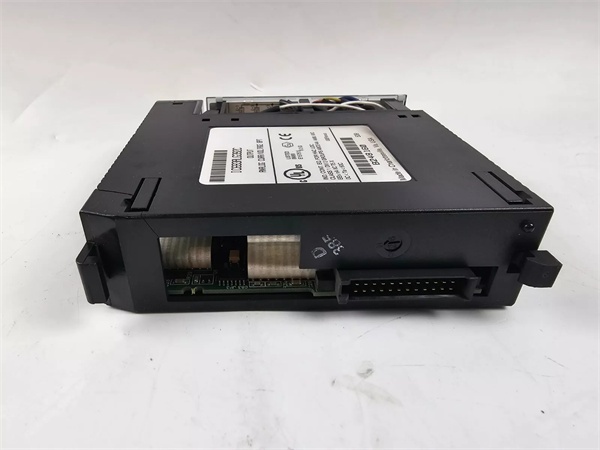
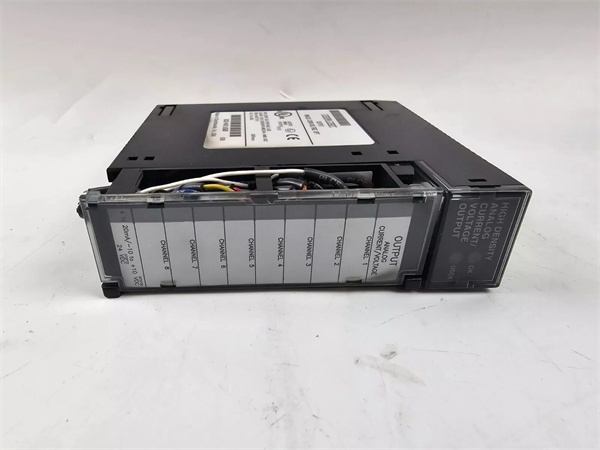
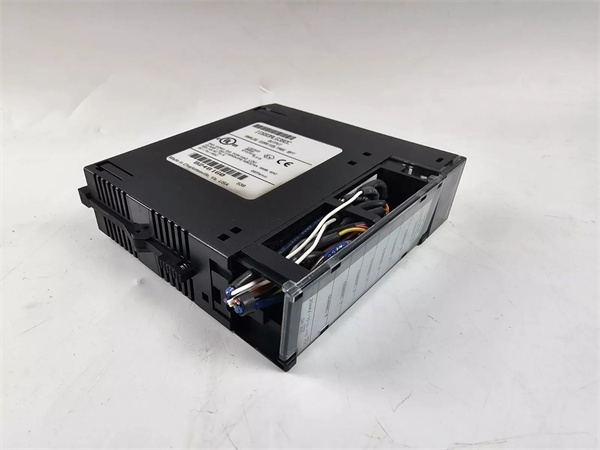
The IC693ALG392C is an 8-channel analog output module designed for GE Series 90-30 and RX3i PLC systems, occupying a slot in the PLC’s I/O rack (typically at Level 1 (Basic Control) or Level 2 (Supervisory Control) of the Purdue Model). It connects to field devices (e.g., control valves, variable frequency drives) via a removable terminal block, converting 15-16 bit digital values from the PLC CPU into analog voltage or current signals.
The module draws power from two sources: +5 VDC from the PLC backplane (for logic circuits) and isolated +24 VDC from an external supply (for field-side signal conditioning). A key architectural advantage is the 1500 V RMS optical isolation between field wiring and the PLC logic, which prevents ground loops and voltage spikes from damaging the CPU. The 8 ms update rate (for all 8 channels) ensures real-time control, while the user-selectable output ranges (0-10 VDC, ±10 VDC, 0-20 mA, 4-20 mA) accommodate most industrial analog devices.
A critical feature is the open-wire fault detection (in current mode), which reports faults to the CPU for each channel. This allows the PLC to trigger alarms or shut down processes in case of broken sensor cables or faulty wiring. Additionally, the module can be configured to hold the last output state or reset to zero when the CPU enters STOP/RESET mode, ensuring process safety during maintenance or faults.

GE IC693ALG392
Core Technical Specifications
-
Channels: 8 single-ended analog output channels
-
Output Ranges:
-
Voltage: 0-10 VDC (unipolar), ±10 VDC (bipolar)
-
Current: 0-20 mA, 4-20 mA (user-selectable via software)
-
-
Resolution: 15-16 bit (dependent on output range; e.g., 16-bit for voltage, 15-bit for current)
-
Accuracy: ±0.1% of full scale (typical); ±0.25% of full scale (maximum)
-
Update Rate: 8 ms (all 8 channels simultaneously)
-
Isolation: 1500 V RMS (field-to-logic)
-
Power Consumption:
-
110 mA from +5 VDC backplane
-
315 mA from +24 VDC external supply (isolated)
-
-
Output Load:
-
Voltage mode: 1 kΩ minimum load resistance
-
Current mode: 0-850 Ω load resistance
-
-
Operating Temperature: 0°C to 60°C (32°F to 140°F)
-
Certifications: UL, CE, RoHS
Customer Value & Operational Benefits
High Channel Density
With 8 channels per module, the IC693ALG392C reduces the number of slots required in the PLC rack, saving valuable cabinet space—critical for compact control panels in industries like food processing or packaging.
Flexible Output Configuration
The user-selectable voltage/current ranges and high resolution (15-16 bit) allow the module to adapt to diverse field devices, from control valves (4-20 mA) to variable speed drives (0-10 VDC). This flexibility eliminates the need for multiple module types, reducing inventory costs.
Reliable Fault Detection
The open-wire fault detection feature in current mode alerts the PLC to broken cables or faulty sensors, preventing process upsets (e.g., over-dosing in chemical plants) and reducing downtime.
Process Safety
The ability to hold the last output state or reset to zero during CPU stops ensures that processes remain stable or shut down safely during maintenance, avoiding accidents or product waste.
Field Engineer’s Notes (From the Trenches)
When wiring the IC693ALG392C, always use twisted/shielded instrumentation cable for field connections—unshielded cable will pick up EMI, causing erratic output signals. I once saw a site use regular Ethernet cable, and the 4-20 mA signal to a control valve fluctuated by 8%, leading to incorrect flow rates.Verify the output range configuration in the PLC software (e.g., Logicmaster 90-30) before commissioning. A misconfigured range (e.g., 0-10 VDC instead of 4-20 mA) will saturate the field device, causing damage or incorrect operation. I always label each channel’s range on the terminal block (e.g., “Ch1: 4-20 mA – Control Valve”) to avoid confusion.Test the open-wire detection during commissioning. Disconnect a sensor cable and verify that the PLC receives a fault message—this ensures the feature works before putting the system into operation.GE IC693ALG392
Real-World Applications
-
Chemical Processing: Controls the position of 8 control valves in a reactor using 4-20 mA signals. The PLC uses feedback from temperature sensors to adjust the valve openings, maintaining reaction temperature within a ±0.5°C band. The open-wire detection feature alerts the operator if a valve cable breaks, preventing process upsets.
-
HVAC Systems: Adjusts the speed of 8 variable air volume (VAV) boxes using 0-10 VDC signals. The 8 ms update rate ensures real-time response to temperature changes, improving occupant comfort and reducing energy consumption. The module’s ability to hold the last output state during CPU stops prevents sudden changes in airflow, ensuring safety.
High-Frequency Troubleshooting FAQ
Q: How do I configure the output range for a channel?
A: Use the PLC programming software (e.g., Logicmaster 90-30) to select the desired range (0-10 VDC, ±10 VDC, 0-20 mA, 4-20 mA) for each channel. The module does not have physical jumpers—configuration is done via software.
Q: What does an “open-wire fault” mean?
A: An open-wire fault occurs when the module detects a break in the current loop (e.g., broken cable, disconnected sensor). The PLC will receive a fault message for the affected channel, allowing the operator to take corrective action.
Q: Can I replace the IC693ALG392C with a newer module?
A: Yes—consider the Emerson IC694ALG392 (for Series 90-70 PLCs) or IC695ALG392 (for RX3i systems). Both offer 16-bit resolution and faster update rates (1 ms per channel). Verify the new module’s footprint and power requirements before swapping.
Q: How do I test the module’s accuracy?
A: Use a precision voltage source (e.g., 5 VDC reference) or current source (e.g., 4-20 mA calibrator) to apply a known signal to a channel. Read the digital value from the PLC and compare it to the expected count (e.g., 5 VDC should be 32768 counts at 0-10 VDC). If the error exceeds ±0.25% of full scale, replace the module.
Commercial Availability & Pricing
Please note: The listed price is not the actual final price. It is for reference only and is subject to appropriate negotiation based on current market conditions, quantity, and availability.