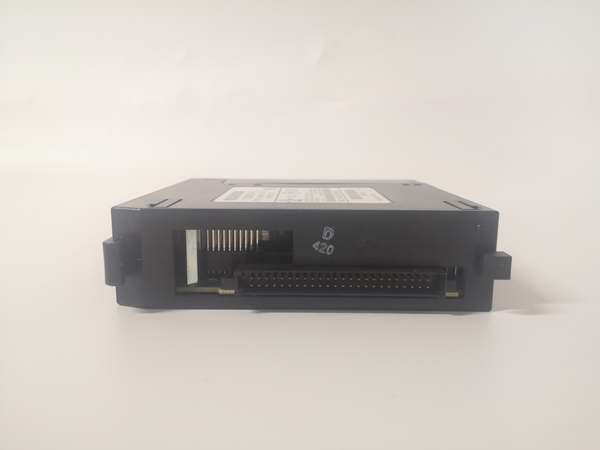
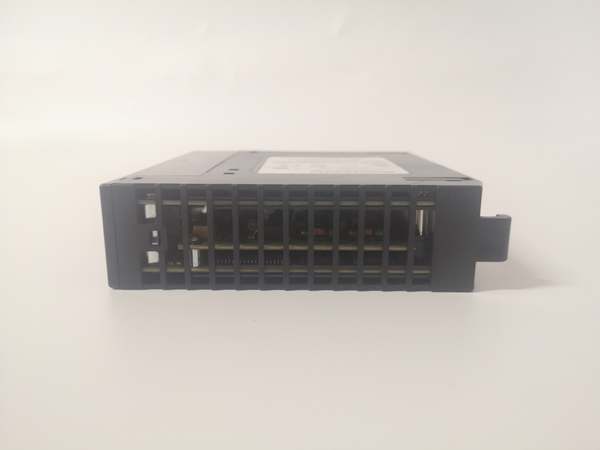
Description
Product Introduction
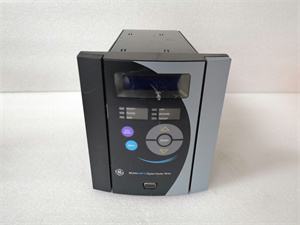
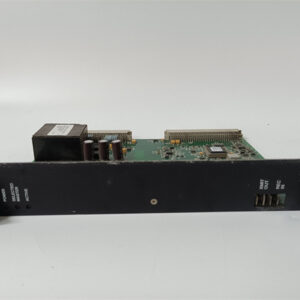
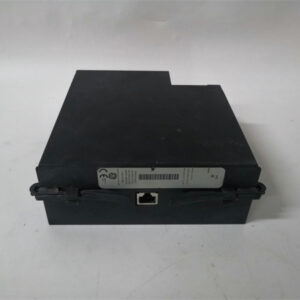
Last month, I pulled a GE IC693CPU372-AE from a water treatment plant—its dual Ethernet ports still handling Modbus TCP after 15 years of continuous operation. This enhanced Ethernet variant builds on the 372 foundation with improved network capabilities .The -AE suffix denotes enhanced Ethernet features while maintaining the 133 MHz AMD SC520 processor and 0.15 ms scan time per 1K Boolean instructions . Honestly, that dual-port internal switch design eliminates external switches in daisy-chain topologies—a clever choice for network redundancy without extra hardware.
Key Technical Specifications
| Parameter | Value |
|---|---|
| Module Type | Single-Slot CPU Module (32-bit processor) |
| Processor | AMD SC520 @ 133 MHz |
| Memory | 240 KB battery-backed RAM (user program/data) |
| Scan Time | 0.15 ms per 1K Boolean logic instructions (typical) |
| I/O Capacity | Up to 2048 discrete I/O points; 32,640 analog I/O words (max) |
| Communication Ports | 2x RJ-45 Ethernet (10/100 Mbps auto-sensing), 1x RS-232/485 serial |
| Power Consumption | 3 W maximum @ 24 V DC (20.4 to 28.8 V DC input range) |
| Operating Temperature | -40°C to 70°C (-40°F to 158°F) ; storage: -55°C to 125°C |
| Network Protocols | Modbus TCP/IP, SRTP, EGD, Device Level Ring (DLR) topology support |
| Compatibility | Series 90-30 baseplates, firmware v6.0+ |
| Dimensions | 133 mm × 42 mm × 3 mm (5.24″ × 1.65″ × 0.12″) |
| Weight | 10 g (0.35 oz) |
| Certifications | UL, CE, CSA |
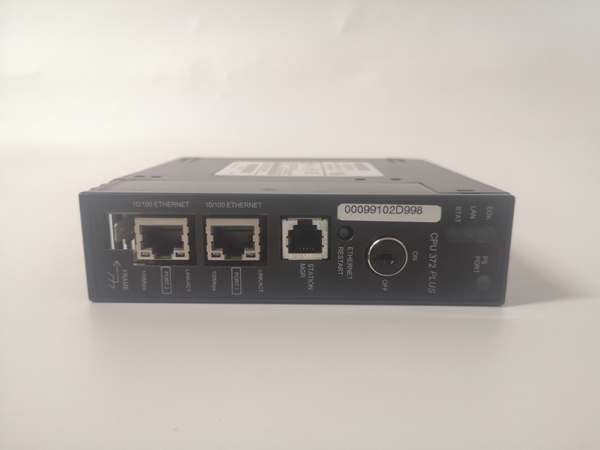
IC693CPU372
Quality Control Process (SOP Transparency)
Here’s how we verify the GE IC693CPU372-AE. We use Fluke 115 for electrical tests and a dedicated Series 90-30 test rack with dual Ethernet simulation.
- Incoming Verification: Trace serials against OEM lists, verify -AE suffix denotes enhanced Ethernet version, inspect dual RJ-45 ports for physical damage, audit accessories (none included).
- Live Functional Test: Install in Series 90-30 test rack, power-on self-check, dual Ethernet handshake (ping test at 100 Mbps), serial comms test (Modbus RTU), simulate 2048 I/O load, run 24 hr test with temp logging (logged -35°C to 65°C range).
- Electrical Parameter Test: Megger insulation at 500 V (>10 MΩ), verify DC input draw (3 W nominal at 24 V), check ground continuity with Fluke 115.
- Firmware Verification: Read firmware version (record v6.2), photograph DIP switches (all off) and Ethernet configuration settings.
- Final QC & Packaging: Inspector signs off, seal in anti-static bag with desiccant, bubble wrap + double-walled carton, apply QC Passed label with date and Ethernet test results.
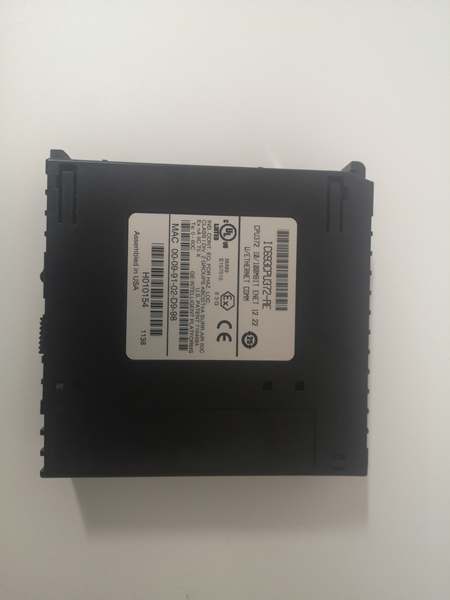
IC693CPU372
Replacement Pitfall Guide (Field Engineer’s Warnings)
Swapping this enhanced Ethernet module introduces specific network risks. Keep these five points in mind and you’ll eliminate roughly 90% of rework.
- ❗ Enhanced Ethernet Configuration: The -AE variant supports Device Level Ring topology by default. Misconfigured DLR settings cause network loops. Document existing network topology before removal .
- ❗ Firmware Rev Mismatch: New module firmware may lack DLR support present in older versions. Record current firmware before swapping. Case: Swapped V5.8 for V6.2—network showed “DLR Not Supported” until downgrade.
- ❗ Power Budget Shortfall: This unit draws 3 W maximum—higher than non-Ethernet CPUs. Calculate total rack load, maintain 20% headroom. Added 8 AI modules? Rack hit 75 W; 24 V/3 A supply tripped.
- ❗ Ethernet PHY ESD Sensitivity: The dual Ethernet chips are static-sensitive. Wear a wrist strap. Work on an anti-static mat. A module powered up but showed “Link Down” on both ports—$3,500 loss from skipping ESD precautions.
- ❗ RS-232/485 Serial Port Pinout: The serial port supports both protocols via jumpers. Verify existing configuration (RS-232 vs. RS-485) before installation. Mismatched jumper settings caused Modbus RTU comms failure.
Verify with OEM datasheet for your specific network topology. Most failures trace to DLR misconfiguration or ESD damage to Ethernet PHYs.